Knowledge Nugget | Bisleri water safety row: What are the health risks of chemical contaminants?
Source Entity
Sanju Singh
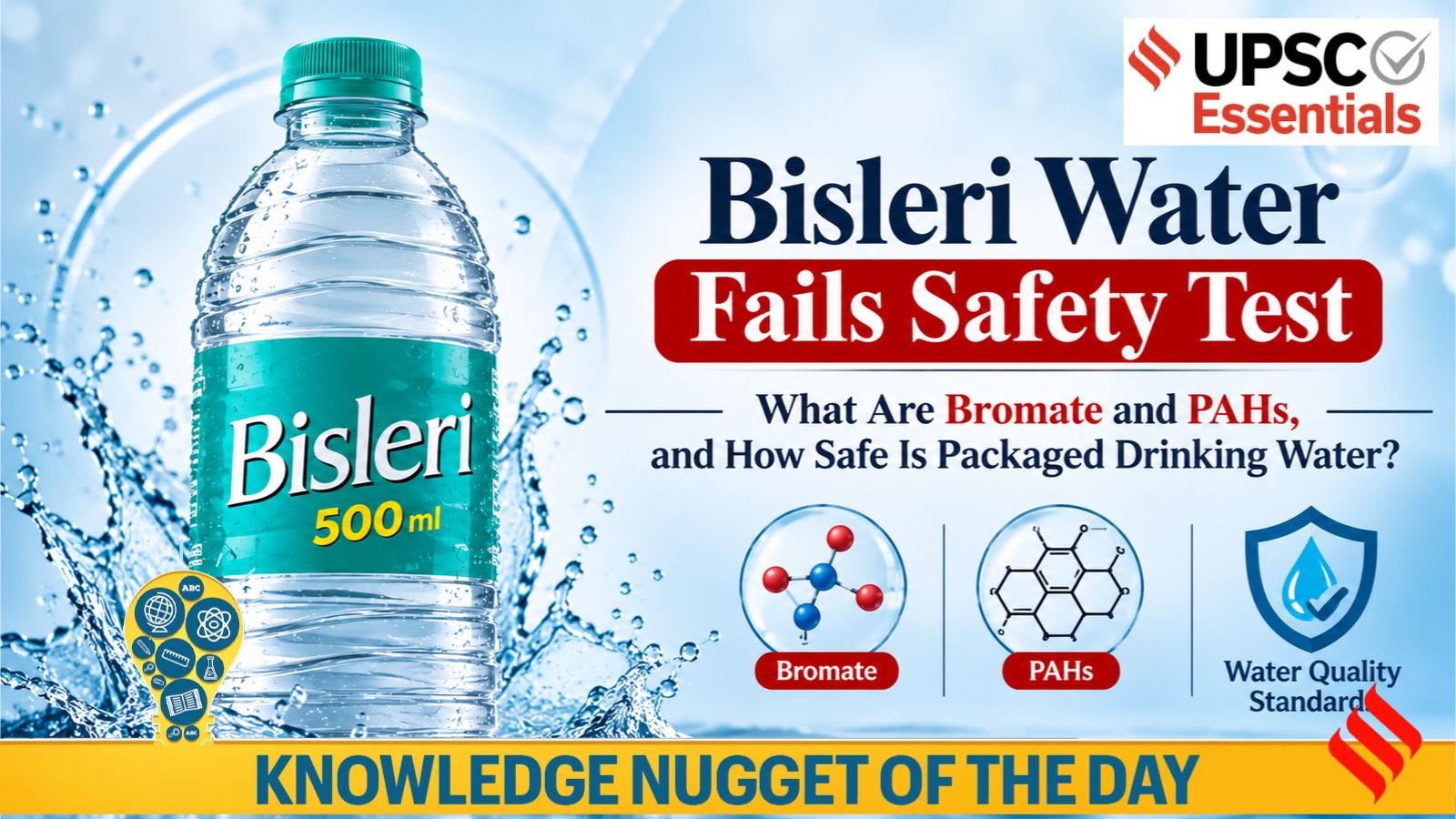
The FSSAI has initiated legal action against Bisleri International following reports of chemical contaminants like bromate and PAHs in water samples. While the company disputes these findings, the incident highlights critical concerns regarding drinking water safety standards in India.
The Bisleri Regulatory Dispute: A Deep Dive into Water Safety
Recent regulatory developments have placed the spotlight on the packaged drinking water industry in India, specifically concerning a case involving Bisleri International Pvt Ltd. The Food Safety and Standards Authority of India (FSSAI) has moved to initiate prosecution against the company after laboratory analysis of a packaged water sample identified the presence of bromate and polycyclic aromatic hydrocarbons (PAHs). This regulatory intervention underscores the stringent oversight maintained by the FSSAI to ensure public health safety.
Understanding the Contaminants: Bromate and PAHs
Bromate is a chemical byproduct often formed during the ozonation process used in water treatment, particularly when bromide is naturally present in the source water. Consumption of bromate-contaminated water, especially over long periods, is a subject of significant toxicological concern. Similarly, Polycyclic Aromatic Hydrocarbons (PAHs) are a group of complex organic compounds often associated with environmental pollution. Their presence in drinking water is strictly regulated due to their potential carcinogenic properties, making their detection a serious matter for consumer safety.
The Corporate Response and Regulatory Tension
In response to the FSSAI’s findings, Bisleri International has formally disputed the laboratory results. The company maintains that its internal quality control protocols and subsequent testing have shown that bromate levels remain well within the prescribed safety limits. This divergence between regulatory testing and corporate internal validation highlights the inherent complexities in food and water safety auditing, where sample collection, storage conditions, and laboratory methodology can lead to varying results.
Implications for India's Water Standards
This incident serves as a broader catalyst for evaluating the current standards governing the packaged drinking water sector in India. As urbanization and water scarcity drive the massive growth of the bottled water market, the enforcement of the FSSAI’s standards becomes increasingly vital. The ongoing legal proceedings will likely serve as a benchmark case for how regulatory bodies handle disputes regarding chemical compliance in consumer goods.
Future Trends in Water Quality Management
Moving forward, it is expected that the FSSAI will continue to tighten surveillance on manufacturers to ensure compliance with permissible limits for chemical additives and environmental contaminants. Consumers and industry stakeholders alike will be watching the outcome of this prosecution to understand how legal precedents are set regarding the burden of proof in water safety. Enhanced transparency in testing protocols and independent verification will remain the cornerstone of restoring and maintaining consumer trust in the packaged water industry.