Opposition parties trying to vitiate country's atmosphere: BJP
Source Entity
TNN
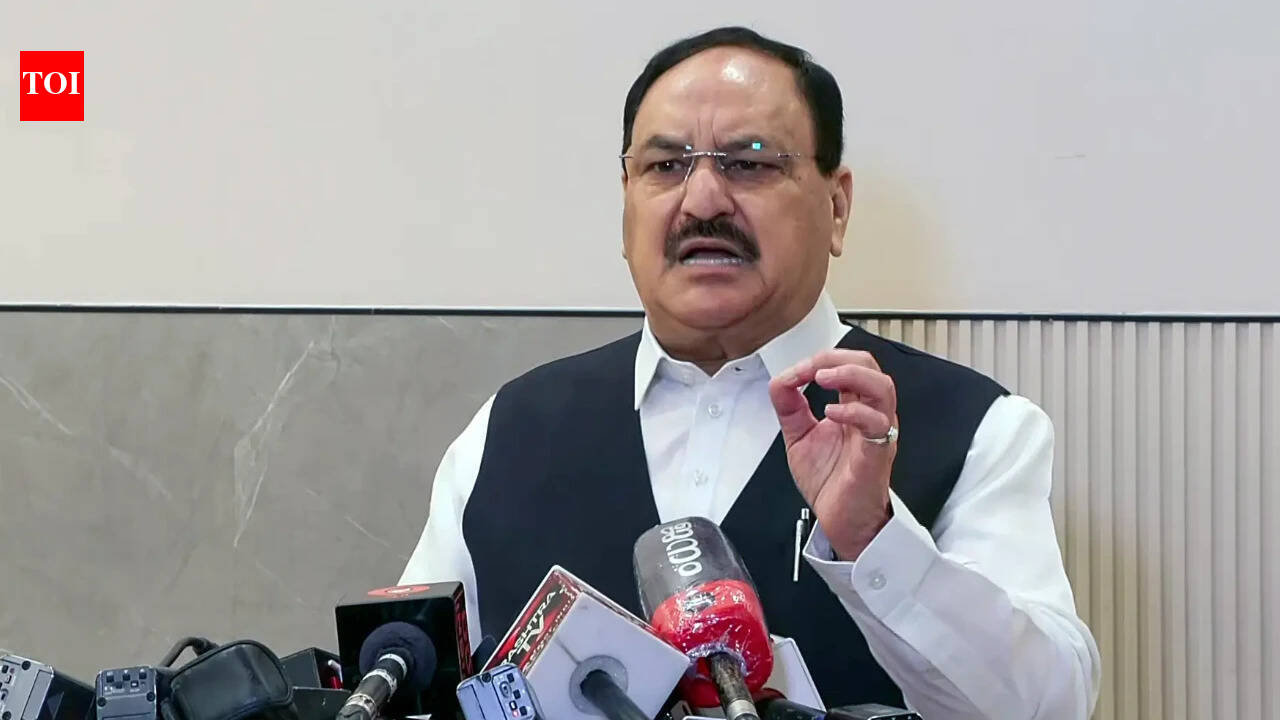
The BJP has accused opposition leaders of attempting to create national instability through protests against the Election Commission. The party claims these actions are part of a calculated effort to seize power by undermining democratic institutions.
The Growing Conflict Over Electoral Integrity
The recent confrontation between the Bharatiya Janata Party (BJP) and various opposition entities has escalated following protests directed at the Election Commission (EC). The BJP, represented by Union Minister J.P. Nadda, has characterized these protests not as legitimate democratic dissent, but as a deliberate attempt to "vitiate" the country's social and political atmosphere. This accusation suggests a deep-seated polarization, where the legitimacy of constitutional bodies is increasingly becoming a central battleground in Indian politics.
The 'Toolkit' Allegation and Strategic Narratives
Central to the BJP's rhetoric is the claim that opposition leaders—specifically naming figures like Rahul Gandhi, Akhilesh Yadav, and Arvind Kejriwal—are operating under a "toolkit mindset." By using this terminology, the ruling party is framing the opposition’s actions as part of a pre-planned, coordinated strategy designed to spread chaos. This narrative serves to delegitimize the protest by suggesting that the motives are cynical and purely driven by a desire to "grab power" rather than address genuine electoral concerns.
Institutional Trust and Political Stability
At the heart of this conflict lies the role of the Election Commission as an independent arbiter of Indian democracy. When opposition parties take to the streets to protest the EC, it signals a breakdown in the consensus regarding the neutrality of state institutions. The BJP’s aggressive stance highlights its commitment to defending the EC’s credibility, while simultaneously painting the opposition as a group that resorts to destructive tactics when they perceive they cannot win through standard electoral competition.
Historical Precedents and Evolving Tensions
This is not the first time that Indian political discourse has centered on the fairness of electoral processes. However, the current intensity of the rhetoric reflects a shift in how political parties interact with constitutional bodies. Historically, complaints against the EC were often handled through formal legal channels; today, the shift toward public protests and social media-driven accusations has made the political environment significantly more volatile and prone to rapid escalations in tension.
Implications for Future Electoral Cycles
Looking ahead, this trend of challenging the EC suggests that the upcoming electoral cycles will be marked by extreme scrutiny and public confrontation. If the opposition continues to view the EC as an extension of the ruling party’s interests, and the BJP continues to label all dissent as a "vitiation" of national atmosphere, the space for healthy political debate will likely continue to shrink. This dynamic threatens to erode public confidence in the electoral process itself, which is the cornerstone of any functioning democracy.
Conclusion
The current standoff underscores a deepening fracture in Indian political culture. The BJP’s insistence that the opposition is prioritizing power over institutional stability, contrasted with the opposition’s active protests, points to a future where every electoral outcome will face intense public scrutiny. Unless there is a concerted effort to restore faith in the neutrality of constitutional institutions, the political atmosphere will likely remain charged with accusations of illegitimacy and strategic sabotage.