Amid uproar, J&K House passes resolution for statehood restoration
Source Entity
Latest News: Todays Latest News Headlines from India & World | Hindustan Times | Hindustan Times
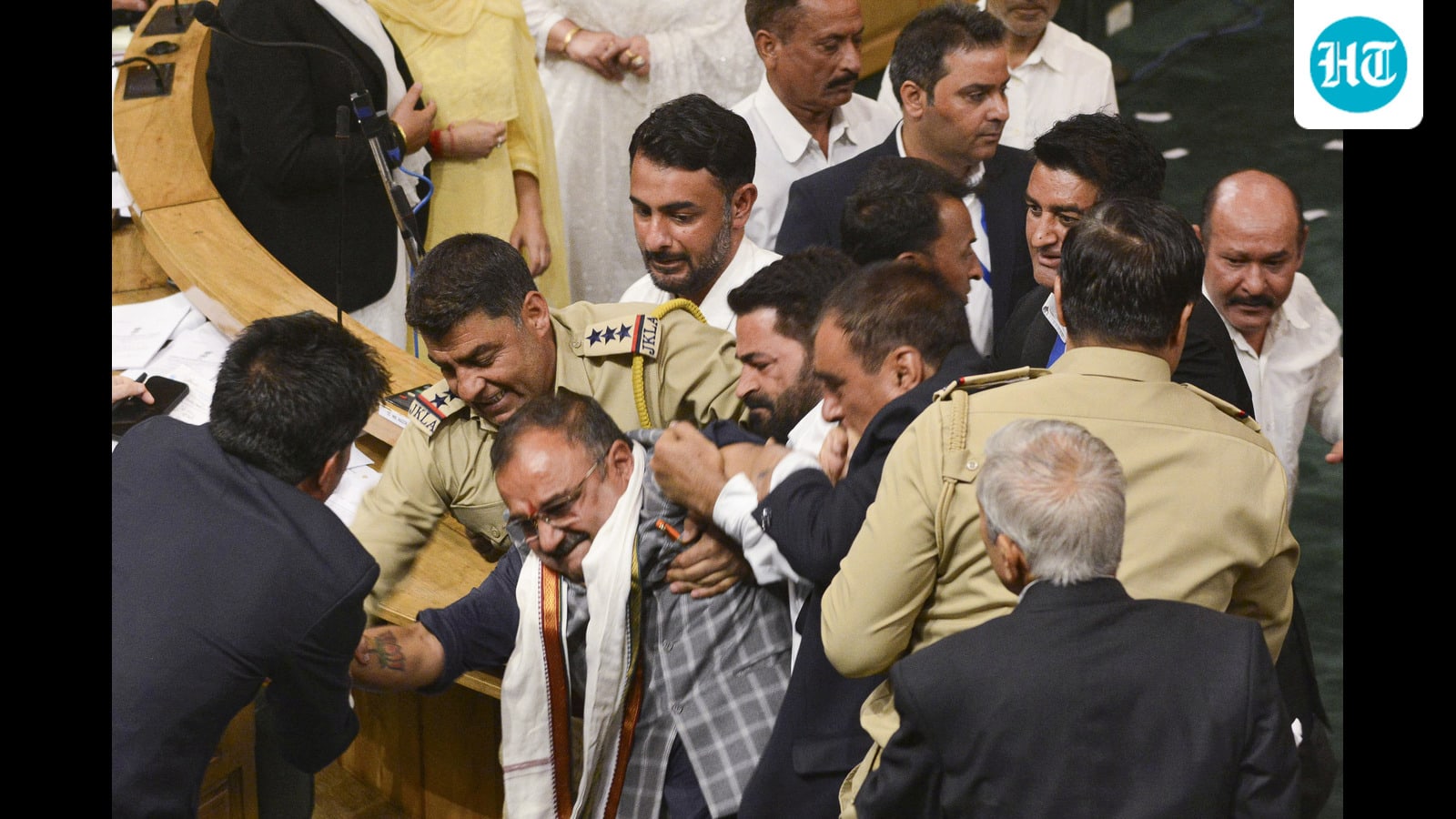
The Jammu and Kashmir Legislative Assembly has passed a resolution demanding the restoration of statehood, amidst significant political tension and a walkout by BJP legislators. Chief Minister Omar Abdullah emphasized that statehood is a fundamental right, citing governance challenges caused by the current administrative structure.
The Quest for Statehood: A Political Turning Point in J&K
The Jammu and Kashmir Legislative Assembly has reached a critical juncture, passing a resolution that demands the restoration of statehood to the region. This move, spearheaded by Chief Minister Omar Abdullah, serves as a direct challenge to the current administrative status quo. The resolution, which has garnered support from various political factions including the Peoples Democratic Party (PDP) and the J&K Peoples Conference (JKPC), underscores a deepening divide between the elected government and the central administration.
Governance Challenges and Administrative Friction
Chief Minister Omar Abdullah has been vocal regarding the practical limitations of the current governance model. He highlighted that the lack of full statehood leaves key officials outside the purview of the elected government’s control. The tension became palpable when the Chief Minister noted that even high-ranking officials, such as the law and chief secretaries, formally wrote to the speaker to oppose the resolution. This incident illustrates the unique administrative friction inherent in a territory where elected representatives operate under the shadow of central oversight.
Legal and Constitutional Arguments
Central to the debate is the interpretation of the Supreme Court’s judgment regarding the abrogation of Article 370. Omar Abdullah pointedly questioned the timeline for the restoration of statehood, referencing the court's directive that it should be returned as soon as possible. By asserting that 'as soon as possible' cannot realistically span two years, the Chief Minister is leveraging judicial precedent to build political legitimacy for his administration's demands.
The Role of Article 370 and 35A
The political discourse has further intensified following amendments moved by six National Conference (NC) legislators. These members have sought to expand the scope of the resolution by explicitly including the restoration of Article 370 and 35A. By attempting to link the current push for statehood with the historical autonomy resolution of 2000, these legislators are signaling a desire to return to the constitutional framework that existed prior to the 2019 reorganization.
Opposition and Legislative Disruption
The proceedings were marked by significant volatility, characterized by protests and a walkout by Bharatiya Janata Party (BJP) legislators. The physical restraint of BJP MLAs during these protests highlights the deep ideological polarization within the assembly. This disruption not only reflects the intensity of the debate but also indicates the difficult path ahead for any legislative consensus that seeks to reverse or modify the central government's previous actions.
Implications and Future Trends
Looking forward, the passage of this resolution sets the stage for a prolonged confrontation between the Srinagar-based legislative assembly and the central government in New Delhi. The move signifies a concerted effort by regional parties to reassert local control over governance. As the political landscape continues to evolve, the demand for statehood will likely remain the central pillar of J&K politics, serving as a litmus test for the relationship between the union territory and the central authority.
Verification Required?