Top Court To Hear Plea Against Decisions By Poll Body Chief Gyanesh Kumar Next Week
Source Entity
NDTV News Search Records Found 1000
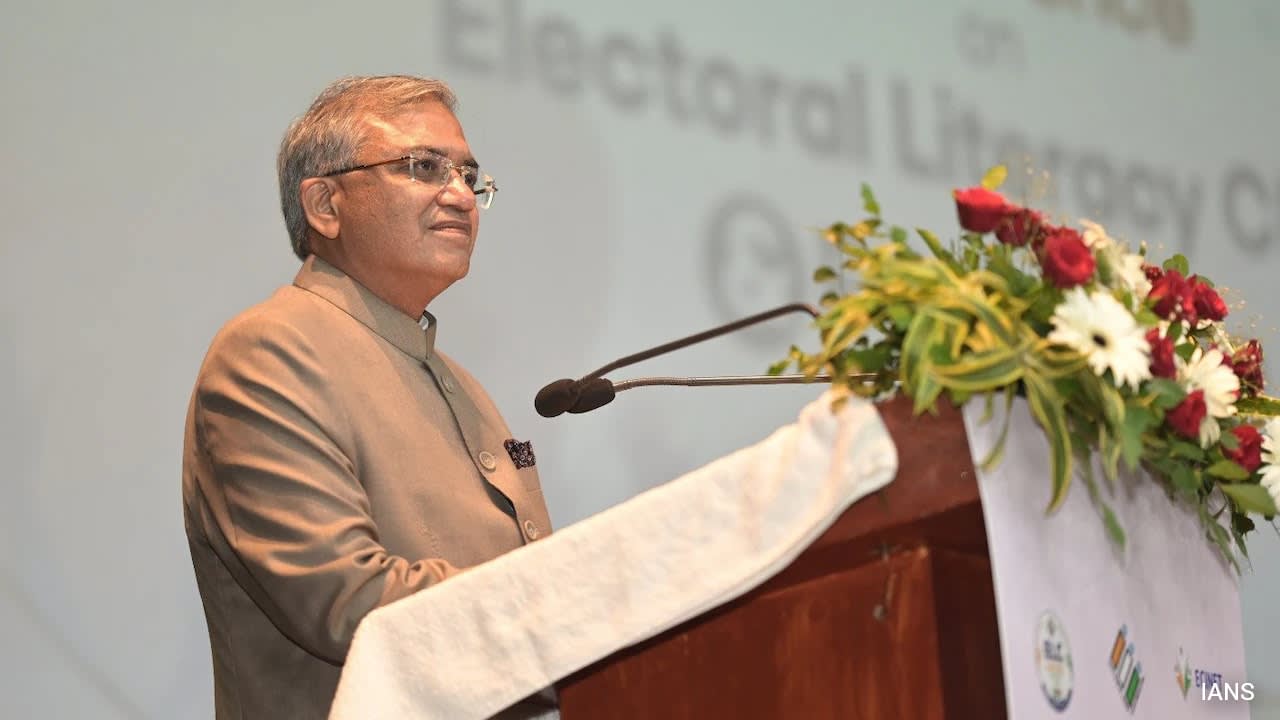
Former Home Secretary R.K. Singh has demanded the resignation of CEC Gyanesh Kumar over alleged illegalities in electoral roll revisions. The Supreme Court is set to hear a plea regarding these decisions, while the Election Commission maintains that all its actions were taken unanimously.
The Constitutional Crisis at the Election Commission
Recent developments surrounding the Election Commission of India (ECI) have thrust the institution into the heart of a significant political and legal controversy. Former Union Home Secretary R.K. Singh has publicly challenged Chief Election Commissioner (CEC) Gyanesh Kumar, alleging that the ongoing Special Intensive Revision (SIR) of electoral rolls is legally flawed. This accusation has escalated into a demand for the resignation of the CEC and his fellow Election Commissioners, Sukhbir Singh Sandhu and Vivek Joshi, with Mr. Singh calling for Opposition parties to boycott elections until such a leadership change occurs.
The Core Allegations and Institutional Friction
The controversy stems from Mr. Singh’s assertion that the nationwide SIR is fundamentally illegal. His critique extends to the Supreme Court, which previously upheld the general SIR, with Mr. Singh labeling that judicial decision as incorrect. This public confrontation is exacerbated by reports of internal discord within the ECI itself. Reports indicate that Mr. Kumar has faced repeated questioning from his fellow Commissioners regarding the integrity of the Commission’s operations, signaling a rare and concerning lack of cohesion at the highest levels of India's electoral oversight body.
Legal Recourse and Judicial Oversight
Recognizing the gravity of these accusations, the Supreme Court of India is scheduled to hear a plea challenging the decisions made by the CEC next week. This judicial intervention is critical for maintaining public trust in the electoral process. The ECI, for its part, has formally maintained that all decisions taken during this period were reached unanimously, effectively countering claims of unilateralism or internal dysfunction. The upcoming court proceedings will be a definitive test of whether the ECI’s internal processes align with constitutional mandates.
Political Polarization and Public Backlash
The discourse has swiftly moved from the corridors of bureaucracy to the political arena. Protests demanding the resignation of Mr. Kumar have erupted across several states, reflecting deep-seated concerns regarding electoral integrity. Conversely, the political establishment has responded with sharp rhetoric; Union Minister J.P. Nadda has dismissed the Opposition's concerns as a "toolkit mentality," accusing them of intentionally attempting to derail the nation's democratic progress. This polarization underscores the high stakes involved in the administration of electoral rolls.
Broader Implications for Indian Democracy
The internal and external pressures facing the ECI highlight the fragility of independent constitutional bodies when they become the focal point of partisan conflict. The role of the ECI is to serve as the neutral arbiter of the democratic process; therefore, any perception of "illegalities" or internal strife poses a direct risk to the legitimacy of future elections. The resolution of this crisis—whether through judicial clarification or institutional reform—will likely serve as a precedent for how future electoral challenges are handled in an increasingly contentious political climate.
Multiple Citing Sources
Verification Required?