'Congress policy to oppose anything patriotic': BJP on Vande Mataram 'insult'
Source Entity
India Latest News: Top National Headlines Today & Breaking News | The Hindu
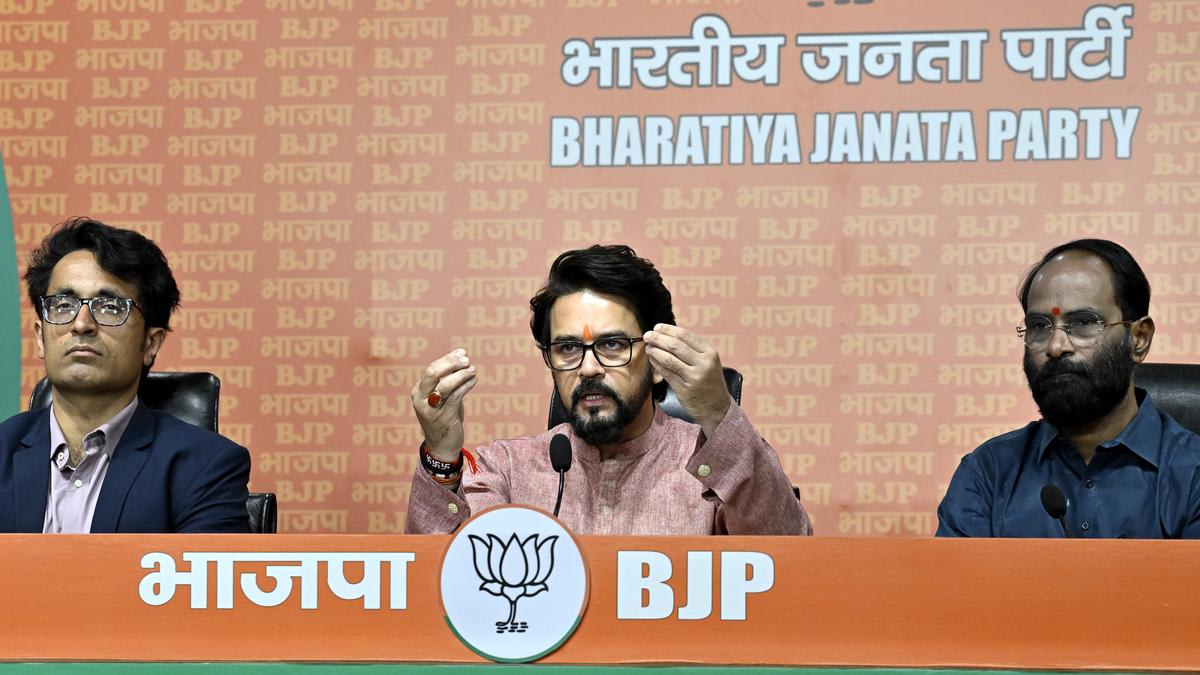
A political controversy has emerged after the BJP accused Sonia Gandhi of interrupting the national song 'Vande Mataram' during an Independence Day event. The Congress party firmly denied the allegations, clarifying that Gandhi was merely requesting a chair for party president Mallikarjun Kharge.
Political Controversy Over Vande Mataram Rendition
A fresh political confrontation has broken out between the Bharatiya Janata Party (BJP) and the Indian National Congress following an Independence Day event held at Indira Bhawan on August 15, 2026. The BJP has leveled serious accusations against Congress leader Sonia Gandhi, alleging that she attempted to obstruct the singing of the full version of 'Vande Mataram,' the national song of India. This incident has reignited long-standing ideological debates regarding patriotism and national symbols within the Indian political landscape.
BJP's Allegations and Narrative
The BJP’s critique was spearheaded by its national general secretary (organisation), B L Santhosh, who utilized social media platform X to circulate video footage from the event. The BJP leadership characterized the alleged actions of the Congress leadership as a reflection of a persistent, negative mindset toward nationalistic expressions. By framing the incident as an objection to the full rendition of the song, the BJP seeks to portray the Congress party as being out of touch with nationalist sentiments, effectively using the controversy to sharpen its ideological divide with the Opposition.
The Congress Party’s Rebuttal
In response to the viral claims, the Congress party has issued a categorical denial, labeling the BJP’s allegations as false and politically motivated. According to the Congress, there was no intent or effort to stop the musical performance. Instead, they assert that Sonia Gandhi was engaged in a logistical concern, specifically asking for a chair to be provided for party president Mallikarjun Kharge, who had been standing for an extended period during the proceedings. The party maintains that the BJP has misinterpreted a routine act of courtesy as an act of defiance against the national song.
Contextualizing the Symbolism of Vande Mataram
'Vande Mataram' holds a unique position in India’s history, having served as a rallying cry during the struggle for independence from British colonial rule. Because of its historical weight, any perceived slight or interruption during its performance often triggers intense public scrutiny and emotional responses. In the current political climate, where nationalistic symbols are frequently utilized to define partisan boundaries, the dispute highlights how ceremonial events are now closely monitored and scrutinized for potential political theater.
Broader Implications for Political Discourse
This incident serves as a microcosm of the current state of Indian political discourse, where digital media allows for rapid dissemination of conflicting interpretations of real-time events. By focusing on video snippets, both parties are engaging in a battle over public perception. The speed at which such controversies escalate underscores the hyper-polarized nature of modern Indian politics, where even ceremonial Independence Day observances are subjected to intense verification and ideological posturing.
Future Trends in Political Communication
Looking ahead, it is highly probable that similar disputes over public behavior, gestures, and symbolic acts will continue to dominate the political narrative. As political parties increasingly rely on social media to frame their opponents' actions, the ability to contextualize such events—distinguishing between administrative interactions and genuine ideological conflicts—will become increasingly difficult for the electorate. This incident confirms that the cultural battleground remains as significant as the legislative one in determining the political trajectory of the nation.
Multiple Citing Sources
Verification Required?