BJP inducts three more leaders from rival parties in Bihar
Source Entity
Latest News: Today's Latest News Headlines from India & World | Hindustan Times | Hindustan Times
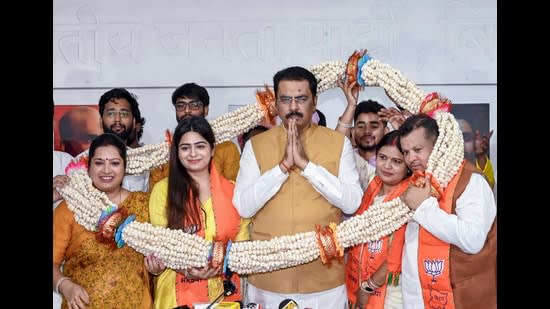
The BJP has strengthened its presence in Bihar by inducting three leaders from rival parties, including young entrepreneur Chetna Jhamb, who previously contested the 2025 Bihar assembly elections as an Independent candidate from Samastipur after leaving the Jan Suraaj Party.
BJP's Strategic Expansion in Bihar: Analyzing the Induction of Rival Leaders
In a calculated move to bolster its organizational strength ahead of the critical 2025 Bihar assembly elections, the Bharatiya Janata Party (BJP) has inducted three prominent leaders from opposing political camps. Among the most notable additions is Chetna Jhamb, a young entrepreneur and former assembly candidate. Jhamb's transition into the BJP is particularly significant given her recent political trajectory; she contested the 2025 elections from the Samastipur constituency as an Independent candidate after her departure from the Jan Suraaj Party. This move underscores the BJP's ongoing strategy of absorbing influential local figures to consolidate its voter base across diverse demographics.
The Strategic Importance of Samastipur and Youth Outreach
The induction of Chetna Jhamb is not merely a numerical addition but a strategic acquisition. Samastipur is a region characterized by complex caste dynamics and fluctuating political loyalties. By bringing in a candidate who has already demonstrated the ability to campaign independently and mobilize voters in this specific constituency, the BJP is effectively absorbing a pre-existing local network. Furthermore, Jhamb's profile as a "young entrepreneur" aligns with the BJP's broader national narrative of promoting startup India and youth leadership. Incorporating a professional background into the political fold allows the party to appeal to the aspirational youth and the business community in Bihar, moving the discourse beyond traditional identity politics toward development and entrepreneurship.
The Jan Suraaj Factor and Political Fluidity
One of the most intriguing aspects of this development is Jhamb's history with the Jan Suraaj Party. Led by strategist Prashant Kishor, Jan Suraaj has attempted to position itself as a disruptive force in Bihar's political landscape, focusing on grassroots systemic change. The shift of a former Jan Suraaj associate to the BJP suggests a tension between the ideological aspirations of new political movements and the pragmatic reality of electoral machinery. For the BJP, attracting leaders from a movement that emphasizes 'new politics' indicates that the saffron party is successfully presenting itself as the most viable vehicle for those seeking actual power and implementation of their goals in the state.
Historical Context of Political Defections in Bihar
Bihar has a long and storied history of political fluidity, often referred to in Indian political parlance as the culture of shifting alliances. From the era of coalition gymnastics to the recent waves of party-switching, the state's politics are often defined by leaders moving toward the party that offers the best chance of victory. The BJP's current strategy of inducting rival leaders is a continuation of this historical pattern but with a modern twist: focusing on 'profile-based' inductions. Rather than just seeking established veterans, the party is now targeting younger, professional, and independent-minded candidates who bring a different kind of social capital to the table.
Future Implications for the 2025 Assembly Elections
Looking forward to the 2025 assembly elections, these inductions suggest that the BJP is playing a game of attrition against its rivals. By peeling away candidates from Independent pools and emerging parties like Jan Suraaj, the BJP is effectively reducing the 'spoiler' effect—where Independent candidates split the vote, potentially benefiting the opposition. The integration of leaders like Jhamb into the party fold likely indicates a push for a more inclusive and diverse candidate list in the coming cycles. If the BJP continues this trend of absorbing professional youth leaders, it may successfully shift the electoral battleground toward a platform of economic modernization.
Conclusion
In summary, the induction of three leaders, including Chetna Jhamb, is a tactical maneuver designed to neutralize opposition influence in Samastipur and broaden the BJP's appeal to the youth and entrepreneurial classes. By leveraging the instability of rival camps and the ambitions of Independent candidates, the BJP is systematically reinforcing its infrastructure in Bihar. This move reflects a sophisticated approach to electoral politics where local influence is merged with national organizational strength to ensure dominance in the upcoming 2025 assembly contest.
Verification Required?