Blue Origin says it is building a higher-performing rocket engine at 1/4 the cost
Source Entity
Eric Berger
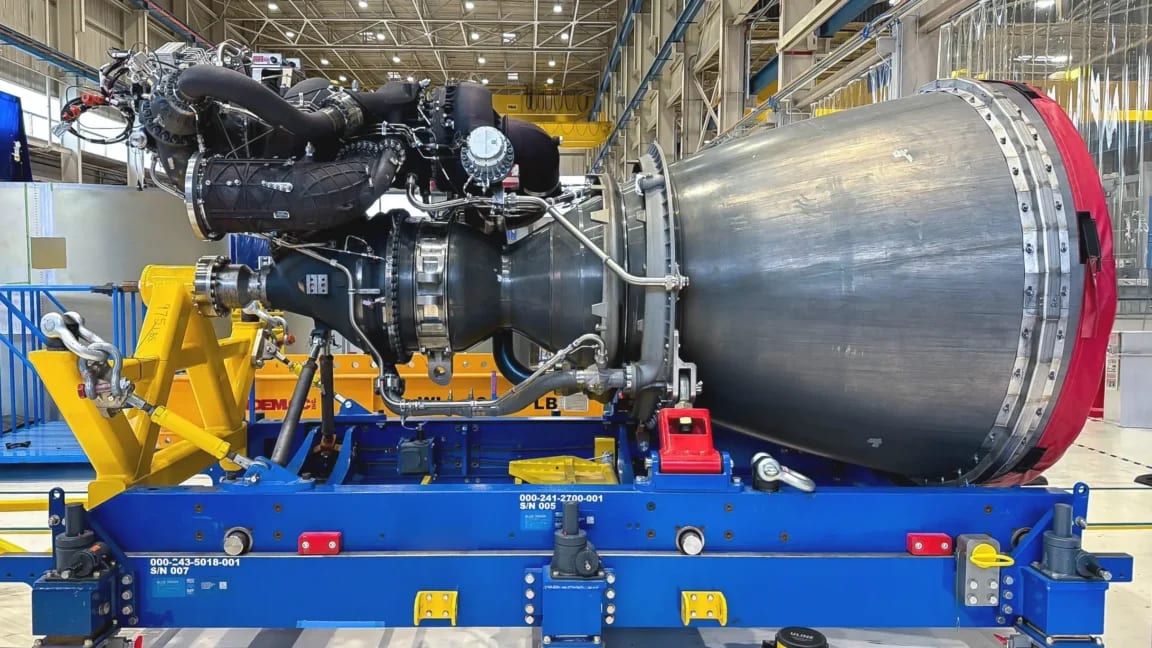
Blue Origin has announced significant upgrades to its New Glenn rocket, including the development of a cost-efficient engine named Northstar. These advancements aim to drastically increase launch capacity to meet unprecedented global demand for space access.
Blue Origin Unveils Strategic Upgrades for New Glenn
Blue Origin has officially announced a series of major engineering advancements for its New Glenn launch vehicle, signaling a shift toward higher efficiency and increased operational frequency. During the UP.Summit conference at the Shuttle Landing Facility, CEO Dave Limp highlighted that the company is developing a new engine, dubbed 'Northstar,' intended to eventually replace the current BE-4 engines. This development is framed as a pivotal moment for the company’s launch infrastructure.
Engineering for Cost and Performance
The core of this announcement centers on the Northstar engine, which Blue Origin claims will be manufactured at one-quarter of the cost of current propulsion systems. By focusing on manufacturing efficiency and performance, the company is attempting to lower the barrier to entry for space access. The transition from the BE-4 to the Northstar represents a long-term strategy to optimize the New Glenn first stage for both reliability and economic viability.
Expanding Orbital and Lunar Capabilities
Beyond engine improvements, Blue Origin is expanding the rocket's architecture by developing a hydrogen-oxygen third stage. This addition is specifically designed to enhance payload capacity for missions reaching geostationary orbit and the Moon. By providing a dedicated third stage for high-energy maneuvers, the company is positioning New Glenn to compete more effectively for complex deep-space and high-orbit logistical contracts.
Scaling to Meet Global Demand
CEO Dave Limp emphasized that the global demand for launch services is currently at an all-time high. The company’s stated goal is to scale the New Glenn program to support more than 1,000 launches per year. This ambitious target suggests a future where launch cadence is no longer a bottleneck for the burgeoning space economy, provided the manufacturing and operational efficiencies are realized.
Future Implications for the Space Industry
The integration of the Northstar engine and the new third stage reflects a broader trend in the aerospace industry: the move toward reusable, high-cadence, and low-cost launch platforms. If Blue Origin succeeds in reducing costs by the magnitude suggested, it could fundamentally alter the economics of satellite deployment and lunar exploration. The ability to launch frequently and affordably is essential for the infrastructure required for sustained human presence on the Moon and beyond.
Conclusion
Blue Origin’s latest announcements represent a significant pivot toward operational scale. By focusing on cost-effective propulsion and expanded mission profiles, the company is clearly preparing for a future characterized by high-volume traffic to orbit. As the Northstar engine moves from test firing to integration, the industry will be watching closely to see if Blue Origin can achieve its goal of making space access a routine, high-frequency enterprise.