Burdened by debt, bonded to life of toil
Source Entity
India Latest News: Top National Headlines Today & Breaking News | The Hindu
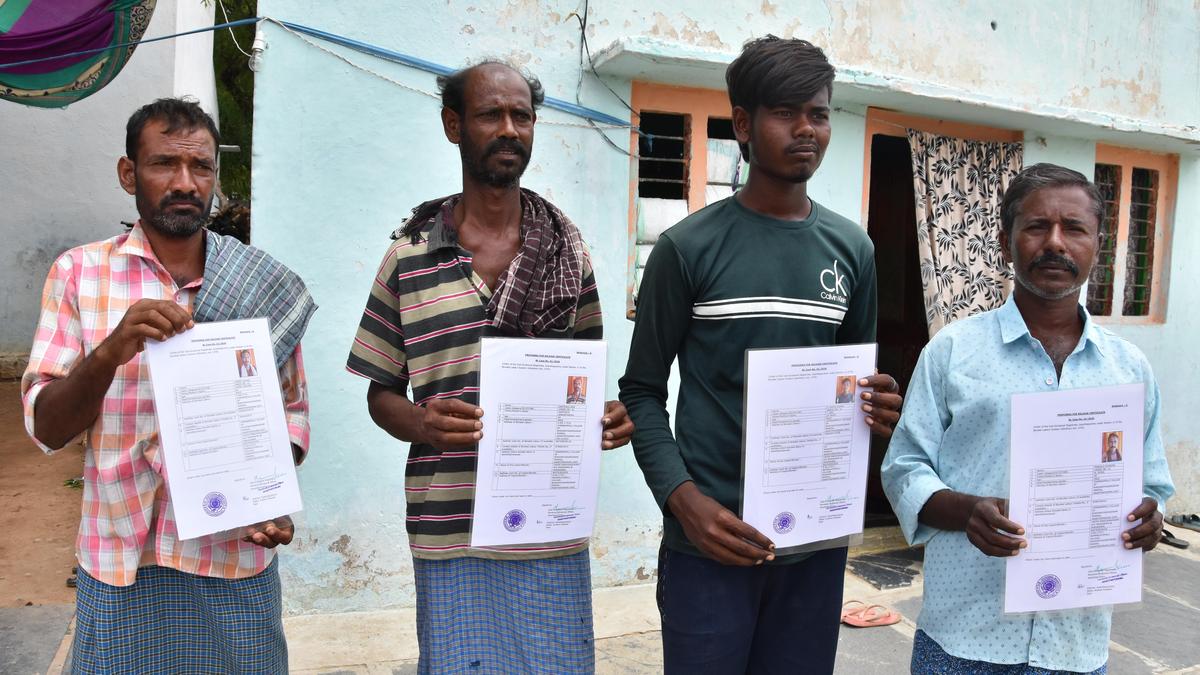
Authorities in Andhra Pradesh recently rescued four members of the Vadde community who were held as bonded laborers over a ₹1-lakh debt. The victims were forced to perform dangerous stone-cutting work at an illegal quarry for over a year.
The Persistence of Debt Bondage in Andhra Pradesh
In a harrowing reflection of deep-seated socio-economic vulnerabilities, four members of the Vadde community were recently liberated from a cycle of forced labor in the Anantapur district of Andhra Pradesh. The victims, including Santhala Anji and his 18-year-old son, had been trapped in a state of indentured servitude at an illegal stone-cutting quarry near Chennampalle village. Their plight, characterized by arduous physical labor and a lack of basic safety measures, highlights the persistent existence of bonded labor systems in rural industrial sectors.
The Mechanics of Debt-Induced Captivity
The trap was set five years ago when Anji borrowed ₹1 lakh from his employer, Vadde Narayana Swamy, ostensibly to cover medical expenses for a lung condition. In the informal credit markets prevalent in rural India, such loans often become predatory instruments. When the borrower is unable to meet repayment terms, the debt is frequently converted into a requirement for physical labor, effectively stripping the individual of their agency and freedom of movement. For over a year, these individuals were forced to toil in extreme weather conditions, tasked with carving 100 stones daily using only rudimentary iron hammers and chisels.
The Vulnerability of the Vadde Community
The Vadde community, a Backward Class (BC) group traditionally associated with stone-cutting and masonry, finds itself uniquely susceptible to this form of exploitation. Because their livelihood is intrinsically tied to the very labor they were forced to provide for free, the power dynamic between employer and worker is heavily skewed. The lack of formal employment contracts in illegal stone-cutting units means that workers have no legal recourse or safety nets, leaving them exposed to the whims of employers who prioritize profit margins over human dignity.
Risks of Illegal Mining and Labor Violations
Beyond the human rights violations, the operation of an illegal stone-cutting unit on rough, hilly terrain presents severe environmental and occupational hazards. Without oversight, these sites operate without essential safety equipment or health protocols. The reliance on manual tools like hammers and chisels for high-volume production increases the risk of chronic injury and long-term respiratory issues, particularly for workers like Anji, who was already struggling with health complications when he entered into this debt arrangement.
Implications and Future Trends
While the rescue operation by local authorities serves as a necessary intervention, it underscores a broader systemic challenge. The recurrence of bonded labor cases in districts like Anantapur suggests that despite constitutional prohibitions against forced labor, the enforcement of the Bonded Labour System (Abolition) Act remains inconsistent. To prevent similar tragedies, authorities must move beyond reactive rescue operations and focus on proactive identification of illegal quarry sites, while providing the Vadde community with access to formal credit and social protection schemes that break the cycle of debt dependency.
Verification Required?