Brazil’s Lula says only he can stop rise of fascism under Bolsonaro’s son
Source Entity
Tom Phillips in Rio de Janeiro
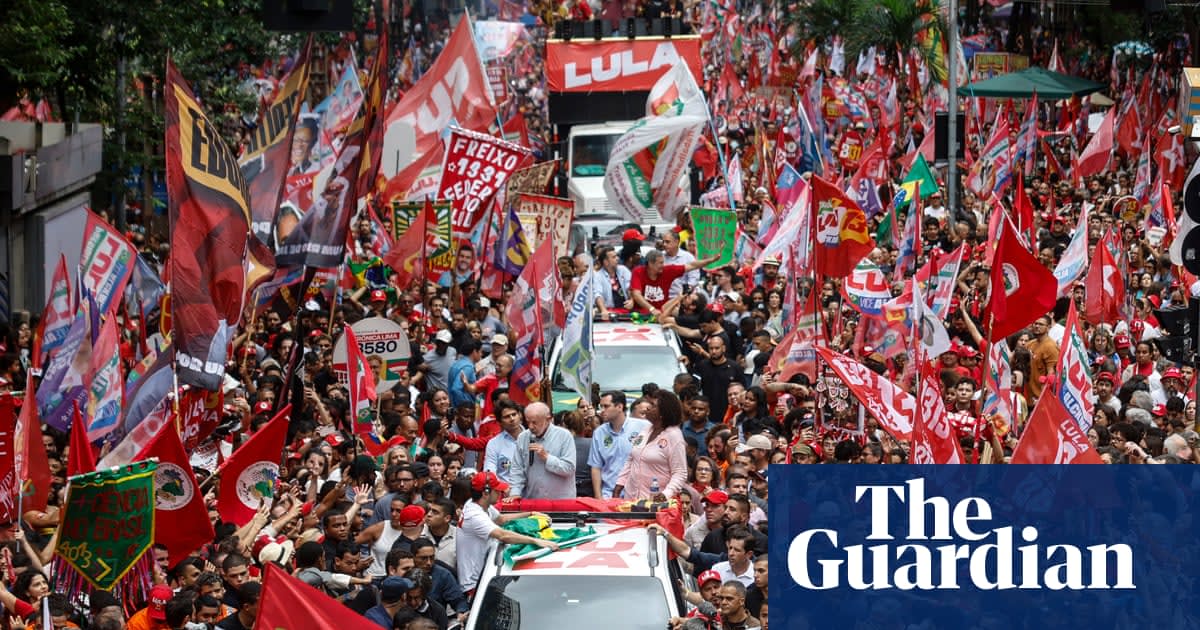
Brazilian President Lula da Silva claims his fourth-term bid is essential to prevent a return of far-right leadership under Flávio Bolsonaro. The election serves as a critical test for the influence of a growing pro-Trump Latin American political bloc.
The High-Stakes Battle for Brazil's Political Future
As Brazil approaches a pivotal national election, the political landscape is defined by a stark confrontation between incumbent President Luiz Inácio Lula da Silva and his right-wing challenger, Flávio Bolsonaro. The 80-year-old president has framed his decision to seek a historic fourth term as an existential necessity, asserting that he is the primary bulwark against what he characterizes as the rise of “fascism.” By framing the choice as “either me, or it’s barbarism,” Lula is attempting to consolidate his base and appeal to centrist voters concerned about the potential return of the Bolsonaro family to the executive branch.
The Global Context: The 'Shield of the Americas'
This domestic struggle is inextricably linked to broader geopolitical shifts in the Western Hemisphere. The election is being viewed as a significant test for the "Shield of the Americas," a coalition of 15 nations currently under right or far-right governance. US President Donald Trump has actively cultivated this bloc, recently boasting that right-wing candidates have achieved a clean sweep in seven consecutive presidential elections across the region. This alignment suggests that the outcome in Brazil will not only determine the country's domestic trajectory but will also serve as a bellwether for the durability of this pro-Trump regional alliance.
Market Volatility and Prediction Discrepancies
Wall Street and global financial markets are closely monitoring the race, recognizing that a victory for either candidate would likely lead to drastically different economic policies. Financial analysts note that Brazilian stocks have surged in tandem with Flávio Bolsonaro’s rising poll numbers in recent months. However, there is a notable disconnect between international prediction markets—which favor Bolsonaro with a 60% probability—and local expert assessments, such as those from Aurora Macro Strategies, which suggest the markets may be overestimating the shift in momentum.
The Symbolism of the Campaign
The visual and symbolic nature of the campaign underscores the intensity of the polarization. Recent demonstrations in Rio de Janeiro saw massive crowds led by President Lula, while competing imagery in São Paulo featured giant effigies of Donald Trump, highlighting the extent to which international figures have become central to the Brazilian narrative. These displays underscore the deep ideological divide that has turned a standard democratic process into a referendum on the country's political identity.
Future Implications for Brazilian Democracy
Looking ahead, the results of this election will likely recalibrate Brazil’s role in international affairs. A victory for Lula would represent a continued rejection of the right-wing wave currently sweeping Latin America, while a win for Flávio Bolsonaro would solidify the influence of the Trump-aligned coalition. As the country heads to the polls, the tension between the "Shield of the Americas" and the traditional left-wing platform of the incumbent remains the defining feature of this democratic contest, with global investors and regional powers alike bracing for the outcome.