US wages plummet to 43% of national income — lowest since the Great Depression. Did Nixon’s gold breakup kill paychecks?
Source Entity
Yahoo Finance
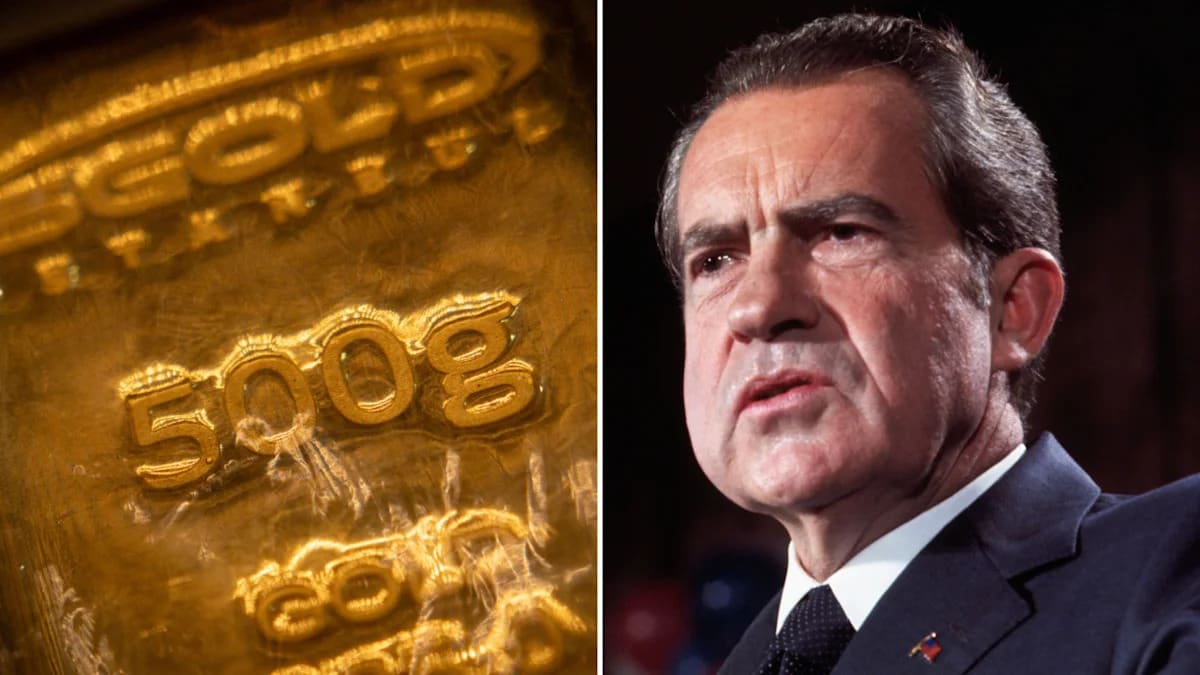
The decline in U.S. labor income share is being linked to the 1971 collapse of the Bretton Woods system. Experts debate whether Nixon's decision to decouple the dollar from gold fundamentally altered long-term wage growth.
The Bretton Woods Collapse and the Erosion of Labor Share
The global economic landscape was fundamentally altered on August 15, 1971, when President Richard Nixon terminated the direct convertibility of the U.S. dollar into gold. This decision effectively dismantled the Bretton Woods system, a post-World War II framework established to ensure international monetary stability. By ending the fixed exchange rate of $35 per ounce of gold, the U.S. transitioned into a era of fiat currency, a shift that many economists now scrutinize when analyzing the long-term stagnation of real wages and the declining share of national income going to labor.
The Historical Mechanics of Bretton Woods
Established at the tail-end of World War II, the Bretton Woods system was designed to regulate the global economy through institutions like the International Monetary Fund. It mandated that foreign governments and central banks guarantee the convertibility of their currencies into U.S. dollars, which were backed by gold. This rigid structure provided a sense of predictability for international trade, but by the late 1960s, the system faced mounting pressure. The volume of dollars circulating overseas had significantly outpaced the U.S. gold reserves, creating a mismatch that rendered the existing peg unsustainable.
Inflation and the Shift in Monetary Policy
As the convertibility guarantee wavered, the United States faced rising inflation, which contributed to the eventual abandonment of the gold standard. The transition away from gold-backed currency marked a departure from the conservative monetary constraints that had defined the post-war boom. Critics argue that this shift allowed for a decoupling of productivity from compensation, as the monetary environment became more fluid and subject to inflationary pressures that frequently outpaced wage growth for the average worker.
Analyzing the Wage-Income Gap
Recent data suggesting that U.S. wages have fallen to 43% of national income—levels not seen since the Great Depression—has reignited the debate regarding the 1971 policy shift. While complex macroeconomic factors such as globalization, technological advancement, and the decline of labor unions are frequently cited as primary drivers of income inequality, the psychological and structural shift caused by the end of the gold standard remains a critical point of contention for historical economists.
Broader Implications and Future Trends
If the current trend of labor receiving a diminishing share of national income persists, it may necessitate a fundamental rethinking of modern fiscal and monetary policy. The decoupling of wage growth from corporate output suggests that the mechanisms of wealth distribution established in the post-Bretton Woods era are increasingly skewed toward capital rather than labor. Future economic policy may need to address whether a return to more stable monetary anchors or a complete restructuring of labor protections is required to reverse this long-term trend.
Conclusion: A Legacy of Economic Transformation
The dissolution of the Bretton Woods system was not merely a change in currency valuation; it was a watershed moment that redefined the global financial order. Whether or not one directly attributes the decline in labor's share of income to Nixon’s 1971 decision, the correlation between the era of fiat currency and the stagnation of real wages provides a compelling narrative for ongoing economic analysis. Understanding this historical context is essential for any meaningful discussion on modern income inequality and the future of the American workforce.