Cabinet approves eight multitracking projects to decongest railway lines
Source Entity
Dheeraj Mishra
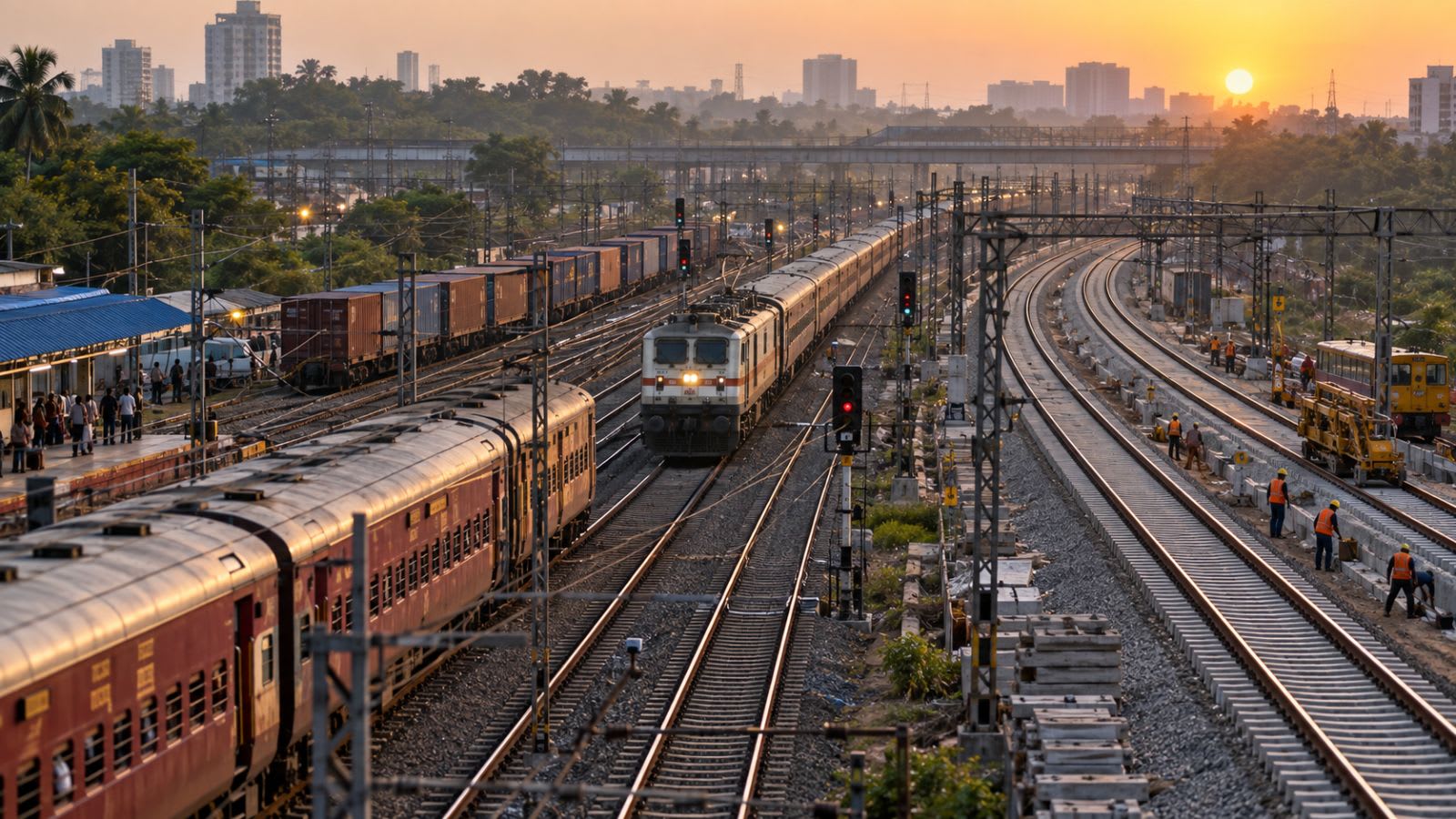
The Cabinet Committee on Economic Affairs has approved eight major railway multi-tracking projects worth Rs 20,804 crore. These initiatives aim to expand the network by nearly 1,200 km, significantly boosting freight capacity and reducing congestion across nine Indian states.
Strategic Expansion of India's Rail Infrastructure
The Cabinet Committee on Economic Affairs (CCEA), chaired by Prime Minister Narendra Modi, has greenlit a massive infrastructure overhaul involving eight railway multi-tracking projects. With a total investment of Rs 20,804 crore, this initiative aims to add approximately 1,196 kilometers to the existing Indian Railways network, serving as a critical step toward modernizing national logistics and transit capabilities.
Regional Connectivity and Economic Impact
A significant portion of this investment focuses on the southern states, where five specific projects span 17 districts across Tamil Nadu, Andhra Pradesh, Karnataka, and Telangana. Key developments include the third and fourth lines for the Arakkonam–Renigunta and Whitefield–Bangarapet stretches, alongside doubling projects for the Hosur–Omalur and Salem–Karur–Dindigul corridors. Additionally, the multi-tracking of the Secunderabad (Ghatkesar)–Kazipet route will further solidify the rail infrastructure backbone in these rapidly growing economic zones.
Boosting Freight and Operational Efficiency
The core objective of these projects is to address the chronic issue of rail congestion. By increasing the number of tracks, the Ministry of Railways intends to facilitate the seamless movement of passengers, goods, and services. The capacity expansion is expected to result in a substantial increase in freight handling, specifically targeting an increase of 47 million tonnes from the southern projects and 65 million tonnes from the projects in eastern and central India, including the Kharagpur–Jharsuguda, Katni–Pendra Road, and Bilaspur–Pendra Road lines.
Environmental and Logistic Implications
Beyond mere capacity expansion, these upgrades represent a strategic move toward sustainability. By improving transport efficiency and reducing the strain on current, over-utilized routes, Indian Railways aims to achieve notable reductions in carbon emissions. This transition aligns with broader national goals of optimizing logistics to lower the cost of doing business while simultaneously reducing the carbon footprint associated with heavy freight transport.
Future Outlook and Conclusion
As these 1,196 kilometers of new track are integrated into the network, the ripple effect will likely be felt across nine states, creating a more cohesive national transport grid. This investment not only addresses immediate bottlenecks but also anticipates the future demand for reliable, high-capacity rail connectivity. By prioritizing these multi-tracking projects, the government is reinforcing the role of railways as the primary engine for India's sustained industrial and economic growth.