Wildfires in Canada and Minnesota trigger poor air quality alerts across Midwest and Northeast US
Source Entity
Latest News: Today's Latest News Headlines from India & World | Hindustan Times | Hindustan Times
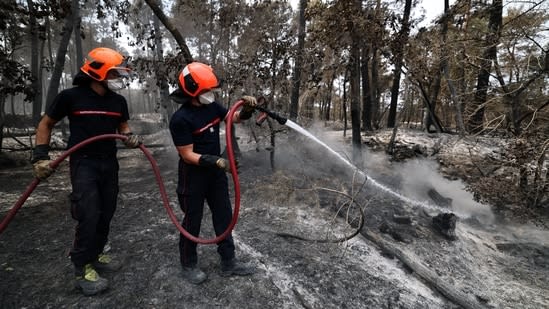
Wildfires in Canada and Minnesota have released massive plumes of smoke that have drifted into the Midwest and Northeast United States, resulting in widespread poor air quality alerts and health warnings.
Atmospheric Crisis: Wildfires Drive Air Quality Decline Across North America
Recent reports indicate a significant environmental health event as wildfires raging in Canada and Minnesota transport dense smoke plumes across the Midwest and Northeast United States. This phenomenon has triggered a series of air quality alerts, warning millions of residents about the presence of hazardous particulate matter. The event highlights the interconnected nature of North American ecosystems and the ease with which localized environmental disasters can escalate into regional public health crises.
The Mechanics of Transboundary Smoke Transport
The degradation of air quality in the U.S. Midwest and Northeast is the result of specific atmospheric conditions that allow smoke to travel thousands of miles. When wildfires occur in Canada's boreal forests or the wooded regions of Minnesota, they release vast quantities of fine particulate matter, known as PM2.5. These tiny particles are light enough to be lofted high into the atmosphere, where they are captured by prevailing wind currents and the jet stream. As these air masses migrate southward and eastward, the smoke descends, creating a hazy veil that obscures visibility and concentrates pollutants at the ground level, far from the actual ignition points.
Public Health Implications and PM2.5 Risks
The issuance of poor air quality alerts is a critical measure to protect vulnerable populations. PM2.5 particles are particularly dangerous because their microscopic size allows them to penetrate deep into the lungs and enter the bloodstream. For individuals with pre-existing respiratory conditions such as asthma or COPD, as well as the elderly and children, this smoke can trigger acute exacerbations and increase hospital admissions. Health officials typically advise residents in affected areas to remain indoors, use HEPA air purifiers, and avoid strenuous outdoor activity until the smoke clears, emphasizing the immediate physiological threat posed by wildfire emissions.
The Scale of Canadian and Regional Wildfires
Canada's vast wilderness, particularly its boreal forests, is highly susceptible to large-scale wildfires during periods of extreme drought and high temperatures. These fires often burn with such intensity that they create their own weather systems, further pushing smoke into the upper atmosphere. Simultaneously, wildfires within Minnesota contribute to a localized concentration of pollutants that merge with the Canadian smoke, compounding the effect on the Midwest. The synergy between these two sources ensures that a broad swath of the U.S. interior and eastern seaboard experiences a simultaneous drop in air quality.
Broader Environmental and Climatic Context
This event is not an isolated incident but part of a growing trend of intensifying wildfire seasons across the Northern Hemisphere. Increasing global temperatures and shifting precipitation patterns have led to drier fuels—dead wood and dried-out vegetation—which make forests more combustible. As these patterns persist, the frequency of "smoke events" in the U.S. is expected to increase, transforming what was once a rare occurrence into a seasonal expectation. This shift necessitates a re-evaluation of urban planning and public health infrastructure to mitigate the long-term effects of recurring poor air quality.
Conclusion and Future Outlook
In summary, the smoke drifting from Canada and Minnesota serves as a stark reminder of the transboundary nature of environmental hazards. While the immediate concern is the health of residents in the Midwest and Northeast, the broader implication is the need for enhanced international cooperation in wildfire management and atmospheric monitoring. As climate volatility increases, the ability to predict smoke trajectories and communicate risks in real-time will be essential in safeguarding public health across the continent.
Verification Required?