Dramatic video shows wildfire surround freight train in Canada
Source Entity
BBC News
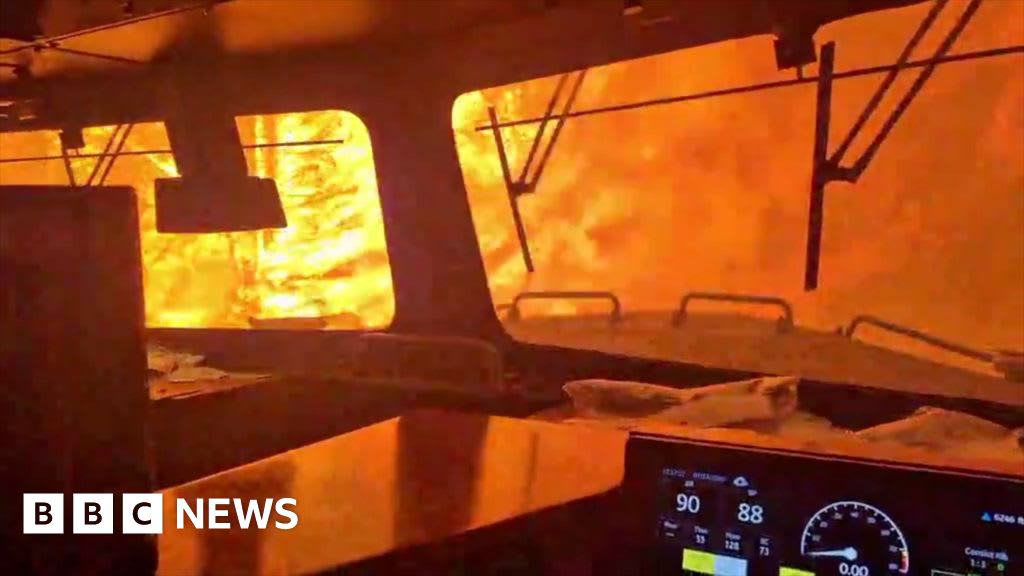
A dramatic video from July 13 captures a freight train in Canada being surrounded by a wildfire, though all workers successfully escaped the scene without injury.
Analysis of the Canadian Rail Wildfire Incident
On July 13, a harrowing event unfolded in the Canadian wilderness when a freight train became trapped within the perimeter of a fast-moving wildfire. The incident, captured in dramatic video footage, highlights the extreme vulnerability of critical transportation infrastructure when faced with the intensifying volatility of nature. While the immediate outcome was positive—with all workers successfully escaping the blaze—the event serves as a stark reminder of the dangers inherent in operating heavy machinery through fire-prone corridors during the peak of the summer season.
The Dynamics of Rail-Fire Interactions
The footage reveals a terrifying scenario where fire quickly encroached upon the rail line, effectively surrounding the train. In such instances, the 'chimney effect' can occur, where the clearing of the rail bed acts as a channel for wind and fire, accelerating the speed at which flames can wrap around a stationary or slow-moving convoy. The fact that the crew was able to evacuate safely suggests either a rapid response to early warning signs or the effective execution of emergency egress protocols. The psychological impact of being surrounded by a wall of fire while confined to a train cannot be overstated, emphasizing the high-stress environment rail workers face during extreme weather events.
Broader Implications for Supply Chain Logistics
Beyond the immediate threat to human life, this event underscores a significant risk to Canada's economic arteries. Freight trains are the backbone of North American trade, transporting everything from grain and potash to hazardous materials and consumer goods. When a wildfire surrounds a rail line, it does not just threaten a single train; it often forces the total shutdown of a corridor. Such disruptions can lead to cascading delays across the entire supply chain, increasing costs for shippers and consumers alike. This incident illustrates how a localized environmental disaster can have macro-economic repercussions by severing vital logistics links.
Environmental Context and Climate Trends
This occurrence is not an isolated anomaly but part of a broader trend of increasingly severe wildfire seasons across Canada. In recent years, the combination of prolonged droughts and record-breaking summer temperatures has created a 'tinderbox' effect across the boreal forests. The timing of this event on July 13 coincides with the historical peak of fire activity. As climate patterns shift, the frequency of 'extreme fire behavior'—where fires move faster and are more unpredictable—increases, making traditional fire-fighting and evacuation strategies more challenging for transport companies and emergency responders.
Safety Protocols and Infrastructure Resilience
The successful escape of the workers brings into focus the critical importance of safety training and real-time communication. Rail operators must rely on a combination of satellite monitoring, ground-based sensors, and rapid communication from forestry services to divert trains before they become trapped. However, as seen in this case, the speed of some wildfires can outpace communication. This event highlights a pressing need for enhanced 'fire-breaks' and vegetation management along rail corridors to create a buffer zone that prevents fire from immediately surrounding the tracks, thereby providing crews more time to react.
Future Outlook and Mitigation
Looking forward, the rail industry in Canada will likely need to invest more heavily in predictive AI and real-time thermal imaging to monitor corridor safety. The integration of drone surveillance could provide a 'bird's-eye view' of approaching fire fronts, allowing dispatchers to halt traffic well before a train enters a danger zone. As the environment becomes more hostile, the transition from reactive emergency management to proactive, data-driven avoidance will be essential to prevent future tragedies.
Summary
The July 13 wildfire incident in Canada was a narrow escape that showcased both the terrifying power of nature and the resilience of emergency protocols. While no lives were lost, the event serves as a critical case study in the intersection of environmental crisis and industrial vulnerability, signaling a need for more robust infrastructure and safety measures to protect the workers and the supply chains that sustain the region.