Orange haze from Canada wildfires seen in Ontario and northern US
Source Entity
BBC News
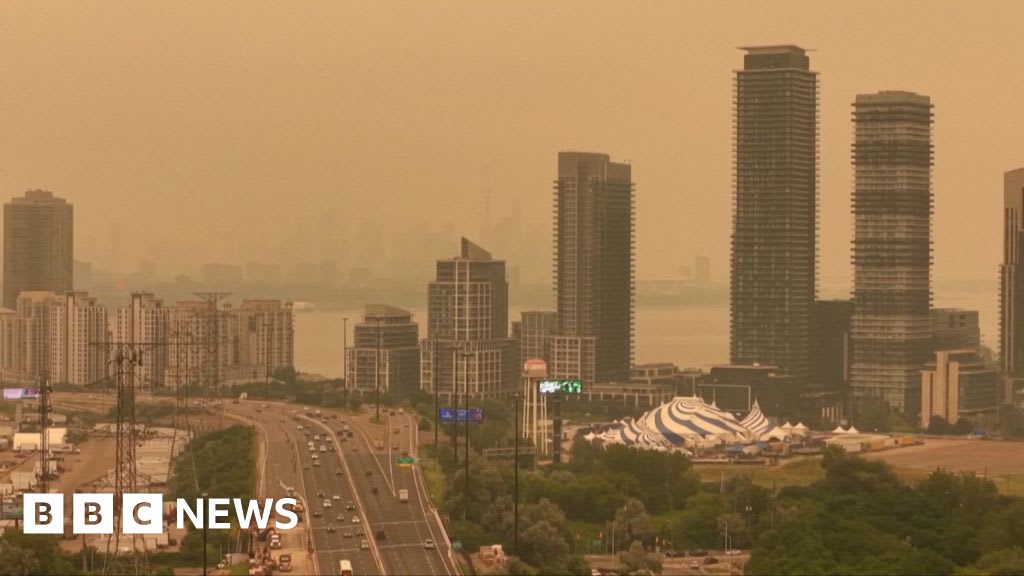
Canada is currently battling 838 active wildfires, which have produced a massive amount of smoke causing a distinct orange haze across Ontario and the northern United States.
Atmospheric Crisis: Analyzing the Impact of Canada's Massive Wildfire Surge
The recent appearance of a surreal orange haze across Ontario and the northern United States is not merely a visual anomaly but a stark indicator of a severe environmental crisis. With the Canadian Interagency Forest Fire Centre reporting a staggering 838 active wildfires burning across the country, the sheer volume of particulate matter being pumped into the atmosphere has reached critical levels. This phenomenon occurs when smoke particles, specifically aerosols and fine particulate matter (PM2.5), scatter shorter wavelengths of light (blue and green) and allow longer wavelengths (red and orange) to pass through, resulting in the eerie, apocalyptic hue observed by millions of residents.
The Scale of the Conflagration
The figure of 838 active fires highlights a systemic challenge in forest management and emergency response. When nearly a thousand fires burn simultaneously, firefighting resources—including water bombers, ground crews, and specialized equipment—become stretched thin. This scale of activity suggests that the fires are not isolated incidents but are likely driven by widespread drought conditions and high temperatures. The coordination required by the Canadian Interagency Forest Fire Centre to track and manage this many active fronts is immense, reflecting a state of emergency that transcends provincial borders and enters the realm of an international atmospheric event.
Transboundary Environmental Impacts
One of the most critical aspects of this event is its transboundary nature. Smoke does not respect national borders, and the transport of pollutants from Canadian forests into the northern United States demonstrates the interconnectedness of North American air sheds. For residents in the northern US, the orange haze is a physical manifestation of a foreign disaster affecting their local air quality. This leads to significant public health concerns, as PM2.5 particles can penetrate deep into the lungs and enter the bloodstream, posing risks to individuals with asthma, COPD, and other cardiovascular conditions.
Ecological and Economic Implications
Beyond the immediate health risks, the burning of these vast tracts of land has profound ecological implications. The intensity of 838 active fires suggests a high rate of carbon release, which contributes to a feedback loop where forest fires release CO2, further warming the atmosphere and drying out more timber, thereby increasing the likelihood of future fires. Economically, the cost of suppression is astronomical, and the long-term loss of timber resources and biodiversity in the affected Ontario and national regions will take decades to recover. The disruption to transport, specifically aviation and road visibility due to the haze, further compounds the economic strain.
Predicting Future Trends
Looking forward, the persistence of such large-scale wildfire events suggests a shift in the 'new normal' for the Canadian wilderness. As climate patterns shift toward more erratic precipitation and prolonged heatwaves, the frequency of these 'orange haze' events is likely to increase. We can expect a greater emphasis on 'FireSmart' community planning and a potential overhaul of how the US and Canada collaborate on cross-border firefighting efforts. The current crisis serves as a catalyst for more aggressive forest management strategies, including prescribed burns to reduce fuel loads before the peak of the summer season.
Summary
In conclusion, the orange haze seen in Ontario and the northern US is the direct result of a massive surge in wildfire activity, with 838 active fires currently burning. This event underscores the vulnerability of North American ecosystems and the immediate health risks posed by large-scale atmospheric pollution. The scale of the disaster requires not only immediate suppression efforts but a long-term strategic shift in how forest health and climate resilience are managed across the continent.