‘Maybe they’ll shoot you’: Carney recalls Trump’s joke on Canada-US ties
Source Entity
ARYAN SINGH
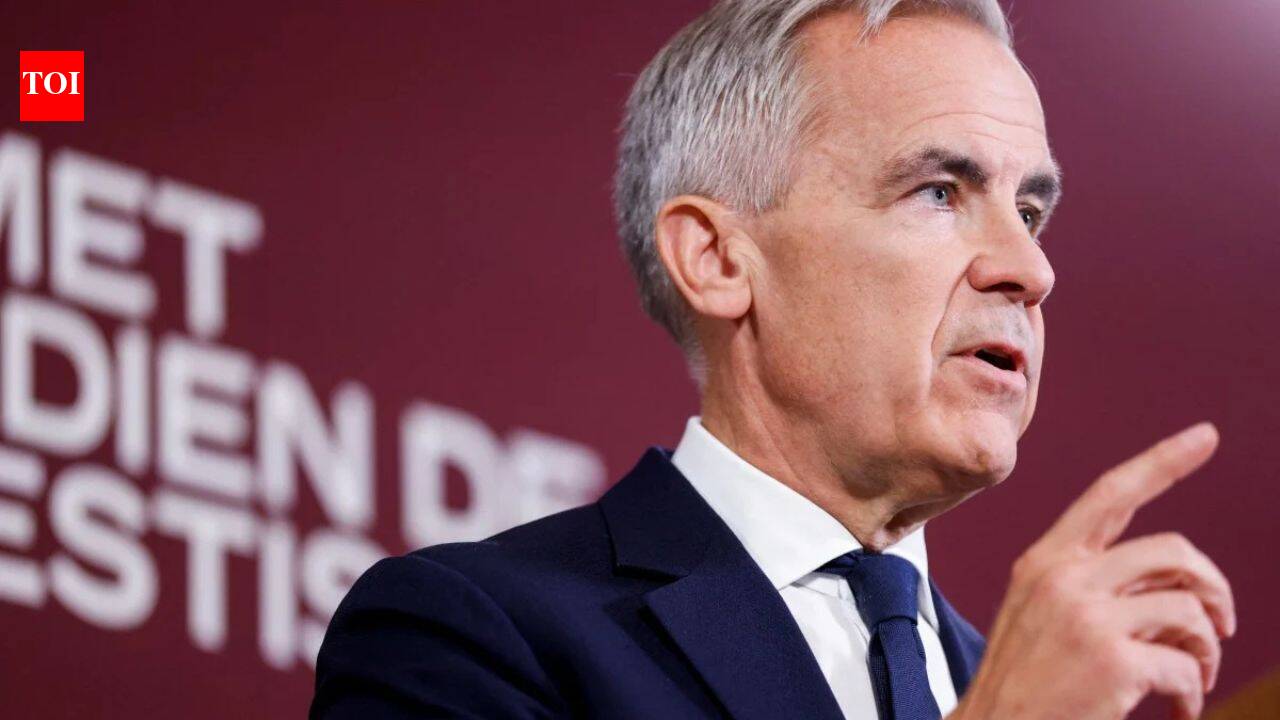
Canadian Prime Minister Mark Carney is spearheading a strategic pivot to reduce economic reliance on the United States amid ongoing trade tensions. By targeting C$1 trillion in private investment and strengthening ties with Europe, Canada aims to position itself as a resilient, independent player in the global economy.
A New Economic Era: Canada’s Strategic Pivot
Canadian Prime Minister Mark Carney has unveiled a bold vision for Canada’s future, signaling a deliberate shift toward economic independence and resilience in response to fractured trade relations with the United States. Speaking at the inaugural Canada Investment Summit in Toronto, Carney framed this transition not as an abandonment of the U.S. partnership, but as a necessary maturation of Canada’s global economic strategy. By seeking to mitigate the risks associated with weaponized economic integration and tariffs, Ottawa is positioning the nation as a secure, stable alternative in an increasingly volatile global landscape.
Targeting Growth and Resilience
At the core of this economic transformation is an ambitious goal to catalyze C$1 trillion in private investment over the next five years. This influx of capital is slated for critical sectors including energy, transportation, data, and defense. By introducing new tax incentives, the government aims to lower barriers to entry for foreign and domestic investors alike. This strategy is designed to create a robust domestic industrial base that is less susceptible to the cyclical pressures of trade disputes with its southern neighbor.
The European Pivot
Recognizing that the global economic order is shifting, Prime Minister Carney has explicitly prioritized a "unique security and economic alliance" with the European Union. This pivot reflects a broader understanding that Canada must diversify its trade corridors to survive in a world where economic openness and national sovereignty are frequently in tension. By strengthening ties with Europe, Canada intends to secure new markets and supply chains, effectively insulating itself from the vulnerabilities of a singular dependence on the North American market.
Addressing Sovereignty and Security
Carney’s rhetoric underscores a fundamental shift in how Canada views its national security. Beyond economic diversification, the government has announced a substantial increase in defense financing through 2030. This move is a direct response to the changing geopolitical climate, where tariffs and economic leverage are increasingly used as tools of statecraft. For Canada, sovereignty is now inextricably linked to its ability to operate independently on the global stage while maintaining its status as a "safe harbour" for global capital.
A Future of Pragmatic Partnership
Despite the clear push for independence, the Canadian government maintains that the door remains open to Washington. Carney’s public statements emphasize that the U.S. will always be a neighbor and a key partner, provided that the relationship is built on mutual respect for sovereignty. The recent history of strained relations, marked by what Carney described as unconventional diplomatic interactions, has clearly informed this cautious, yet pragmatic, approach to future bilateral agreements.
Conclusion: Navigating the Global Order
As Canada moves forward, its success will depend on its ability to effectively implement these tax incentives and attract the projected C$1 trillion in investment. By balancing its historical ties with the U.S. against the need for a diversified international strategy, Canada is attempting to carve out a more resilient role for itself. The coming years will be a test of whether this "new global economic order" strategy can truly insulate the Canadian economy from the shocks of regional trade disputes while fostering long-term prosperity.
Multiple Citing Sources