Congress questions ₹43 lakh-crore GDP revision, asks Centre to explain methodology
Source Entity
India Latest News: Top National Headlines Today & Breaking News | The Hindu
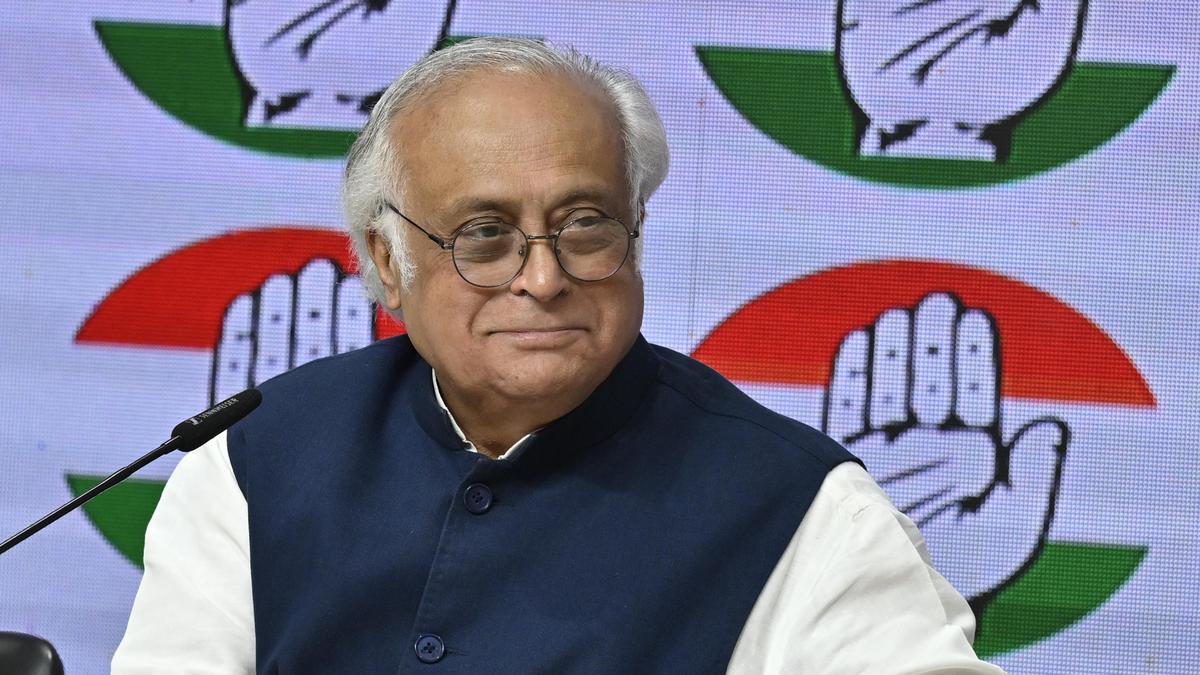
The Indian government has issued a six-point FAQ to defend its latest GDP growth figures against opposition criticism. Officials emphasize that methodological updates, such as the new base-year series, account for the data revisions and discrepancies.
Understanding the GDP Data Controversy
The Indian government, through the Ministry of Statistics and Programme Implementation (MoSPI), has recently found itself at the center of a heated debate regarding the accuracy and methodology of the nation's latest Gross Domestic Product (GDP) growth figures. Following the release of data showing a 7.8% growth rate for the April-June quarter—a figure that notably outperformed both market expectations and the Reserve Bank of India’s 7% forecast—opposition parties and various experts have raised significant concerns. This prompted the Centre to issue a formal six-point rebuttal and a series of Frequently Asked Questions (FAQs) to address mounting skepticism.
Methodological Shifts and Base-Year Revisions
A primary point of contention involves the transition to a new 2022-23 base-year series. Critics have highlighted that the Q1 2025-26 GDP estimates underwent substantial revisions, with figures initially estimated at Rs 86.05 lakh crore under the old 2011-12 base-year series being adjusted downwards to Rs 80 lakh crore in the new series. The government maintains that these revisions are a natural consequence of updating the analytical framework, which now incorporates the new output Producer Price Index (PPI), an updated Index of Industrial Production (IIP), and the Banking Services Price Index.
Addressing Sectoral Discrepancies
The government’s FAQs specifically target technical anomalies, such as the manufacturing sector recording a negative inflation rate of -1.5% in the GVA implicit deflator during Q1 2026-27, even as manufacturing output and input prices increased. Conversely, the agricultural sector reflected a positive inflation rate of 3.9%. The Centre’s defense rests on the technical integrity of these indices, suggesting that the divergence is a result of the specific mechanics of the new deflators rather than a failure of the broader economic reporting system.
Political Fallout and Rhetoric
The debate has transcended technical economics, moving into the political arena. Union Minister Piyush Goyal has forcefully defended the integrity of the data, stating that government ministers do not manufacture statistics. This rhetoric serves as a direct counter-attack against opposition figures and former finance officials who have suggested that the downward revision of last year’s current GDP—from Rs 86 lakh crore to Rs 80 lakh crore—was a tactical move intended to artificially inflate the appearance of current growth rates.
Broader Implications for Economic Policy
This dispute underscores the critical importance of transparent statistical reporting in maintaining investor confidence and shaping fiscal policy. When growth figures deviate significantly from external forecasts, as was the case with the 7.8% report, the burden of proof rests on the state to demonstrate that the underlying data collection methods are robust. The government’s move to issue FAQs is an attempt to institutionalize transparency and quell fears that growth numbers are being manipulated for political optics.
Conclusion
Moving forward, the reliance on newer indices like the PPI and updated IIP will likely become the new standard for Indian economic monitoring. While the current friction between the Centre and its critics highlights a lack of consensus on the interpretation of these figures, the government's commitment to its six-point rebuttal suggests a firm stance on the validity of its methodologies. For stakeholders, the focus remains on whether these revised figures will withstand sustained scrutiny as subsequent quarters of data are released under the new 2022-23 base-year series.
Multiple Citing Sources
Verification Required?