Chandigarh drowns in rain, Madhya Marg bears the brunt
Source Entity
Jagpreet Singh Sandhu
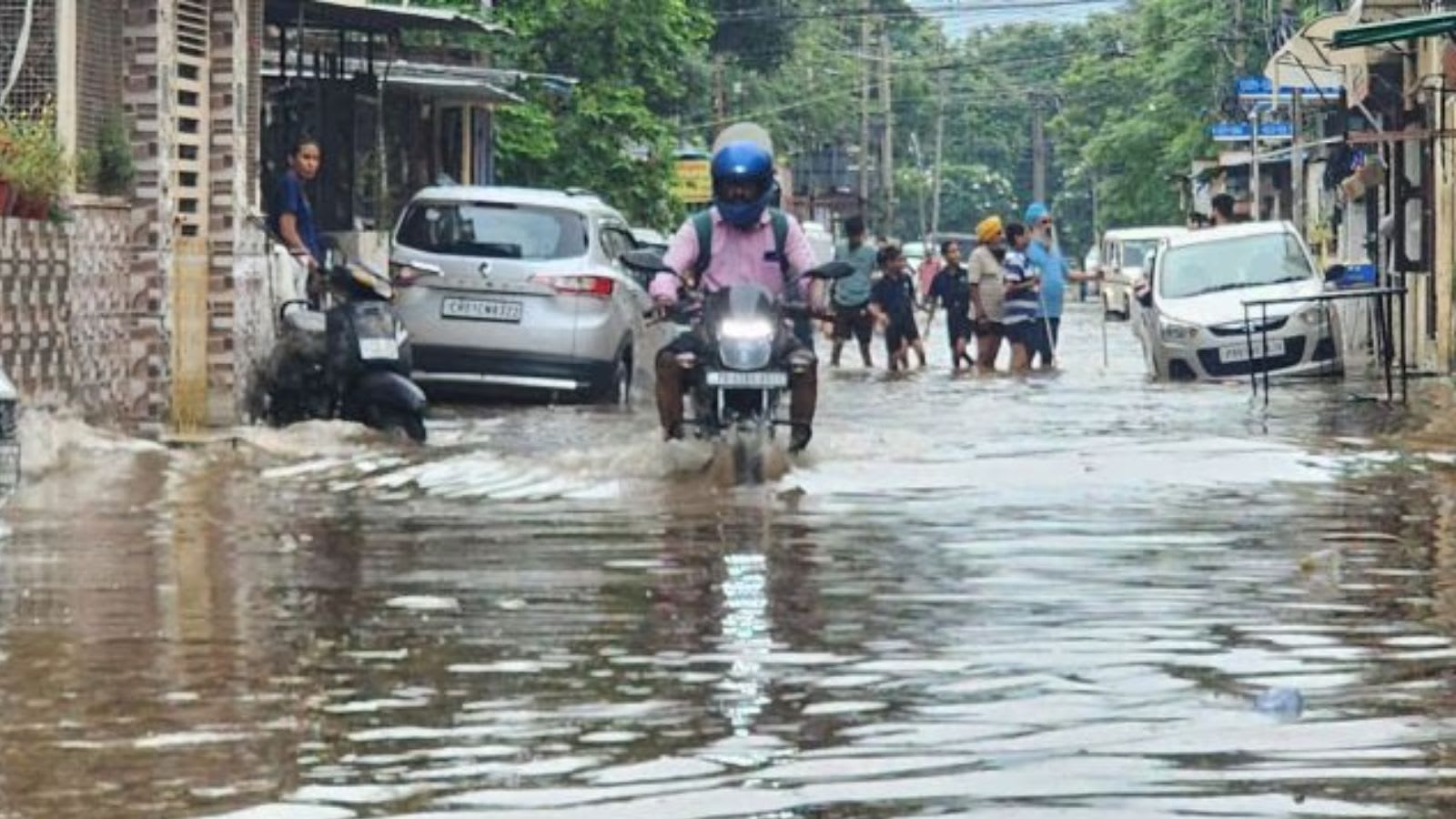
Heavy rainfall in the Chandigarh Tricity area caused significant road damage and traffic disruption on Tuesday. Authorities were forced to divert traffic after a portion of the critical Madhya Marg artery was washed out.
Infrastructure Crisis in Chandigarh: Analyzing the Impact of Heavy Rainfall
The Meteorological Trigger
On Tuesday, the Chandigarh Tricity area, encompassing Chandigarh, Mohali, and Panchkula, experienced a severe weather event that overwhelmed local infrastructure. The India Meteorological Department (IMD) reported that the regional observatory recorded 72.7 mm of rainfall by 6:30 pm. This concentrated downpour acted as a catalyst for widespread urban flooding, exposing the vulnerability of the region’s drainage and road systems to extreme climatic events.
The Collapse of Madhya Marg
One of the most concerning outcomes of this deluge was the physical degradation of Madhya Marg, one of the city's primary arterial roads. A portion of the road situated between the Transport Light Point and the Grain Market Chowk suffered structural failure. The washout of this critical segment not only hindered daily commutes but also highlighted the potential for severe civil engineering challenges when infrastructure is exposed to sustained high-volume precipitation.
Traffic Management and Public Safety Measures
In response to the road damage, the Chandigarh Traffic Police initiated immediate contingency plans to maintain public safety. Traffic originating from Panchkula was redirected from the Transport Light Point, utilizing a route behind the Police Lines toward the ITI Light Point. These measures, while necessary to prevent accidents, resulted in significant congestion across the network, illustrating the cascading effect that a single point of failure can have on regional mobility.
Broader Implications for Urban Planning
This event serves as a stark reminder of the necessity for climate-resilient urban planning in rapidly developing regions like the Tricity. As extreme weather patterns become more frequent, the reliance on legacy infrastructure designs faces a critical test. The incident on Madhya Marg underscores the urgent need for city planners to reassess the load-bearing capacities of arterial roads and the efficiency of storm-water drainage systems to mitigate future economic and social disruptions.
Future Outlook and Resilience
Looking ahead, the administration must prioritize the hardening of key transport corridors against environmental stressors. Future infrastructure projects in the region will likely require enhanced drainage specifications and more robust materials to withstand the intensity of modern monsoon seasons. By integrating meteorological data into long-term infrastructure maintenance, authorities can hope to reduce the frequency of such chaotic traffic disruptions and ensure the structural integrity of Chandigarh’s vital thoroughfares.