‘Oppn’s duty is to oppose, expose, depose’: Cong defends ‘regime change’ remark
Source Entity
AADRITA HALDER
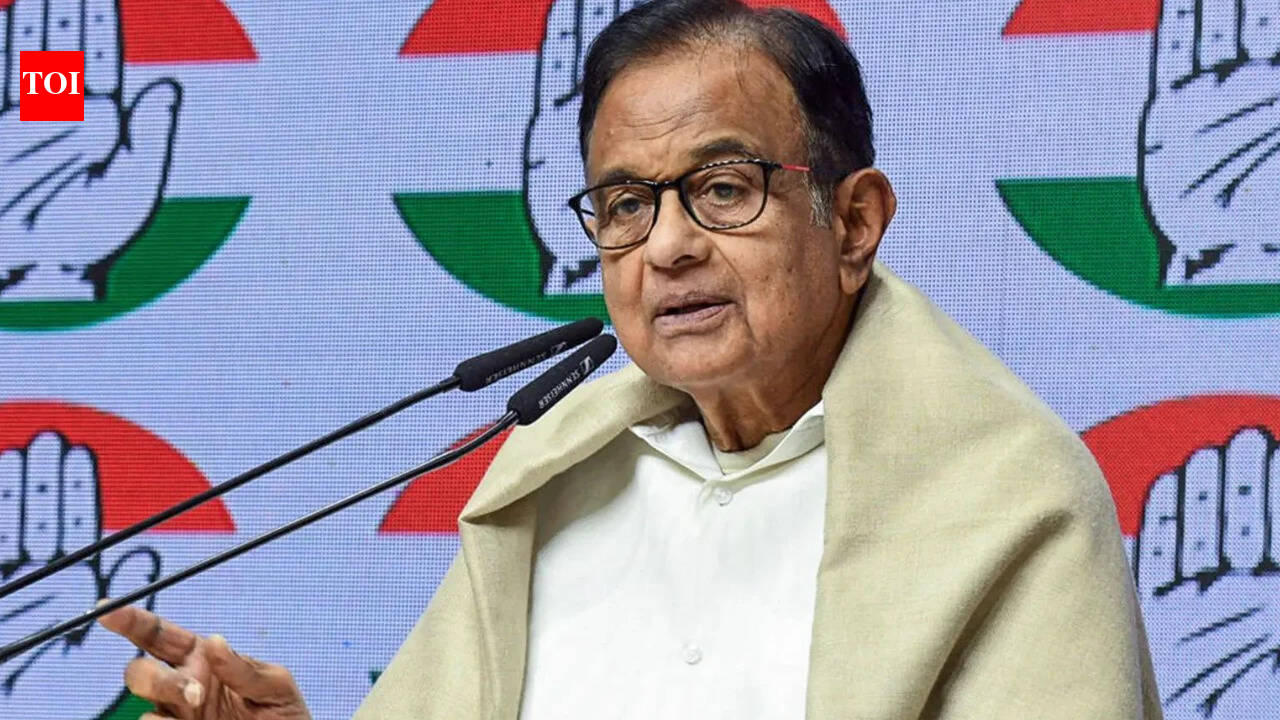
Senior Congress leader P. Chidambaram has defended the phrase 'regime change,' asserting it is a fundamental aspect of democratic processes. The statement follows a political firestorm involving remarks by activist Neha Bora and lawyer Prashant Bhushan regarding the current administration.
The Discourse on Democratic Accountability
The recent political discourse in India has been reignited by a heated exchange regarding the concept of 'regime change.' Senior Congress leader and former Union minister P. Chidambaram recently took to social media to defend the usage of this term, framing it as a standard and necessary component of a healthy, functioning democracy. This defense comes in the wake of significant public backlash from the Bharatiya Janata Party (BJP) following remarks made by student activist Neha Bora and senior advocate Prashant Bhushan during protests concerning Election Commissioner Gyanesh Kumar.
Defining the Opposition's Mandate
At the heart of Chidambaram's argument is the tripartite responsibility he assigns to the political opposition: to 'oppose, expose, and depose.' By categorizing these as the core duties of an opposition party, Chidambaram is attempting to normalize the pursuit of electoral victory as the ultimate objective of democratic participation. He argues that the BJP’s reaction to this terminology is performative, characterizing their outrage as 'feigned' and questioning the underlying motives behind their sensitivity to the phrase.
Historical Context of Political Rhetoric
Historically, the term 'regime change' has often carried heavy connotations, frequently associated with international interventions or systemic overhauls. However, in the context of Indian parliamentary politics, the Congress party is framing it strictly within the bounds of constitutional electoral processes. The friction arises because the ruling party interprets the language of 'deposing' a government not merely as a call for a change in administration through the ballot box, but as an existential threat to the current mandate.
The Role of Civil Society and Activism
The involvement of figures like Prashant Bhushan and Neha Bora in this controversy highlights the intersection of judicial activism, student politics, and partisan strategy. When protests target specific appointments within the Election Commission—an institution vital to the integrity of Indian democracy—the rhetoric naturally intensifies. Chidambaram’s intervention serves to provide political cover for these activists, aligning their critique with the institutional stance of the Congress party.
Broader Implications for Indian Democracy
This debate underscores a widening chasm in the political culture of India. As the lines between institutional scrutiny and political agitation blur, the language used by leaders becomes a pivotal battleground. The insistence that 'regime change' is a normal democratic outcome suggests that the opposition is signaling a more aggressive, zero-sum strategy for future electoral cycles, moving away from consensus-based political discourse toward a more confrontational model of parliamentary accountability.
Future Trends and Political Outlook
Looking ahead, this exchange suggests that the upcoming political climate will be defined by highly polarized rhetoric. As the opposition seeks to challenge the ruling government's longevity, terms like 'regime change' will likely become common parlance in campaign messaging. The real-world impact will depend on whether the public perceives this as a legitimate exercise of democratic duty or as an destabilizing attempt to undermine elected authority, setting the stage for highly charged electoral contests in the near future.