China's EV makers shift gears to focus on humanoids as car market slows
Source Entity
US Top News and Analysis
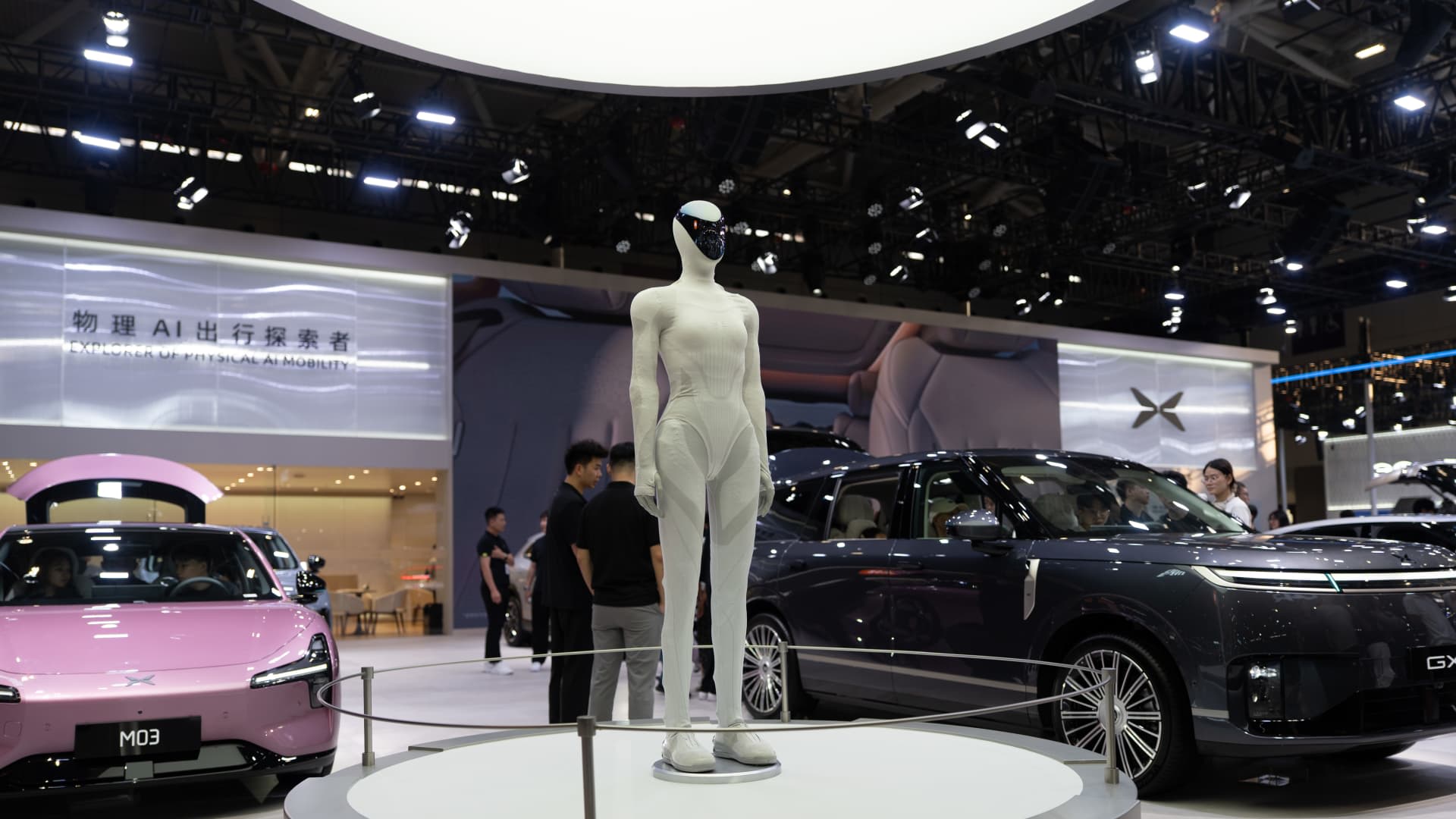
Chinese EV manufacturers are pivoting toward humanoid robotics as domestic electric vehicle sales face a significant downturn. Companies like XPeng are leveraging robotics to diversify their portfolios and improve market valuation amidst intense sector competition.
The Strategic Pivot: China’s EV Giants Embrace Robotics
As the Chinese electric vehicle (EV) market confronts its most challenging period since 2021, major automotive players are executing a strategic pivot toward humanoid robotics. Faced with tumbling share prices and oversaturated market conditions, companies that once defined the rapid expansion of the EV sector are now seeking new avenues for growth and innovation. This transition is exemplified by the public debut of robots like XPeng’s 'IRON' at the 2026 Guangdong-Hong Kong-Macao Greater Bay Area International Auto Show, signaling a shift in R&D priorities.
Market Stagnation and the Quest for New Value
The current slowdown in EV sales is the result of years of aggressive expansion and hyper-competition. As the domestic market reaches a level of maturity where growth rates are no longer exponential, automakers are struggling to maintain the high valuations expected by investors. By moving into humanoid robotics, these firms are attempting to capitalize on their existing expertise in battery technology, artificial intelligence, and automated manufacturing, hoping to transition from pure-play carmakers into broader tech-industrial conglomerates.
Reshaping Capital Valuation Narratives
Industry analysts, including Kevin Li of Counterpoint Research, suggest that this move is as much about financial optics as it is about technological advancement. By introducing humanoid robotics, companies are actively attempting to reshape their 'capital valuation narratives.' In an era where AI and robotics are the primary drivers of investor enthusiasm, associating an automotive brand with advanced robotics provides a much-needed narrative shift that can mitigate the negative impacts of stagnant car sales.
Technological Synergies and Challenges
While the commercial viability of humanoid robots remains a subject of intense scrutiny, the technological overlap between autonomous driving systems and humanoid robotics is significant. Both fields rely heavily on advanced computer vision, sensor fusion, and real-time decision-making algorithms. Automakers are banking on the fact that the proprietary software and hardware stacks developed for their EV lines can be repurposed to accelerate the development cycle of humanoid assistants.
Future Trends and Industry Outlook
Looking ahead, the success of this pivot will depend on whether these companies can move beyond prototypes to achieve scalable production. While the immediate goal is to stabilize investor sentiment, the long-term objective is to capture a share of the emerging industrial and domestic robotics market. If successful, this shift could define the next decade of Chinese industrial policy, marking a move away from simple vehicle assembly toward high-tech, integrated robotics manufacturing.
Conclusion
The pivot by Chinese EV manufacturers into the humanoid robotics space represents a calculated response to a cooling automotive market. By diversifying their technological footprint, these firms are attempting to future-proof their business models. Whether these robots become a sustainable revenue stream or remain a speculative asset for valuation purposes, the trend underscores a broader transition in China’s tech sector toward AI-driven hardware.