China's exports ride AI boom as domestic economy struggles
Source Entity
Yahoo Finance
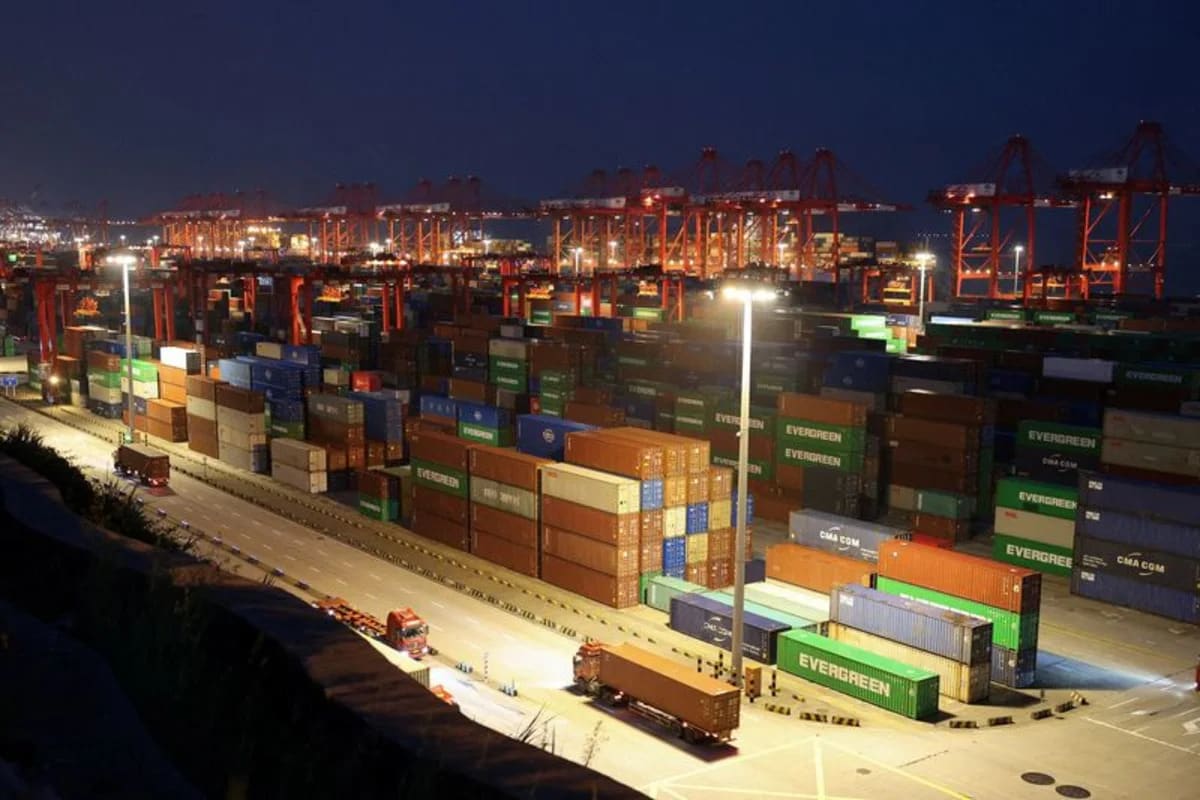
By Joe Cash and Yukun Zhang BEIJING, July 14 (Reuters) - China's exports surged in June, buoyed by orders for chips to fuel the global AI boom and automobiles, deepening producers' reliance on overse...
The Great Divergence: China's Export Surge Amidst Domestic Stagnation
China's economic landscape is currently defined by a stark paradox: a booming export sector contrasting with a fragile internal market. Recent data from June indicates a significant surge in exports, primarily propelled by the global appetite for AI-enabling hardware and the continued expansion of the automotive sector. This trend suggests that while the 'world's factory' is still humming, it is increasingly doing so to serve external demand rather than internal consumption, creating a precarious reliance on overseas buyers to sustain GDP growth.
The AI Hardware Catalyst
The global AI boom has acted as a powerful tailwind for Chinese exports. As tech giants worldwide scramble to build large language models and integrate generative AI into their ecosystems, the demand for specialized chips and the components required to build AI infrastructure has skyrocketed. China, with its deep integration into the global electronics supply chain, has capitalized on this hardware race. By providing the essential circuitry and peripheral components needed for AI servers, China is effectively exporting the physical infrastructure of the AI revolution, even as it faces stringent US-led restrictions on high-end semiconductor imports.
Automotive Dominance and Global Expansion
Parallel to the AI surge is the aggressive expansion of China's automotive exports. Having achieved massive scale and technological maturity in Electric Vehicles (EVs) and hybrid technology, Chinese manufacturers are now pivoting toward global markets to offset a saturated domestic landscape. This shift is not merely about volume but about a strategic transition toward higher-value exports. The ability to produce affordable, high-tech vehicles at scale has allowed China to penetrate markets in Europe, Southeast Asia, and Latin America, further cementing its role as a global automotive powerhouse.
The Domestic Economic Struggle
Despite these export victories, the underlying domestic economy remains in a state of fragility. The Chinese consumer, burdened by a prolonged real estate crisis and fluctuating employment stability, has remained cautious. The property sector, historically a primary engine of Chinese wealth and growth, continues to struggle with debt and unfinished projects, leading to a 'wealth effect' in reverse where citizens feel poorer and spend less. This domestic slump is precisely why the export surge is so critical; the external market is effectively absorbing the production capacity that the Chinese people are currently unable or unwilling to purchase.
Strategic Risks and Geopolitical Tensions
This deepening reliance on overseas markets introduces significant geopolitical risk. As China exports its industrial overcapacity—particularly in EVs and AI hardware—it risks triggering protectionist responses from trading partners. We are already seeing the emergence of tariffs and trade barriers from the EU and the US, aimed at 'de-risking' their economies from Chinese dominance. The tension lies in the fact that China needs these markets to sustain its factories and employment, but the very success of these exports is what fuels the political appetite for trade restrictions abroad.
Future Outlook and Conclusion
Looking ahead, China's economic health will depend on whether it can successfully transition to its 'Dual Circulation' strategy—balancing external trade with a robust domestic consumer market. While the AI boom provides a timely lifeline, it is a volatile driver subject to rapid technological shifts and political interference. To achieve long-term stability, China must address the structural issues within its property market and bolster consumer confidence. In summary, while the June export data is a positive indicator of industrial resilience, it underscores a systemic vulnerability: a growing dependence on a global market that is becoming increasingly wary of China's economic ascent.