Retail-trader 'bottleneck bros' eyeing AI supply chain can't wait for SK Hynix options
Source Entity
US Top News and Analysis
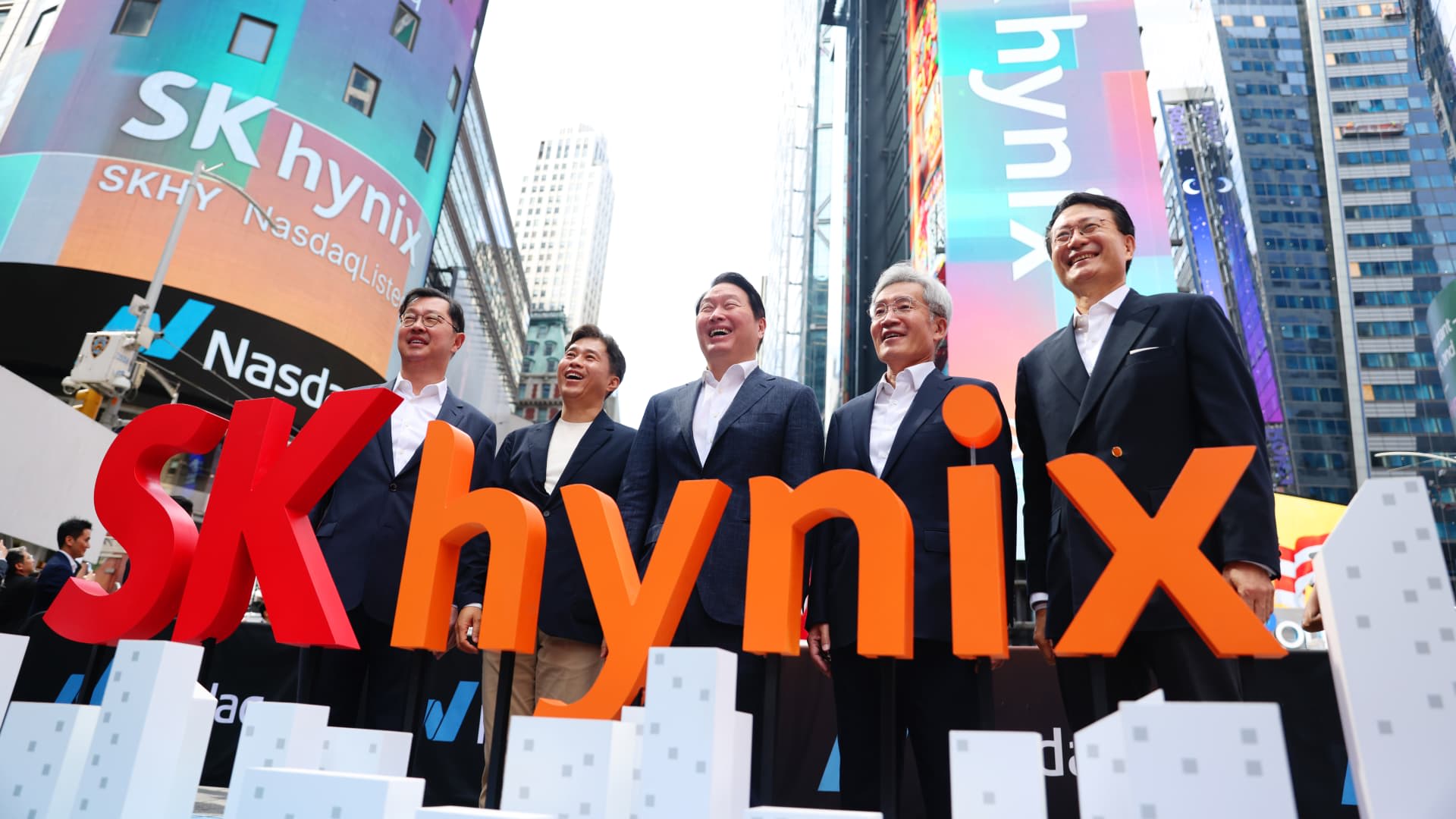
For many of those retail tech traders, SK Hynix's memory business reminds them of Micron – the paragon of the supply-chain bottleneck thesis.
The Rise of the 'Bottleneck Bros': Decoding the AI Supply Chain Thesis
The current artificial intelligence gold rush has birthed a specific breed of retail investor known as the "bottleneck bros." These traders are not necessarily interested in the companies building the final AI applications—the chatbots or the generative art tools—but are instead hyper-focused on the physical constraints of the AI infrastructure. The core of their strategy is the "supply-chain bottleneck thesis," which posits that the greatest financial gains are found in the companies that control the most restricted, essential components of the production line. By identifying where the industry is most likely to hit a wall, these traders aim to position themselves in the companies that hold the keys to unlocking that capacity.
SK Hynix and the HBM Imperative
At the center of this current focus is SK Hynix, a South Korean semiconductor giant. The specific bottleneck in question is High Bandwidth Memory (HBM). AI accelerators, such as those produced by NVIDIA, require massive amounts of data to be moved rapidly between the processor and the memory to function efficiently. Standard DRAM is no longer sufficient for the scale of Large Language Models (LLMs). SK Hynix has emerged as a dominant force in HBM3 and HBM3e technology, making them an indispensable partner for AI chipmakers. For the "bottleneck bros," SK Hynix represents a strategic chokepoint; without their specialized memory, the world's most powerful AI chips cannot reach their full potential.
The Micron Parallel: A Proven Blueprint
The fascination with SK Hynix is not an isolated event but a replication of a strategy previously applied to Micron Technology. In the retail trading community, Micron has become the "paragon" of the bottleneck thesis. As the primary US-based producer of high-end memory, Micron's stock often reacts violently to shifts in supply-demand dynamics for memory chips. Traders learned that when memory supplies tighten, Micron's pricing power increases exponentially. By viewing SK Hynix through the same lens, retail traders are essentially betting that the global AI build-out will create a similar, if not more severe, supply crunch for HBM, turning SK Hynix into a high-leverage play on the growth of AI.
The Psychology of 'Picks and Shovels' Investing
This trend is a modern evolution of the classic "picks and shovels" investment strategy from the 1849 Gold Rush, where the people selling the tools made more consistent money than the miners searching for gold. In the AI era, the "shovels" are the HBM chips and the advanced packaging techniques required to integrate them. Retail traders are increasingly skeptical of the "software layer" of AI, which they perceive as overcrowded and prone to rapid disruption. Instead, they are gravitating toward the "hardware layer," where physical limits—such as fabrication capacity and material science—create a more predictable and defensible moat for companies like SK Hynix.
Broader Implications and Future Trends
Looking forward, this focus on bottlenecks suggests that the market's attention will likely shift as HBM capacity expands. Once the memory bottleneck is eased through increased production and new competitors entering the HBM space, the "bottleneck bros" will likely pivot to the next constraint. This could include advanced cooling systems for data centers, specialized power management chips, or the availability of CoWoS (Chip on Wafer on Substrate) packaging. The movement toward SK Hynix signals a sophisticated shift in retail trading, where investors are analyzing the technical specifications of hardware to predict macroeconomic financial trends.
Summary
The emergence of the "bottleneck bros" underscores a pivotal shift in how retail investors approach the AI sector. By targeting SK Hynix based on the supply-chain bottleneck thesis, these traders are betting on the critical necessity of High Bandwidth Memory. This strategy, mirrored from previous successes with Micron, highlights a preference for the tangible, indispensable hardware that enables AI over the speculative software that utilizes it. As the AI infrastructure continues to scale, the focus on these strategic chokepoints will likely remain a dominant theme in semiconductor investing.