Nepal finally agrees to foreign flood rescue help; India acts on its 'request'
Source Entity
AASTHA JHA
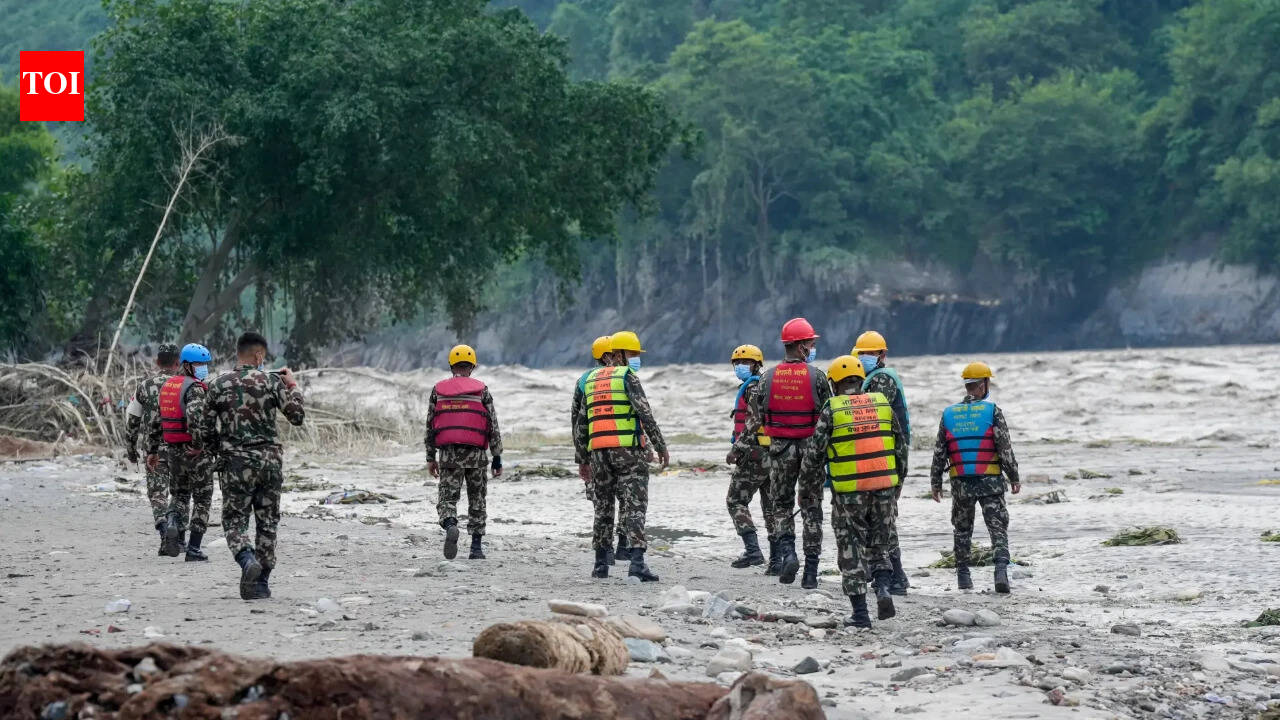
China has officially rejected claims that a man-made dam collapse on its side caused devastating floods in Nepal, labeling the allegations as fake news. Beijing instead attributes the disaster to a natural glacial collapse, though it has mobilized rescue teams to monitor potential barrier lake breaches.
Tensions Rise Over Cross-Border Flooding Claims
The diplomatic friction between China and Nepal has intensified following catastrophic flooding in the Gyirong-Rasuwagadhi border region. At the heart of the dispute is the origin of the disaster, with Nepali claims suggesting that a 'geological disaster dam' on the Chinese side of the border collapsed, exacerbating the floodwaters that caused significant casualties and missing persons. Beijing has swiftly and categorically rejected these allegations, dismissing them as 'fake news' and asserting that such accusations are counterproductive to regional stability.
The Chinese Counter-Narrative
In a direct rebuttal issued via its embassy in Kathmandu, China provided a conflicting account of the events of August 26. According to the Chinese statement, the devastation was not the result of human-engineered infrastructure failure, but rather a natural disaster. Beijing posits that an earthquake or an earthquake-like glacial collapse occurred on the Nepali side of the border, which subsequently triggered massive mudslides. This narrative shifts the burden of causality away from Chinese infrastructure and places the onus on seismic or environmental instability within the mountainous terrain.
The Role of Glacial Lake Outbursts
Independent reports and supplementary details suggest that the environmental context of the region is highly volatile. Experts have noted that an avalanche of ice and rock, likely stemming from a glacial lake outburst, played a significant role in the flooding. These phenomena are increasingly common in the Himalayas, where rising temperatures accelerate glacial melting, creating unstable 'barrier lakes' that pose a constant threat to downstream communities. The interplay between these natural risks and the geopolitical sensitivity of the border region complicates the recovery efforts.
Emergency Response and Monitoring
Despite the diplomatic spat, China has taken active steps to mitigate further risks. Recognizing the potential for ongoing danger, Beijing has mobilized fire and rescue teams from Beijing to the Tibet-Nepal border. These teams are tasked with monitoring a identified 'barrier lake' that poses a risk of breaching within a 72-hour window. This mobilization indicates that while China is defensive regarding accusations of negligence, it remains deeply concerned about the physical integrity of the geography along its border.
Future Implications for Regional Cooperation
The Chinese embassy’s concluding remarks, stating that 'accusation helps nothing' and emphasizing the need for 'cooperation,' highlight the precarious state of trans-border environmental management. As climate change continues to destabilize the high-altitude regions of the Himalayas, the potential for similar disasters will only increase. Moving forward, the incident underscores a critical need for shared early-warning systems and transparent data exchange between China and Nepal to prevent future humanitarian crises caused by natural geological shifts.
Multiple Citing Sources