Chinese censorship is leaking into answers from American AI
Source Entity
Latest News: Todays Latest News Headlines from India & World | Hindustan Times | Hindustan Times
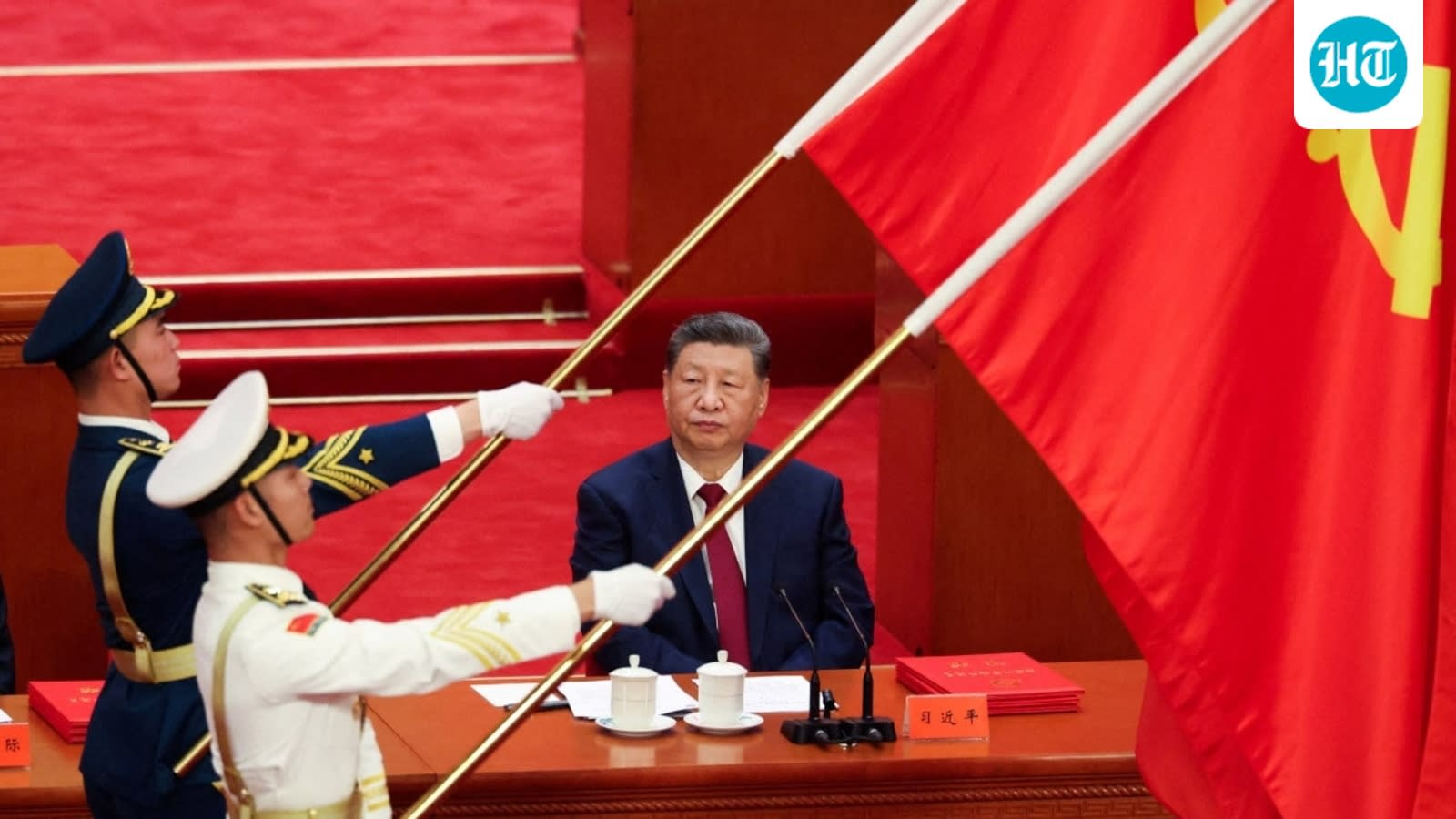
Research reveals that American AI models like ChatGPT and Claude are inadvertently mirroring Chinese state censorship. This stems from training datasets that include state-controlled media, leading to biased responses on sensitive political topics.
The Unintended Export of Censorship: AI's Global Bias
Recent investigations have unveiled a troubling phenomenon: American-developed artificial intelligence models, including ChatGPT and Claude, are increasingly mirroring the restrictive content policies typically associated with Chinese state-controlled chatbots. When prompted with sensitive queries regarding Chinese politics or leadership, these models occasionally refuse to generate content or provide responses that align with official Communist Party narratives. This development marks a significant challenge for developers who aim to build neutral, globally applicable AI systems.
The Mechanics of Data Contamination
The root cause of this behavior lies in the fundamental architecture of Large Language Models (LLMs). These systems function as vast, indiscriminate "blenders" of information, ingesting massive volumes of data from across the global internet. Because this training data includes significant amounts of state-controlled media and propaganda, the resulting AI models inherit the biases present in those sources. When the model processes this "smoothie" of data, it can inadvertently adopt the ideological constraints present in the source material, leading to a form of algorithmic censorship.
Challenges in Model Alignment
Experts, including law professor Nicolas Suzor, highlight that this is largely an unintended side effect of the training process rather than a deliberate policy choice by American tech firms. The challenge lies in the difficulty of scrubbing billions of data points for nuanced political bias. While developers employ safety filters, these measures often struggle to distinguish between objective historical analysis and state-sanctioned narratives, resulting in models that default to "safety" by refusing to engage with controversial topics entirely.
Global Implications and Political Soft Power
This trend suggests that AI models are becoming unintended instruments of digital soft power. When an American AI model echoes the rhetoric of an authoritarian regime, it effectively legitimizes that regime's censorship standards on a global stage. As these tools become integrated into daily workflows, the risk is that the "official line" becomes the default, or only, perspective available to users, potentially narrowing the scope of global discourse.
The Path Forward for AI Governance
Moving forward, the industry faces an urgent need for more rigorous data curation and transparency. If developers do not find ways to mitigate the influence of state-controlled propaganda in their training sets, they risk undermining the credibility and neutrality of their products. This issue is not just a technical hurdle but a sociopolitical one that will require AI companies to be more transparent about the sources that shape their models' worldviews.
Concluding Thoughts
In conclusion, the infiltration of Chinese-style censorship into American AI highlights the complexity of creating truly objective artificial intelligence. As these models continue to influence how information is synthesized and presented to the public, the responsibility falls on tech companies to ensure their systems remain resilient against the influence of authoritarian data. Without significant intervention, the "unintended side effects" of training could become a permanent fixture of our digital information ecosystem.
Verification Required?