Delhi Police registers three FIRs over anti-CEC protests, none named
Source Entity
India Latest News: Top National Headlines Today & Breaking News | The Hindu
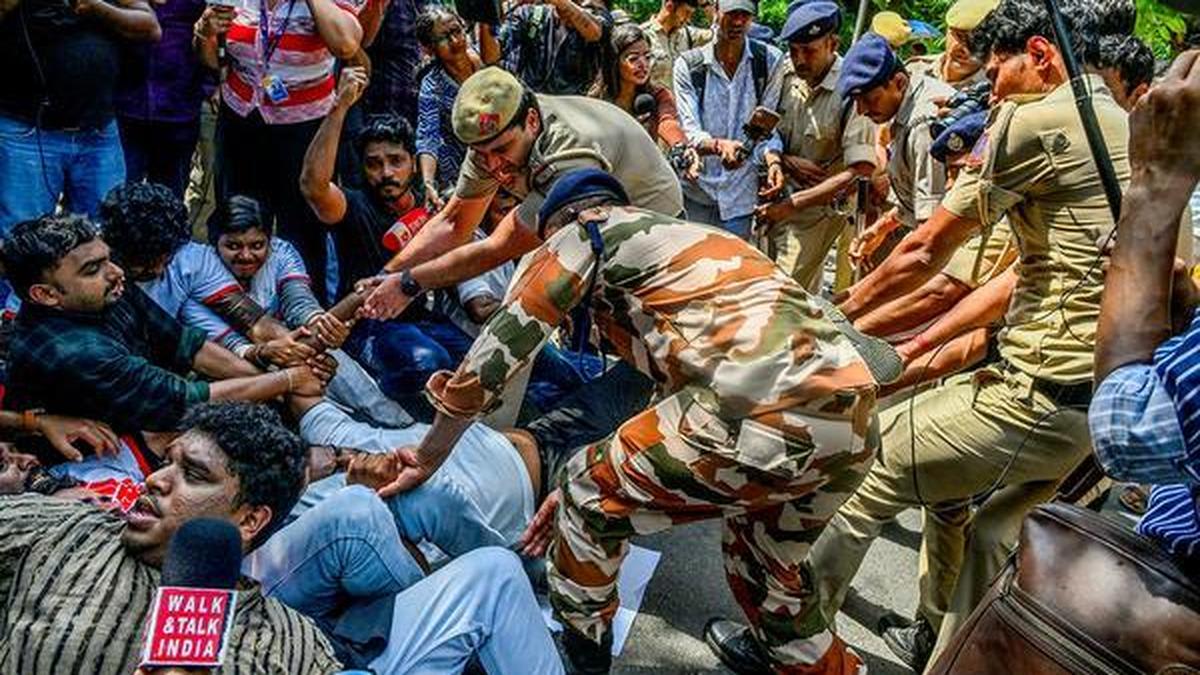
The Cockroach Janta Party (CJP), led by Abhijeet Dipke, has launched a nationwide protest demanding the resignation of CEC Gyanesh Kumar. The movement, sparked by allegations of irregularities in electoral roll deletions, seeks to expand from Mumbai to cities like Bengaluru and Kolkata, culminating in a Delhi sit-in.
The Cockroach Janta Party’s Nationwide Mobilization
The political landscape has seen a new wave of organized dissent following the announcement by Abhijeet Dipke, founder of the Cockroach Janta Party (CJP), regarding a nationwide agitation beginning October 2. The movement, which kicked off with a protest at Mumbai’s Shivaji Park, is a direct response to allegations concerning the integrity of the electoral process under Chief Election Commissioner (CEC) Gyanesh Kumar.
The Catalyst: Electoral Roll Controversies
At the heart of the CJP’s grievances is an investigation into internal rifts within the Election Commission of India, specifically regarding Special Intensive Revision (SIR) voter deletions. Dipke and his colleagues, including Saurav Das, have alleged that these deletions have disenfranchised a significant number of citizens. The CJP asserts that the current electoral rolls are compromised, leading them to demand an immediate freezing of the 2025 rolls to prevent further alleged irregularities.
Strategic Expansion and Demands
What began as a localized protest in Mumbai is rapidly evolving into a broader national campaign. The CJP has outlined plans to take their demonstrations to major urban centers including Goa, Bengaluru, and Kolkata, before concluding with a large-scale sit-in at Jantar Mantar in New Delhi. The group’s core demands are threefold: the resignation of CEC Gyanesh Kumar, the implementation of a transparent, civil-society-inclusive process for the appointment of future Election Commissioners, and the immediate freezing of the 2025 electoral rolls.
Political Rhetoric and Accountability
During a press conference at the Mumbai Press Club, Dipke utilized sharp rhetoric, labeling the CEC a "traitor" and accusing the poll body of functioning as an extension of the current central government. By challenging high-ranking officials and explicitly linking the CEC’s tenure to the electoral successes of the current administration, the CJP is attempting to frame their movement as a defense of democratic institutions rather than merely a policy dispute.
Broader Implications for Democratic Oversight
The agitation highlights a growing trend of civil society groups scrutinizing the technical and administrative functions of India's electoral apparatus. By calling for criminal action against the CEC and demanding structural changes to how the Election Commission is governed, the CJP is tapping into broader anxieties regarding the independence of constitutional bodies. This movement reflects a deepening divide between political activists and the current electoral management framework.
Future Trends and Outlook
As the CJP prepares to move their protest across various states, the coming weeks will be critical in determining whether this agitation gains traction with the wider public or remains a niche political movement. The ultimate success of their demands—particularly the call for a new, transparent appointment process for the CEC—depends on the group's ability to sustain momentum beyond the initial protests. Whether or not these demands lead to institutional reform, they underscore a persistent, vocal demand for accountability within India's electoral management system.
Multiple Citing Sources
Verification Required?