Cockroach Janata Party protests in Chennai demanding resignation of CEC Gyanesh Kumar
Source Entity
India Latest News: Top National Headlines Today & Breaking News | The Hindu
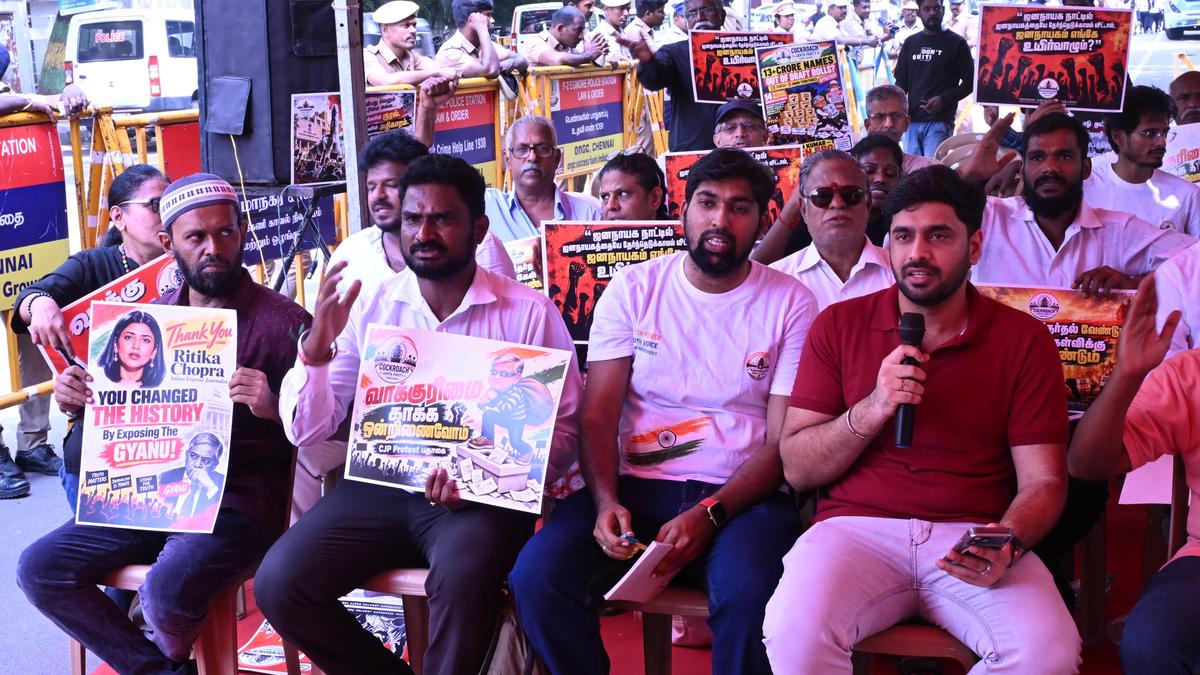
The Cockroach Janta Party (CJP), led by Abhijeet Dipke, has launched a nationwide protest demanding the resignation of CEC Gyanesh Kumar over alleged electoral roll irregularities. The movement, starting October 2 in Mumbai, calls for criminal charges and a transparent process for future election commission appointments.
CJP Launches Nationwide Agitation Against CEC Gyanesh Kumar
The Cockroach Janta Party (CJP), headed by founder Abhijeet Dipke, has officially mobilized a nationwide protest movement, beginning on October 2, 2026. Centered on allegations of significant irregularities within the Election Commission of India, the group is calling for the immediate resignation of Chief Election Commissioner (CEC) Gyanesh Kumar. The agitation, which kicked off at Mumbai’s Shivaji Park, is set to expand into a multi-city campaign, with planned demonstrations in Goa, Bengaluru, and Kolkata before culminating in a final sit-in at Jantar Mantar, New Delhi.
The Catalyst: Electoral Roll Controversies
At the core of the CJP’s grievances is an investigation regarding the Special Intensive Revision (SIR) of voter rolls. The CJP alleges that the internal processes of the poll body have been compromised, leading to the deletion of a vast number of voters. Dipke and his colleagues, including Saurav Das, have characterized these deletions as a systemic failure, arguing that the integrity of the democratic process is at stake. The demand to freeze the 2025 electoral roll is a direct response to these concerns, as the party seeks to prevent further perceived disenfranchisement.
Demands for Institutional Reform
Beyond the immediate call for the CEC’s resignation, the CJP is pushing for structural changes in how India’s electoral oversight bodies function. Their platform includes three primary demands: the resignation of Gyanesh Kumar, the freezing of the 2025 electoral rolls for future use, and the establishment of a transparent, independent appointment process for the next CEC. By advocating for the inclusion of civil society in these appointments, the CJP aims to shift the current selection model toward a more participatory and accountable framework.
Political Escalation and Rhetoric
The protest movement has adopted a highly confrontational stance against the ruling establishment. Abhijeet Dipke has explicitly linked the current state of the Election Commission to the broader political landscape, alleging that the CEC has acted in favor of Prime Minister Narendra Modi and Home Minister Amit Shah. By threatening to pivot their protest toward the Prime Minister should Kumar fail to resign, the CJP is signaling an intent to escalate the political pressure, positioning the Election Commission’s neutrality as a central issue in the national discourse.
Future Implications and Nationwide Reach
As the CJP prepares to take its “Jail Bharo Andolan” to various state capitals, the movement represents a growing trend of civil society organizations challenging the administrative independence of constitutional bodies. The success of these protests—and their ability to mobilize public sentiment in cities like Bengaluru and Kolkata—will likely depend on the traction the electoral roll deletion narrative gains among the broader electorate. The final demonstration at Jantar Mantar is expected to serve as a litmus test for the party’s influence and the intensity of public concern regarding the management of the 2025 electoral cycle.
Verification Required?