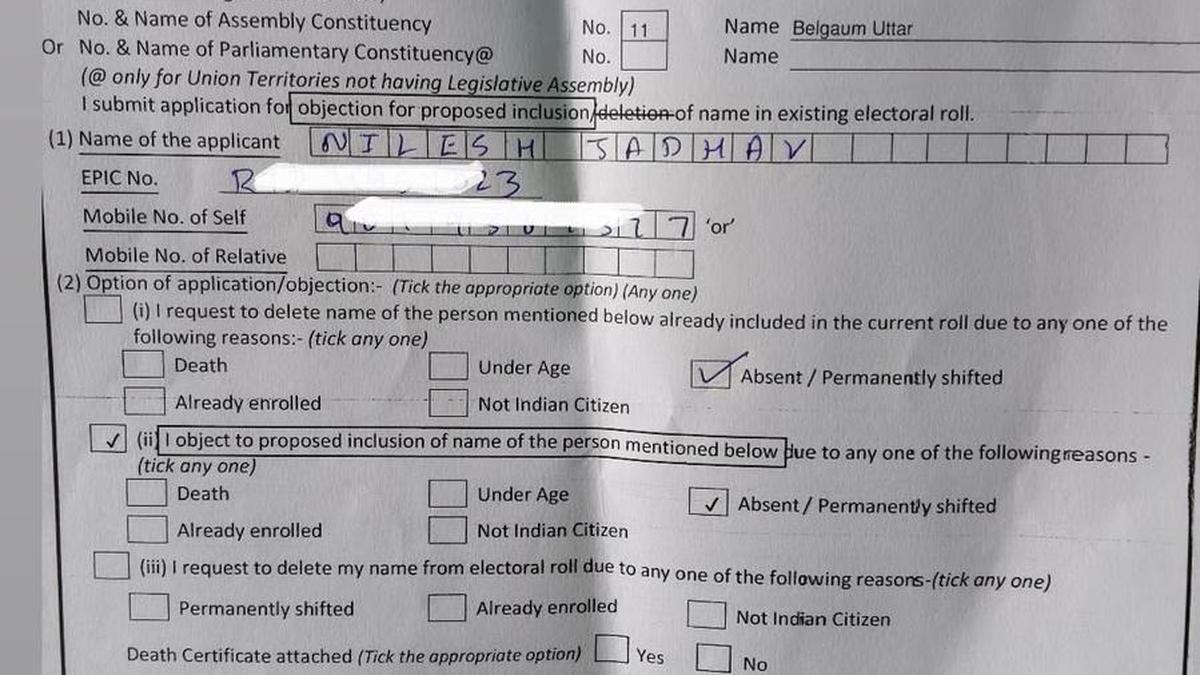
SIR: Filled Form-7 targeting Muslim voters surface in Belagavi; BLOs allege they were pressured to sign
Source Entity
India Latest News: Top National Headlines Today & Breaking News | The Hindu
Recent reports highlight significant concerns regarding electoral roll integrity in Karnataka and Delhi, citing mass voter deletions and targeted exclusion. Civil society groups have flagged procedural lapses and alleged political bias in the Special Intensive Revision (SIR) process.
Integrity of Electoral Rolls Under Scrutiny
The integrity of the electoral process serves as the bedrock of any functioning democracy. Recent reports from Karnataka and Delhi have raised alarms regarding the Special Intensive Revision (SIR) process, suggesting that systemic lapses or targeted actions may be disenfranchising significant portions of the electorate. In Karnataka, an investigation by the Anti-SIR Alliance and the Citizens’ Vote Protection Committee has identified a staggering reduction of 1.08 crore voters, representing a 19.5% drop from the previous roll figures.
The Scale of Deletions in Karnataka
The data from Karnataka is particularly concerning due to the sheer volume of voters categorized as “Shifted” (over 6.5 million) or “Dead” (over 1.6 million). When such a massive segment of the population is removed from the draft rolls, it necessitates a transparent and rigorous verification process. The ground-level survey conducted across 100 polling booths suggests that these administrative labels may not accurately reflect the reality of the electorate, potentially leading to the mass disenfranchisement of legitimate voters who are neither shifted nor deceased.
Targeted Exclusion and Political Bias
Beyond administrative errors, the reports point toward more sinister allegations of targeted exclusion. In Belagavi, Booth Level Officers (BLOs) reported being pressured to process bulk Form-7 applications—the official document used to request the deletion of a voter’s name. Alarmingly, these pre-printed forms were reportedly focused exclusively on Muslim voters. Such incidents, if proven, suggest a coordinated attempt to manipulate the demographics of specific constituencies, undermining the neutrality required of election officials and the integrity of the electoral roll.
Challenges for Marginalized Communities
In Delhi, the focus shifts to the accessibility of the electoral process for vulnerable populations. The Centre for Holistic Development (CHD) has highlighted that despite a substantial homeless population, only 747 enrolment applications were received during a recent drive. This low turnout is attributed to structural barriers including language difficulties, low literacy rates, and a lack of awareness among Booth Level Officers regarding the specific needs of homeless voters residing in DUSIB shelters.
Broader Implications for Democracy
The combination of mass deletions in Karnataka and the failure to include homeless voters in Delhi points to a broader crisis in voter registration management. When marginalized communities or specific demographic groups find it increasingly difficult to remain on the electoral rolls, the legitimacy of the resulting election outcomes is naturally called into question. The reliance on automated or potentially biased administrative processes without robust human oversight risks eroding public trust in democratic institutions.
Future Trends and Necessary Reforms
Looking ahead, it is imperative that election commissions implement more transparent verification protocols to prevent the mass, unexplained removal of voters. Future electoral revisions must prioritize outreach to marginalized groups and ensure that BLOs are properly trained to avoid discriminatory practices. Without significant reforms to the SIR process, the risk of systemic voter suppression will continue to haunt the electoral landscape, necessitating greater scrutiny from civil society and independent oversight bodies to ensure that every eligible citizen retains their right to vote.
Verification Required?