Thousands brave rain and regroup at CJP protest site, day after police crackdown
Source Entity
India Latest News: Top National Headlines Today & Breaking News | The Hindu
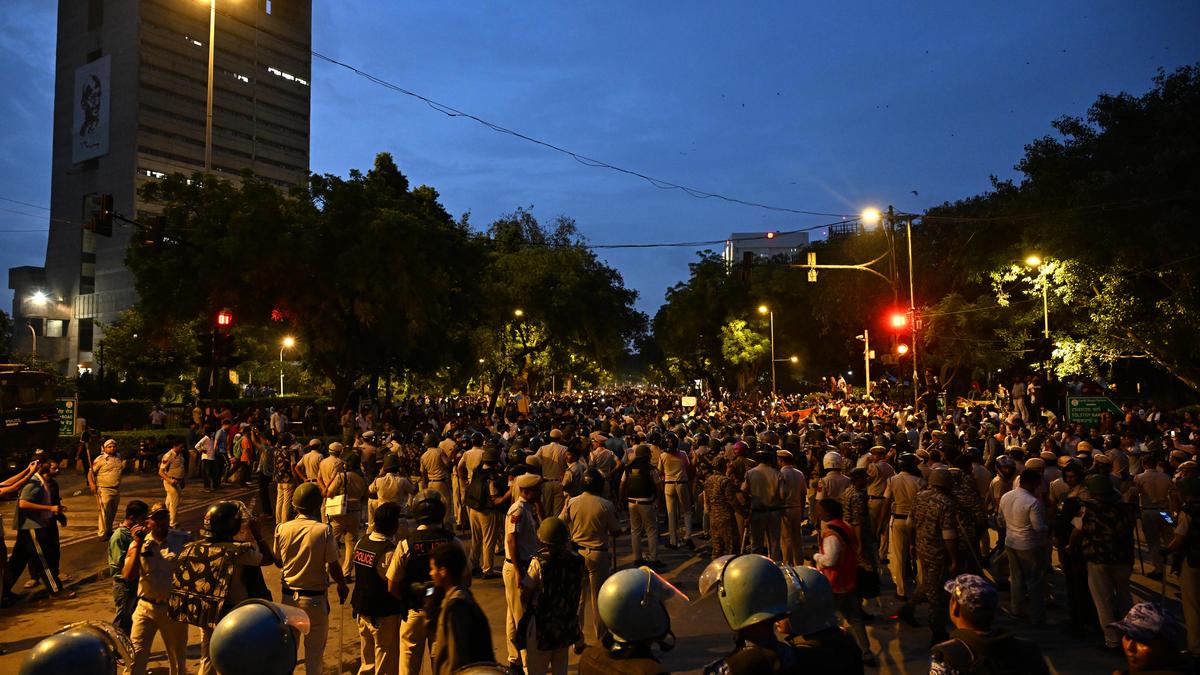
Thousands have regrouped at Delhi's Jantar Mantar following a police crackdown on Cockroach Janta Party (CJP) protesters. Solidarity demonstrations have also emerged in Mumbai, with protesters demanding education reforms and the resignation of the Union Education Minister.
Resilience at the Protest Frontlines
The ongoing demonstrations organized by the Cockroach Janta Party (CJP) have taken a dramatic turn following a significant police crackdown at the Jantar Mantar site in Delhi. Despite the systematic dismantling of tents and the main stage by security forces on Monday, July 20, 2026, the movement has demonstrated remarkable resilience. By Tuesday afternoon, thousands of protesters had returned to the site, transforming a morning gathering of only a few hundred into a massive assembly that defied the inclement weather and state intervention.
The Catalyst of Public Outrage
Observers at the site noted a distinct shift in the protest dynamics. Many individuals who arrived throughout the day identified as first-timers, specifically citing the 'brutal' nature of the police action on the previous day as their primary motivation for joining. This phenomenon suggests a 'backfire effect,' where attempts to suppress dissent through force have instead mobilized a broader demographic of citizens who feel compelled to defend the right to peaceful assembly.
Nationwide Solidarity and Expanding Demands
While the epicenter of the movement remains in Delhi, the spirit of the CJP protest has reverberated across the country. In Mumbai, over 500 people—comprising students, senior citizens, and children—gathered at Shivaji Park to express solidarity. These protesters, who marched peacefully despite heavy security presence, are aligning themselves with the CJP and activist Sonam Wangchuk. Their agenda has moved beyond general support, now coalescing around concrete demands for systemic changes in the education sector and the resignation of Union Education Minister Dharmendra Pradhan.
The Clash Between State Authority and Civil Dissent
The tension between the demonstrators and law enforcement highlights a critical friction point regarding the freedom of expression in India. The detention of protesters at Chaityabhoomi in Dadar, coupled with the previous day's injuries to students, has intensified the political stakes. As the CJP works to re-erect its infrastructure at Jantar Mantar, the queues of people waiting to enter the site indicate that the movement is currently in a phase of growth rather than decline.
Future Implications and Trends
Looking ahead, the longevity of this movement will depend on the government's response to the demands for educational reform. By centering their cause on the resignation of a high-profile Union Minister, the protesters have ensured that the issue remains at the forefront of national political discourse. If the administration continues to rely on police dispersal tactics, it risks further radicalizing moderate participants and inviting more widespread solidarity protests in other urban centers, potentially creating a prolonged period of political instability regarding education policy.
Multiple Citing Sources
Verification Required?