Delhi high court to hear today Saurav Das’s plea seeking travel nod to UK
Source Entity
TNN
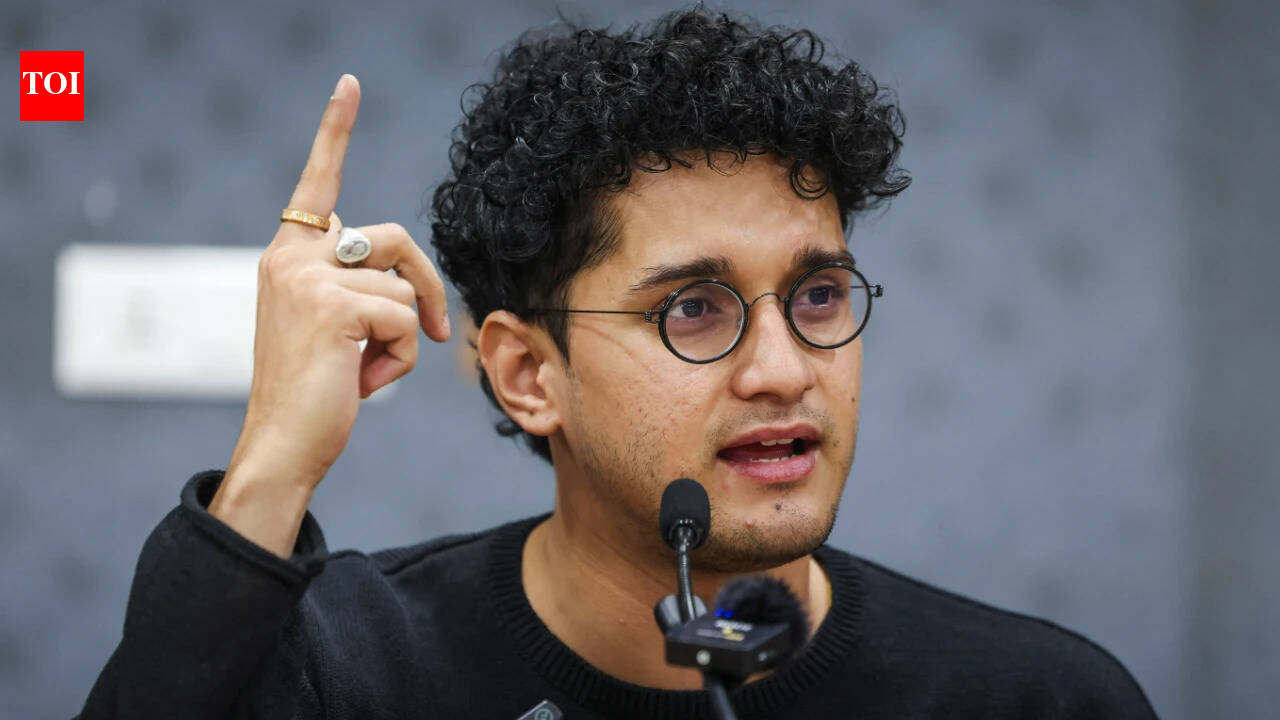
Cockroach Janta Party co-founder Saurav Das has moved the Delhi High Court after being denied permission to fly to the U.K. for an Oxford University conference. Party founder Abhijeet Dipke alleges the government is suppressing international discourse regarding the party's ideological movement.
The Legal and Political Fallout of the Saurav Das Travel Ban
On November 24, 2026, a significant conflict emerged between the Cockroach Janta Party (CJP) and the Indian central government. Saurav Das, a co-founder and spokesperson of the party, was intercepted at the Indira Gandhi International Airport in Delhi, preventing him from boarding a flight to the United Kingdom. His stated objective was to attend a conference at the University of Oxford, where he was scheduled to discuss the ideological underpinnings of the 'cockroach movement,' specifically linking the philosophy of B.R. Ambedkar and Mahatma Gandhi to their contemporary political advocacy.
Allegations of Selective Enforcement
Abhijeet Dipke, the founder of the CJP, has leveled severe accusations against the administration, framing the incident as a targeted act of political suppression. Dipke drew a sharp contrast between the treatment of Das and that of high-profile financial fugitives such as Vijay Mallya, Nirav Modi, and Mehul Choksi. By highlighting that these individuals were able to depart the country despite facing massive fraud allegations, Dipke argues that the restriction on Das—a 27-year-old legal journalist—is not a matter of national security or due process, but a strategic effort to prevent the exposure of domestic 'ground realities' on a global stage.
Judicial Recourse and Procedural Challenges
Following the incident, Saurav Das took immediate legal action by filing a plea in the Delhi High Court. Represented by advocate Krishnesh Bapat, the legal team sought an urgent hearing to challenge the lack of a formal order or justification provided at the immigration counter. The matter was brought before a division bench comprising Acting Chief Justice Nitin Wasudeo Sambre and Justice Sanjay Sharma. While the court acknowledged the urgency of the situation, it scheduled the formal hearing for November 26, leaving the window for Das to reach London in time for his engagement increasingly narrow.
The 'Cockroach Movement' and Political Narrative
At the heart of this controversy is the 'cockroach movement,' a nomenclature used by the CJP that suggests a grassroots, resilient, and perhaps disruptive approach to political discourse. The fact that Das intended to present this movement at an academic institution like Oxford suggests that the CJP is attempting to legitimize its political platform through international intellectual circles. The government’s intervention, therefore, can be viewed as an attempt to control the narrative regarding the state of democracy and civil rights in India as perceived by external observers.
Broader Implications for Dissent
The incident has sparked a broader conversation regarding the freedom of movement for political activists and journalists in India. When the state restricts the mobility of those critical of its policies, it raises fundamental questions about the proportionality of state power. If the court finds that the restriction was arbitrary or lacked a statutory basis, it could serve as a significant precedent for protecting the rights of individuals to participate in international academic and political exchange without fear of state-imposed travel bans.
Future Trends and Judicial Oversight
The outcome of the hearing on November 26 will be a bellwether for how the judiciary balances the state’s executive power at borders against the fundamental rights of citizens. Should the court rule in favor of Das, it may constrain the government's ability to use 'no-fly' or immigration-based restrictions as a tool for political containment. Conversely, a ruling that upholds the government's action could signal a hardening of the state's stance toward internationalizing domestic political grievances, potentially isolating emerging political movements from global platforms.
Multiple Citing Sources