CLARITY Act could get another shot during lame-duck session, policy advocate says
Source Entity
Cointelegraph by Nate Kostar
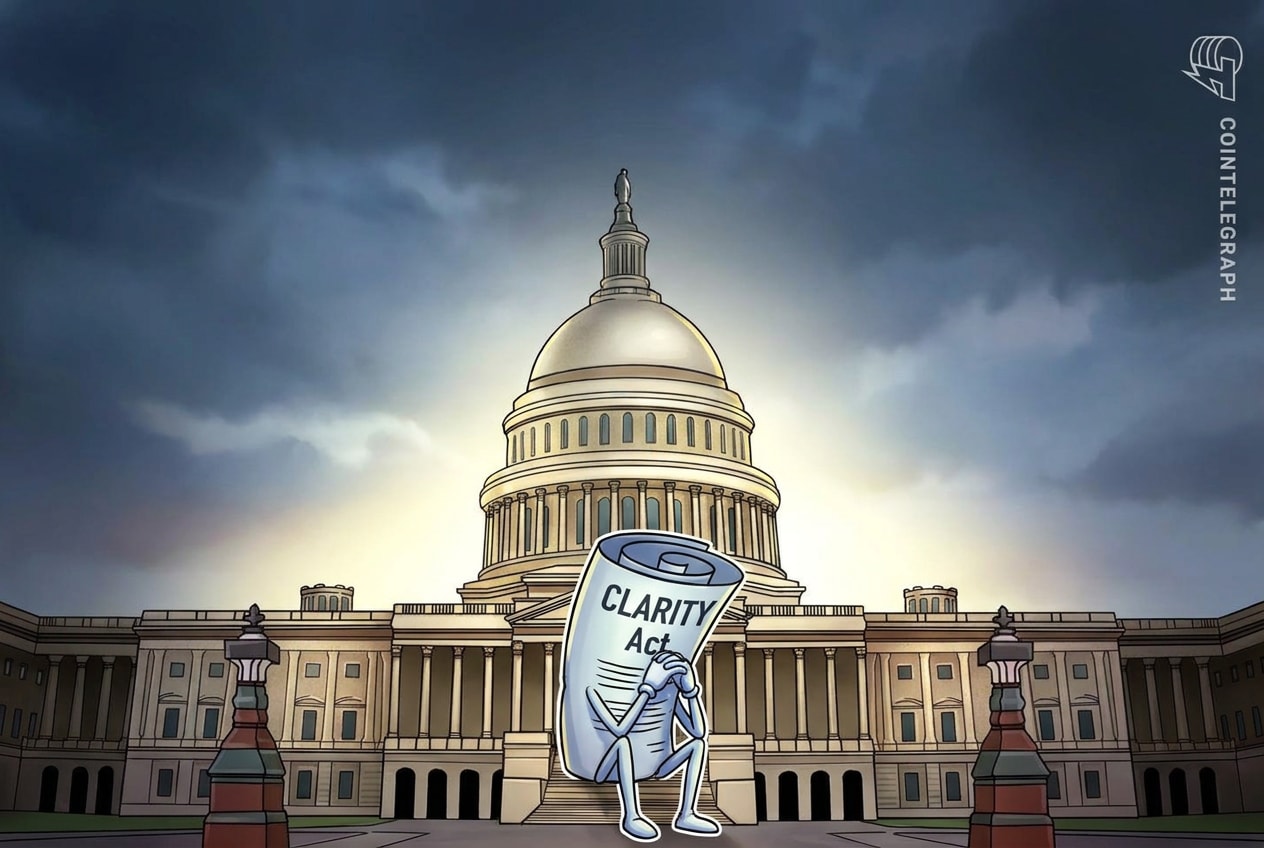
The failure of the CLARITY Act to pass a Senate cloture vote has prompted expectations of aggressive rulemaking from the SEC and CFTC. Despite this setback, bipartisan discussions are reportedly underway to revisit the legislation during the upcoming lame-duck session.
The Regulatory Landscape Post-CLARITY Act Failure
The failure of the Digital Asset Market Clarity (CLARITY) Act to clear a Senate cloture vote this week marks a significant turning point in the U.S. approach to digital asset governance. For months, the bill was positioned as a critical framework to resolve long-standing jurisdictional disputes between the Securities and Exchange Commission (SEC) and the Commodity Futures Trading Commission (CFTC). Its inability to advance signals a continued stalemate in legislative efforts to provide clear market structure.
The Shift Toward Executive Rulemaking
Following the legislative stall, analysts at Bernstein have projected an imminent shift in strategy. With the legislative process currently gridlocked, federal agencies are expected to fill the vacuum through aggressive and swift rulemaking. Bernstein anticipates that the SEC and CFTC will move to implement regulations independently to compensate for the time lost during the failed negotiations of the CLARITY Act. This pivot suggests that the industry should brace for regulatory action rather than statutory clarity in the near term.
Anticipated Regulatory Focus Areas
According to industry projections, the scope of this expected agency activity is broad. Bernstein suggests that the SEC and CFTC are likely to prioritize the establishment of a token taxonomy, which would define how digital assets are classified for the purposes of raising capital. Furthermore, there is an expectation of new developer protection measures specifically targeting decentralized finance (DeFi) platforms and the regulatory treatment of self-custodial protocols, areas that have remained significant friction points for regulators.
The Lame-Duck Session Opportunity
Despite the current legislative impasse, the possibility of the CLARITY Act surfacing again remains on the table. Adrian Wall, managing director of the Digital Sovereignty Alliance, has indicated that there is still a bipartisan appetite to advance the bill during the post-election lame-duck session of Congress. While proponents acknowledge the difficulty of passing complex legislation in this period, the existence of active dialogue between senators suggests that the bill's lifecycle is not necessarily over.
Internal Disagreements and Counterproposals
The path toward a consensus bill has been fraught with internal friction. Recent reports from Politico highlight that Senate Democrats have pushed back against what GOP leadership labeled their “last, best and final offer.” The primary point of contention centers on crypto ethics provisions, which some Democratic lawmakers argue require further refinement. This persistent disagreement underscores why the legislative process has been so arduous, as stakeholders struggle to balance innovation with strict regulatory oversight.
Future Trends and Market Implications
The trajectory of the CLARITY Act underscores a broader trend in U.S. financial policy: the struggle to modernize regulatory frameworks for an evolving digital economy. If the lame-duck session fails to produce a breakthrough, the reliance on SEC and CFTC rulemaking will likely become the primary mode of governance for the crypto sector. This transition would place the burden of market structure definition squarely on agency enforcement and policy-making, potentially leading to a more fragmented and litigious environment for digital asset firms.
Multiple Citing Sources