JD(U) clarifies stance on UCC, proposal to rename party and RJD’s invitation to join hands
Source Entity
India Latest News: Top National Headlines Today & Breaking News | The Hindu
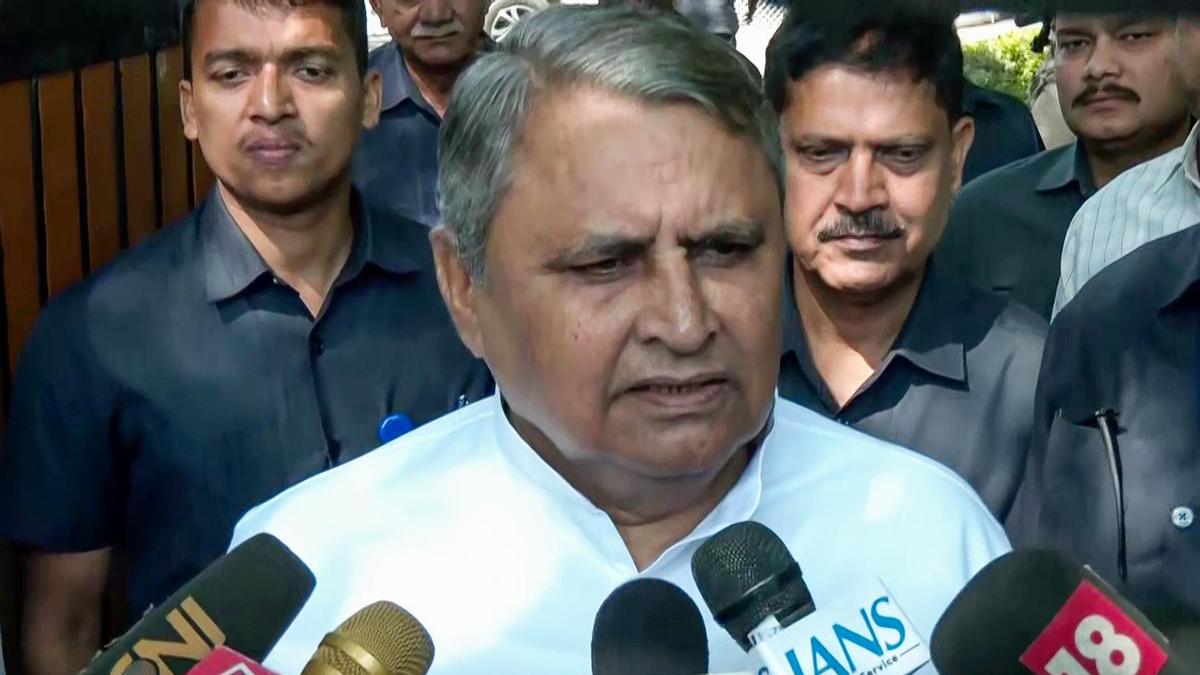
J&K CM Omar Abdullah has challenged the BJP to introduce the Uniform Civil Code (UCC) in Parliament rather than through state-level implementation. He cited internal coalition resistance, specifically from the JD(U), as a major barrier to a nationwide rollout.
The UCC Debate: A Challenge to Federal Governance
Jammu and Kashmir Chief Minister Omar Abdullah has sparked a fresh political discourse by challenging the Bharatiya Janata Party (BJP) to introduce the Uniform Civil Code (UCC) in Parliament. His remarks, delivered on September 15, 2026, suggest that the current strategy of implementing the UCC piecemeal across BJP-governed states is a tactical avoidance of the legislative hurdles the party would face at the national level. By questioning the 'universality' of a law that is not truly nationwide, Abdullah has positioned himself as a vocal critic of the center’s legislative approach.
The 'Backdoor' Strategy and Legislative Hurdles
Abdullah’s core argument rests on the premise that the BJP is bypassing parliamentary scrutiny by pushing state-level enactments. He characterized this as a "backdoor" approach, implying that the ruling party lacks the necessary consensus to secure a mandate in the national legislature. This perspective highlights a fundamental tension in Indian federalism: the balance between state-level autonomy in legislative experimentation and the need for a unified national legal framework on personal laws.
Internal Coalition Friction
A critical component of Abdullah’s critique is the fragility of the National Democratic Alliance (NDA) regarding the UCC. Abdullah pointedly referenced the Janata Dal (United)’s opposition to implementing the code in Bihar. This internal dissent within the ruling coalition serves as the primary evidence for his claim that the BJP cannot currently command the requisite support to pass such a contentious bill in Parliament. The existence of these ideological rifts suggests that the UCC remains a point of significant friction, even among political allies.
The Question of Universality
The Chief Minister’s argument challenges the semantic integrity of the term "Uniform" Civil Code. He posits that if a code is applied in a fragmented manner—governing citizens in some states but not others—it fails to meet the standard of a truly national law. This critique raises important questions about the legal consistency and administrative complexity of having disparate personal law regimes operating simultaneously across different state boundaries.
Broader Political Implications
This challenge by the J&K Chief Minister reflects a broader strategy of holding the central government accountable for its promises while exposing potential vulnerabilities in the NDA’s unity. By linking the UCC debate to the specific stance of regional allies like the JD(U), Abdullah is effectively shifting the narrative from a purely ideological debate to a question of political feasibility and coalition management. As the 2029 timeline for a 21-state rollout approaches, this debate is likely to intensify, forcing the BJP to reconcile its national ambitions with the regional realities of its coalition partners.
Conclusion
The challenge issued by Omar Abdullah underscores the deep-seated complexities surrounding the Uniform Civil Code in India. Whether the government will choose to test its strength in Parliament or continue its state-by-state implementation strategy remains to be seen. However, the resistance highlighted by the Chief Minister suggests that the path to a national UCC is fraught with both legislative and political challenges that go beyond mere ideological commitment.
Verification Required?