Claude can now use your 1Password credentials for you
Source Entity
Jess Weatherbed
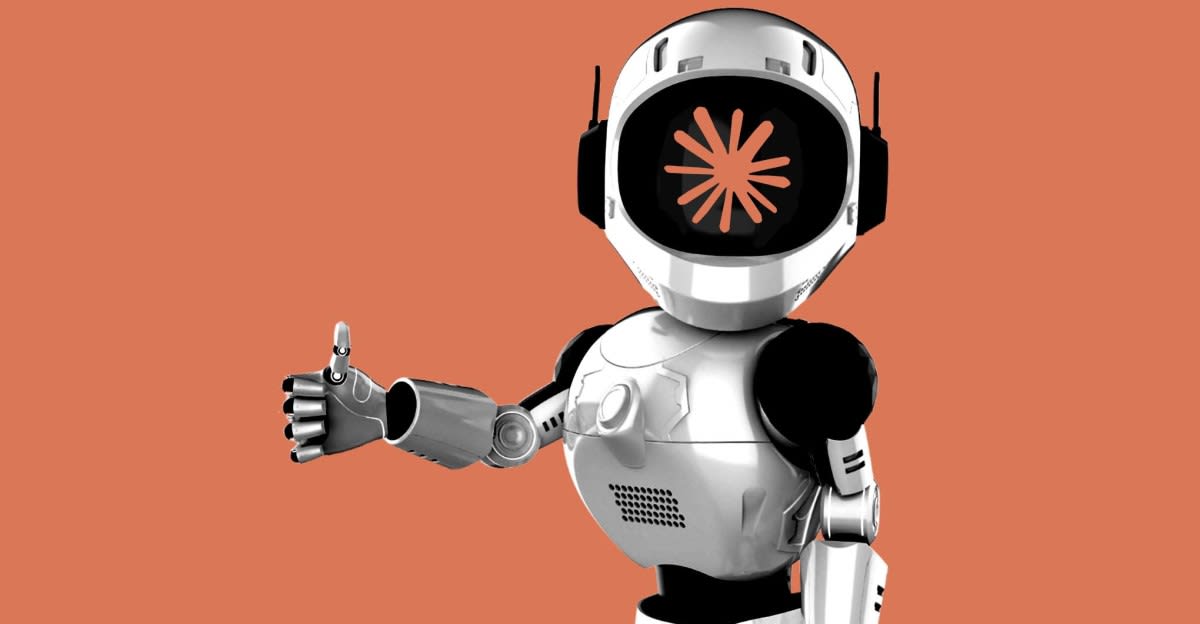
1Password has launched a browser integration for Anthropic's Claude, allowing the AI to securely access stored credentials to automate complex, multi-step online tasks like booking travel and account management.
The Dawn of Autonomous AI Agents: Claude and 1Password Integration
The recent announcement that 1Password has launched a browser integration for Anthropic's Claude marks a pivotal shift in the evolution of Large Language Models (LLMs). For the past few years, AI chatbots have primarily functioned as information retrieval systems or creative assistants—tools that provide text, code, or analysis but require the user to execute the final action. By enabling Claude to access stored security credentials, this integration transforms the AI from a passive advisor into an active 'agent' capable of navigating the web and interacting with secure portals on a user's behalf.
Bridging the Gap Between Intelligence and Action
At its core, this integration addresses one of the most significant friction points in AI productivity: the authentication wall. While Claude has demonstrated impressive reasoning capabilities and the ability to understand complex workflows, it has historically been stopped at the login screen. By leveraging 1Password's secure vault, Claude can now bypass the manual entry of usernames and passwords. This allows for the completion of 'multi-step tasks,' such as navigating to a travel site, logging into a loyalty account, selecting a flight, and managing the booking process without the user having to manually intervene at every authentication prompt.
Security Implications in an Agentic World
Integrating a password manager with an AI introduces a complex security dialogue. 1Password is renowned for its zero-knowledge encryption architecture, and this integration must balance that security with the openness required for an AI to operate. The critical component here is user authorization; Claude does not have unfettered access to the vault but must be authorized to use specific credentials for specific tasks. However, the industry must now grapple with the risk of 'prompt injection'—where a malicious website could potentially trick an AI agent into performing unauthorized actions using the credentials it has been granted access to. This development will likely accelerate the creation of more robust 'guardrails' for AI-driven web navigation.
The Broader Context of the 'Agentic' Trend
This move by Anthropic and 1Password is not an isolated event but part of a broader industry race toward 'Agentic AI.' We are seeing a transition from LLMs that simply 'chat' to those that 'do.' This mirrors similar trajectories seen in the development of OpenAI's efforts toward autonomous operators and Google's integration of AI into the Chrome browser. The goal is to create a seamless layer of orchestration where the AI acts as a digital concierge. By solving the identity and access management (IAM) problem through 1Password, Claude is positioned to handle operational overhead that previously required human cognitive load.
Impact on User Productivity and Workflow
From a productivity standpoint, the implications are profound. The ability to delegate account management—such as updating subscription settings, managing billing details, or organizing travel—could save users hours of repetitive administrative work. This shifts the human role from 'operator' to 'supervisor.' Instead of performing the clicks, the user provides the intent ("Book me the cheapest flight to Tokyo for next Tuesday"), and the AI handles the execution. This fundamentally changes the user experience of the internet, moving away from a page-by-page navigation model toward an intent-based execution model.
Future Predictions: Toward an AI-First Web
Looking forward, this integration is likely a precursor to a more deeply integrated AI ecosystem. As more service providers create 'agent-friendly' interfaces, we may see the rise of specialized security protocols designed specifically for AI agents, moving beyond traditional passwords to dynamic, short-lived tokens. We can expect further integrations where Claude might not only access passwords but also integrate with payment gateways (like Apple Pay or Google Pay) to complete the entire transaction loop autonomously, provided the user grants a one-time authorization.
Conclusion
The partnership between 1Password and Claude is a landmark moment in the practical application of AI. By solving the hurdle of secure authentication, it unlocks the true potential of AI agents to perform real-world work. While security concerns remain paramount, the move toward autonomous, credential-aware AI is an inevitable step in the journey toward a more efficient, automated digital existence. This integration doesn't just make Claude more useful; it redefines what it means for an AI to be a 'personal assistant.'