Claude Code sends your email address to websites
Source Entity
Hacker News
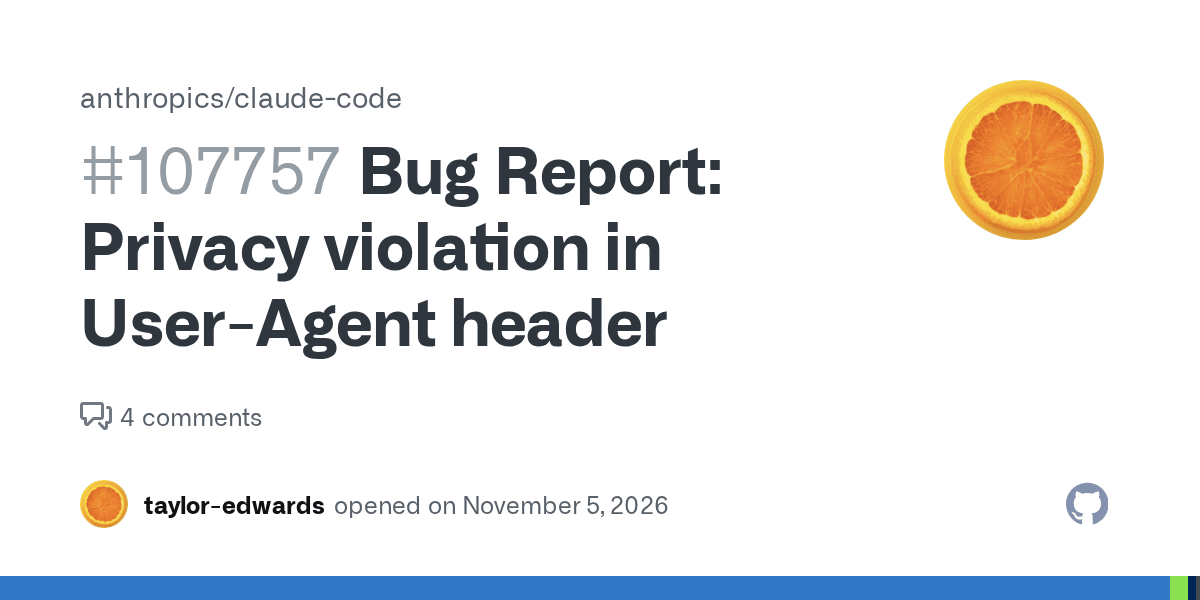
Claude Code has been identified as transmitting user email addresses to third-party websites during operation. This privacy concern highlights potential data leakage risks within automated coding assistant tools.
Analysis of Claude Code Privacy Concerns
The Discovery of Data Transmission
Recent reports indicate that Claude Code, an AI-powered coding assistant, has been observed transmitting user email addresses to external websites. This functionality, while seemingly integrated into the tool's authentication or operational workflow, has raised significant privacy concerns among developers who rely on such tools for secure code management and software development lifecycle (SDLC) support. The automated nature of these tools often obscures the flow of sensitive data, making this discovery a critical point of interest for the developer community.
Technical Implications of Automated Tools
AI coding assistants function by interacting with various repositories and web-based services to provide context-aware suggestions. When a tool like Claude Code initiates a connection to a third-party domain, the inclusion of PII (Personally Identifiable Information) such as email addresses in headers or payload data can be inadvertent but technically significant. This practice underscores the broader challenge of maintaining data sovereignty when utilizing third-party AI agents that require access to authenticated user sessions.
Security and Privacy Best Practices
In the context of software security, the transmission of user identifiers to external entities is generally discouraged unless explicitly required for the core functionality of the service. Developers and security professionals typically look for transparency in how data is handled, stored, and transmitted. If the transmission of email addresses is not a documented feature required for account verification, it represents a potential security oversight that could lead to unauthorized data aggregation by third-party sites.
Broader Industry Trends in AI Governance
This incident mirrors a growing tension in the tech industry regarding the balance between AI utility and data privacy. As companies integrate LLM-based coding assistants into their development environments, the 'black box' nature of these agents often masks data egress behaviors. This event serves as a reminder that organizations must implement robust traffic monitoring and data loss prevention (DLP) strategies when deploying AI tools that interact with external web resources.
Future Outlook and Mitigation
Moving forward, it is likely that developers will demand greater transparency from AI vendors regarding data telemetry. We can expect future updates to coding assistants to include more granular control over data sharing, potentially allowing users to opt-out of sharing PII with third-party web services. For now, users should monitor their network traffic and review the permission scopes granted to AI coding extensions to mitigate the risk of unintended data leakage.