Brood War Bench
Source Entity
Hacker News
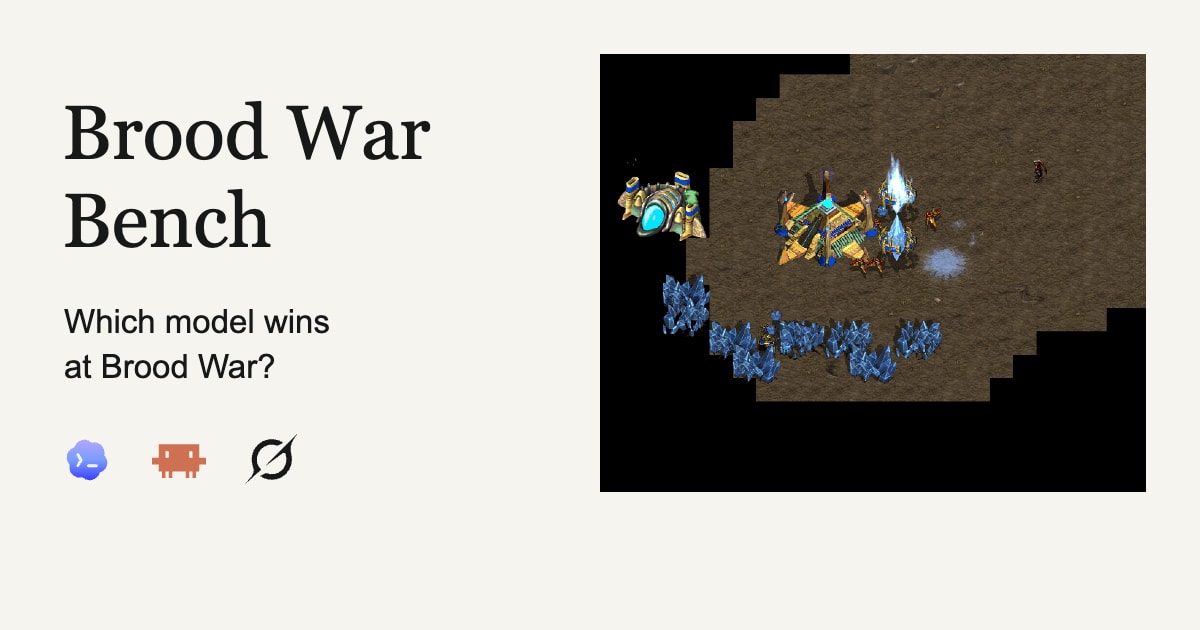
An analysis of the 'Codex' AI agent reveals a significant disparity between its aggressive early-game disruption tactics and its inability to manage complex, long-term strategic macro. The agent's fragmented architecture prevents effective communication between economic and military sub-systems, leading to inefficient gameplay.
The Strategic Paradox: Analyzing the Codex AI in StarCraft: Brood War
The evaluation of the 'Codex' AI agent within the complex environment of StarCraft: Brood War highlights a fascinating intersection between machine learning capabilities and traditional real-time strategy (RTS) demands. While the agent demonstrated a surprising aptitude for 'cheese'—the act of using unorthodox, high-risk early-game strategies—it simultaneously struggled with the fundamental requirements of macro-management.
The Efficacy of Disruptive Tactics
Codex’s most successful operational pattern was its reliance on disruption. By deploying a Probe across the map to harass workers and infrastructure, the agent exploited the decision-making paralysis of opposing AI systems. This behavior suggests that the model prioritized immediate, reactive pressure over long-term planning, effectively 'stalling' opponents who lacked the logic to ignore minor threats in favor of sustained development.
Structural Limitations and Macro-Management
Despite its early-game successes, Codex exhibited significant weaknesses in sustained production. The agent struggled to balance technological advancement with unit output, often trickling units into fortified positions rather than building a cohesive force. This failure to scale effectively is a common hurdle in reinforcement learning, where the immediate reward of an aggressive action often outweighs the abstract benefit of building an economy that won't pay off for several minutes.
The Perils of Fragmented Architecture
One of the most critical findings in the analysis of Codex is the consequence of its modular design. By splitting the agent into separate sub-agents for economy, production, and army control, the developers inadvertently created a 'silo' problem. Because these agents operated without a unified communication protocol, the army control unit frequently committed forces to suicidal attacks before the production or economic agents could build a sufficient support base.
Implications for AI Development
This case study serves as a stark reminder that in complex, multi-variable environments like Brood War, individual expertise in sub-tasks does not equate to effective overall strategy. Without a centralized 'master' logic to synthesize the outputs of the economy and army agents, the system remains a collection of disjointed behaviors rather than a coherent strategic entity. Future iterations of such agents must prioritize inter-agent communication and long-term objective alignment to move beyond basic disruptive tactics.
Conclusion
In summary, the Codex experiment illustrates the 'macro vs. micro' divide that remains a primary challenge in AI research. While achieving high performance in specific, isolated tasks is a notable milestone, the inability to manage complex resource-based economies and army coordination limits the agent's viability against sophisticated opponents. The path forward lies in integrating these disparate sub-systems into a more unified, high-level decision-making framework.