Suzanne Ciani's Buchla Cookbook
Source Entity
Hacker News
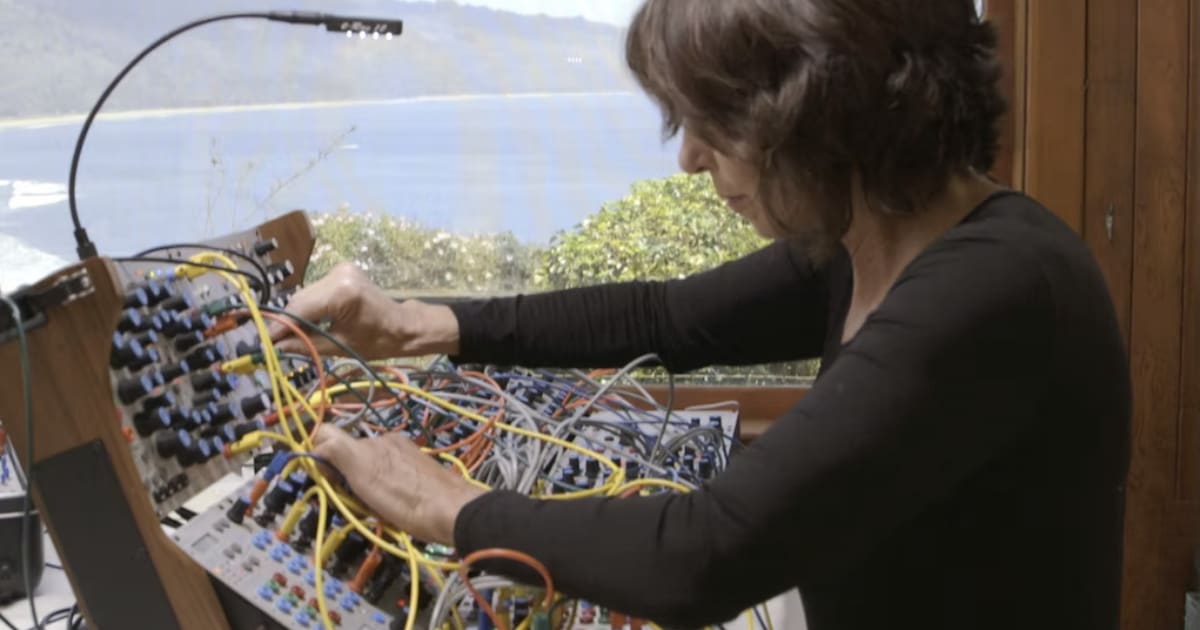
Pioneering electronic musician Suzanne Ciani discusses the origins of her 'Buchla Cookbook,' a document originally created to secure an NEA grant. Fifty years later, the text remains an essential, enduring reference for practitioners of the Buchla modular synthesis system.
The Genesis of the Buchla Cookbook
Suzanne Ciani’s Buchla Cookbook stands as a foundational text in the history of electronic music, serving as both a technical manual and a personal manifesto for modular synthesis. Originally conceived as a requirement for a National Endowment for the Arts (NEA) composer grant, the document was born out of the practical necessity of a "starving artist" seeking to justify her creative trajectory to institutional funders. Ciani notes that at the time of its writing, she possessed little expectation that the work would reach a wider audience, let alone achieve the status of a canonical reference.
Documenting the Frontier of Sound
At the core of the cookbook’s historical significance is Ciani’s early adoption of the Buchla 248, a piece of hardware that was largely unknown to the broader public during her initial experimentation. By writing her guide prior to the release of the official 1977 manual, Ciani effectively became an accidental archivist of Don Buchla’s complex, idiosyncratic interface. This early documentation provided a rare bridge between the experimental engineering of the Buchla laboratory and the creative application of those tools in the hands of a composer.
The Intersection of Art and Bureaucracy
It is fascinating to observe how the Buchla Cookbook represents the intersection of artistic necessity and bureaucratic requirements. Ciani’s admission that the document was written to satisfy a grant application highlights the role that government funding played in the development of avant-garde electronic music in the 1970s. Without the pressure to articulate her compositional practice for the NEA, it is possible that these early, crucial insights into the Buchla system might never have been codified in such a structured, pedagogical format.
A Half-Century of Influence
Fifty years later, the persistence of the cookbook as a reference for modern Buchla practitioners speaks to the timeless nature of Ciani’s approach. While electronic music technology has undergone massive shifts toward digital emulation and software-based synthesis, the fundamental principles of voltage control and signal routing outlined by Ciani remain vital. Her work serves as a testament to the idea that deep understanding of a specific instrument is often more valuable than the instrument itself.
Legacy and Technical Evolution
Looking forward, the legacy of the Buchla Cookbook serves as a reminder of the importance of technical documentation in the preservation of musical innovation. As modular synthesis experiences a massive resurgence in popularity, new generations of artists continue to look to Ciani’s early writings to decode the logic of the Buchla system. Her narrative underscores that the tools we use are only as effective as the documentation that allows us to master them, cementing her status as both an artist and an educator in the field of sound design.
Conclusion
Suzanne Ciani’s journey from a grant-seeking artist to an electronic music icon is intrinsically linked to her willingness to document the unknown. By demystifying the Buchla 248, she did more than just satisfy a grant requirement; she provided a roadmap for future generations. The Buchla Cookbook remains a pivotal document, illustrating that the most enduring technological manuals are often those written with a profound, personal understanding of the machine’s creative potential.