'Lady hiding in Dehradun': Who was Rahul referring to at INDIA bloc presser?
Source Entity
PRIYANKA MUKHERJEE
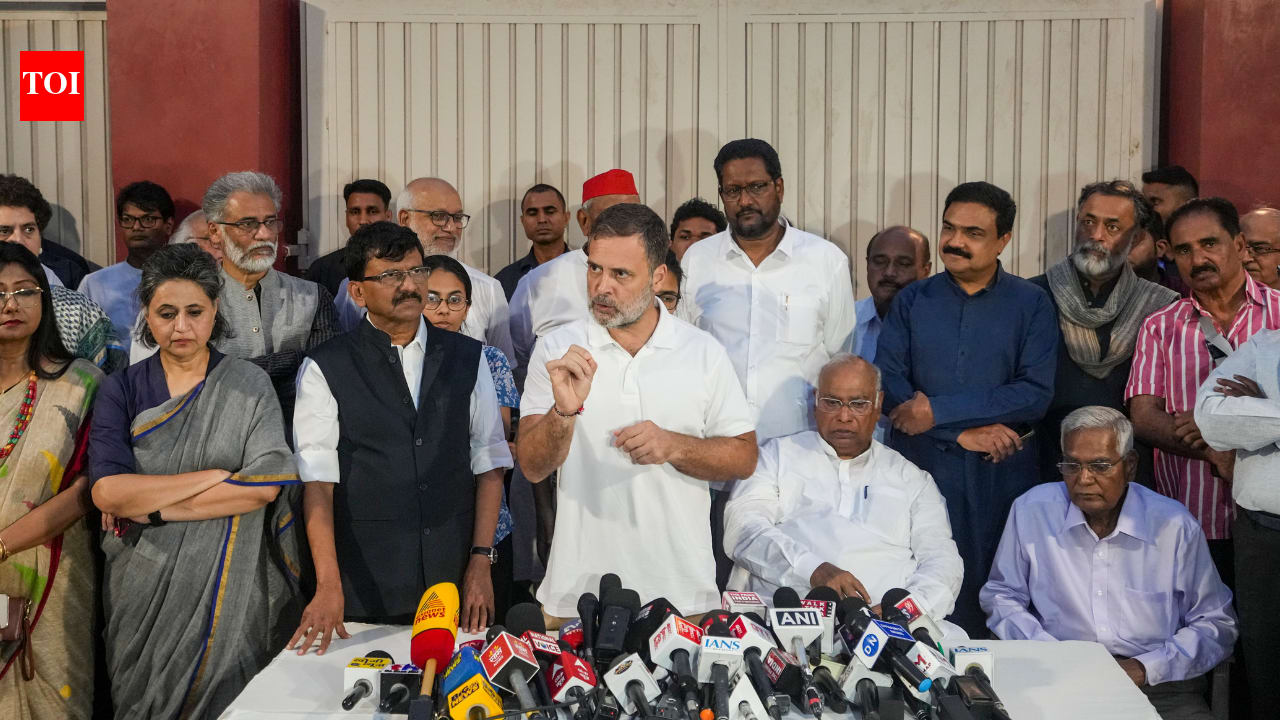
Congress leaders Mallikarjun Kharge and Rahul Gandhi sought a meeting with CJI Surya Kant to discuss alleged electoral malpractice. The Chief Justice declined the request, citing the separation of powers and the fact that the issues are currently sub judice.
The Confrontation Over Constitutional Integrity
In a significant development for Indian democracy, Congress President Mallikarjun Kharge and Leader of the Opposition Rahul Gandhi recently sought a formal audience with the Chief Justice of India (CJI), Surya Kant. The primary motivation behind this request was to voice deep-seated concerns regarding what the opposition coalition terms 'vote chori' (electoral theft) and the alleged erosion of the independence of constitutional institutions, specifically the Election Commission of India.
The Opposition's Narrative of an 'Undeclared Emergency'
Mallikarjun Kharge’s rhetoric surrounding this initiative has been severe, framing the current political climate as an 'undeclared Emergency.' By alleging that the ruling party has leveraged legislative changes to facilitate electoral malpractice, the Congress leadership is attempting to elevate their concerns from the political arena to the judicial branch. This move signifies a strategic pivot by the INDIA bloc to seek external validation for their grievances regarding the administrative functions of state bodies.
The Judicial Stance: Maintaining Separation of Powers
The request for a meeting, scheduled for October 12, 2026, was ultimately declined by CJI Surya Kant. In an official communication sent to the opposition leaders, the CJI’s office confirmed that the request was rejected 'with reasons.' This decision underscores the judiciary's commitment to maintaining a clear distance from political disputes, reinforcing the fundamental constitutional principle of the separation of powers between the legislature, the executive, and the judiciary.
Legal Precedents and Sub Judice Constraints
A critical factor in the CJI's refusal is the principle of sub judice. Sources indicate that the issues raised by the Congress leadership are already subjects of active litigation within the Supreme Court. For the CJI to engage in a private meeting regarding these matters would potentially compromise the impartiality of the court. Furthermore, the judiciary maintains that it cannot intervene in the routine administrative governance of the state, as doing so would overstep its mandate and encroach upon the executive's domain.
Broader Implications for Indian Democracy
This episode highlights the growing friction between the executive and the opposition regarding the neutrality of constitutional watchdogs. The attempt by the INDIA bloc to involve the judiciary suggests a lack of faith in traditional parliamentary debate mechanisms to resolve disputes over electoral integrity. As these tensions persist, the role of the Supreme Court as the final arbiter of constitutional propriety remains under intense public and political scrutiny.
Future Trends in Political-Judicial Relations
Looking ahead, this refusal sets a clear precedent for how the judiciary intends to handle political grievances that are essentially partisan in nature. By prioritizing institutional decorum and legal proceduralism over political engagement, the current leadership of the Supreme Court is signaling a return to a more traditional interpretation of judicial boundaries. For the opposition, this failure to secure a high-level meeting may force them to seek alternative avenues—such as public protests or legislative challenges—to maintain pressure on the government regarding electoral reforms.
Multiple Citing Sources