Amit Shah says Congress’s decision on rendering first two stanzas of Vande Mataram is ‘anti-national’
Source Entity
India Latest News: Top National Headlines Today & Breaking News | The Hindu
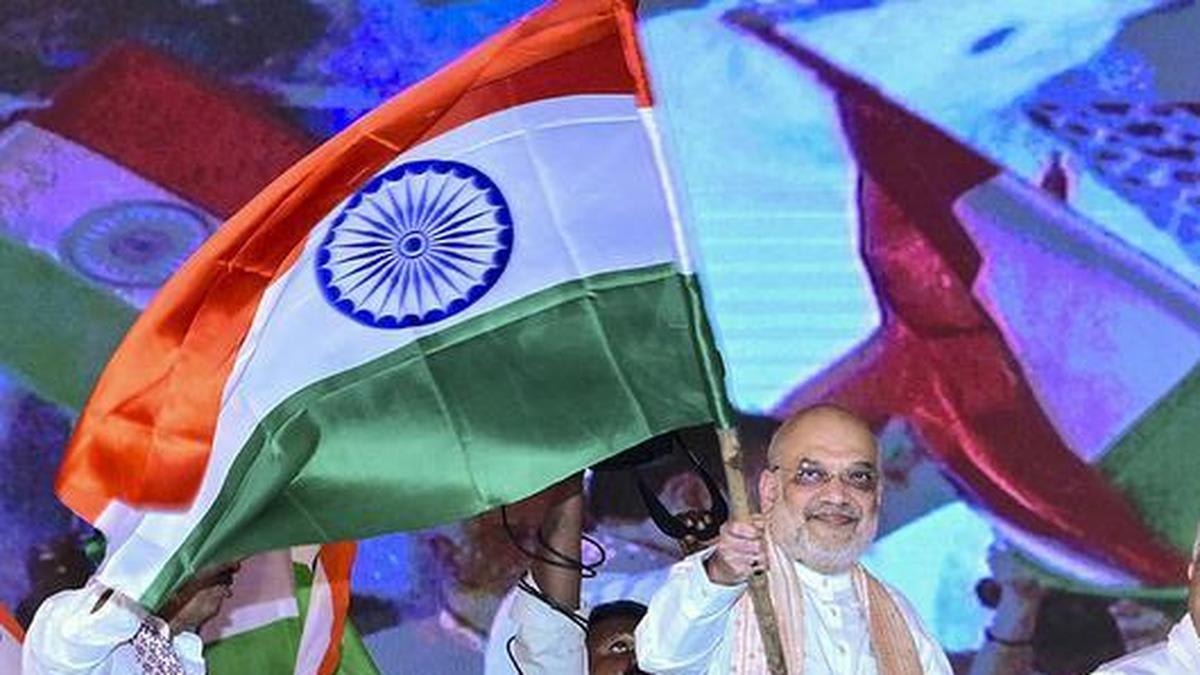
The Congress Working Committee has decided to limit Vande Mataram renditions to two stanzas, citing a 1937 resolution. This move has sparked sharp criticism from the BJP, while Congress President Mallikarjun Kharge simultaneously expressed personal hurt over lack of internal support regarding a recent 'purification' controversy.
Congress Reaffirms Stance on Vande Mataram Amid Political Firestorm
The Congress Working Committee (CWC), the highest decision-making body of the Indian National Congress, recently solidified its protocol regarding the national song, Vande Mataram. During a meeting at the party headquarters in New Delhi, the leadership decided that official party functions will exclusively feature the first two stanzas of the song. This decision is not a recent innovation but a formal return to a 1937 CWC resolution, which the party claims was supported by historical figures such as Mahatma Gandhi and Rabindranath Tagore to maintain communal harmony and brevity in public recitations.
The Historical and Political Context
By anchoring their decision in a 1937 resolution, the Congress seeks to frame the move as a commitment to historical precedent rather than a contemporary political maneuver. The party argues that the later stanzas of the song were historically contentious, and by limiting the rendition, they are upholding the spirit of the freedom struggle as envisioned by the founding leadership of the party. However, this move has invited immediate and intense scrutiny from political opponents.
The BJP’s Sharp Critique
BJP President Nitin Nabin has strongly condemned the decision, labeling the Congress the "New Muslim League" and accusing the party of insulting the nation’s martyrs for the sake of vote-bank politics. This rhetoric highlights the deep ideological divide in Indian politics, where symbols of nationalism are often at the center of heated public discourse. For the BJP, the move is seen as a disregard for the sacred invocation of 'Bharat Mata,' while for the Congress, it is a matter of adhering to established organizational norms.
Internal Strife: The 'Purification' Controversy
Beyond the national song debate, the CWC meeting served as a venue for Congress President Mallikarjun Kharge to voice rare, personal anguish. Kharge expressed disappointment that many CWC members failed to publicly condemn a 'purification' ritual (shuddhikaran havan) performed after his visit to Haldwani, Uttarakhand. The Congress has linked this event to a casteist mindset allegedly fostered by BJP-affiliated elements, though the BJP has distanced itself from the incident.
Implications for Party Cohesion
Kharge’s public expression of hurt regarding the lack of support from his own colleagues reveals underlying tensions within the party hierarchy. While the CWC is meant to present a united front, the failure of members to rally behind the party president on an issue as sensitive as caste-based discrimination suggests a struggle to maintain a unified narrative. This internal vulnerability could complicate the party’s efforts to effectively oppose the BJP on broader national issues.
Conclusion and Future Outlook
As the political landscape in India continues to polarize, the Congress finds itself caught between navigating historical legacies and managing modern electoral optics. The combination of the Vande Mataram controversy and the internal friction over the 'purification' incident underscores the difficult road ahead for the party. Moving forward, the effectiveness of the Congress will likely depend on its ability to reconcile its internal contradictions while countering the aggressive nationalist narrative presented by the BJP.
Multiple Citing Sources
Verification Required?