Constitution Day LIVE updates: Priceless heritage of Indian democracy, says PM Modi
Source Entity
India Latest News: Top National Headlines Today & Breaking News | The Hindu
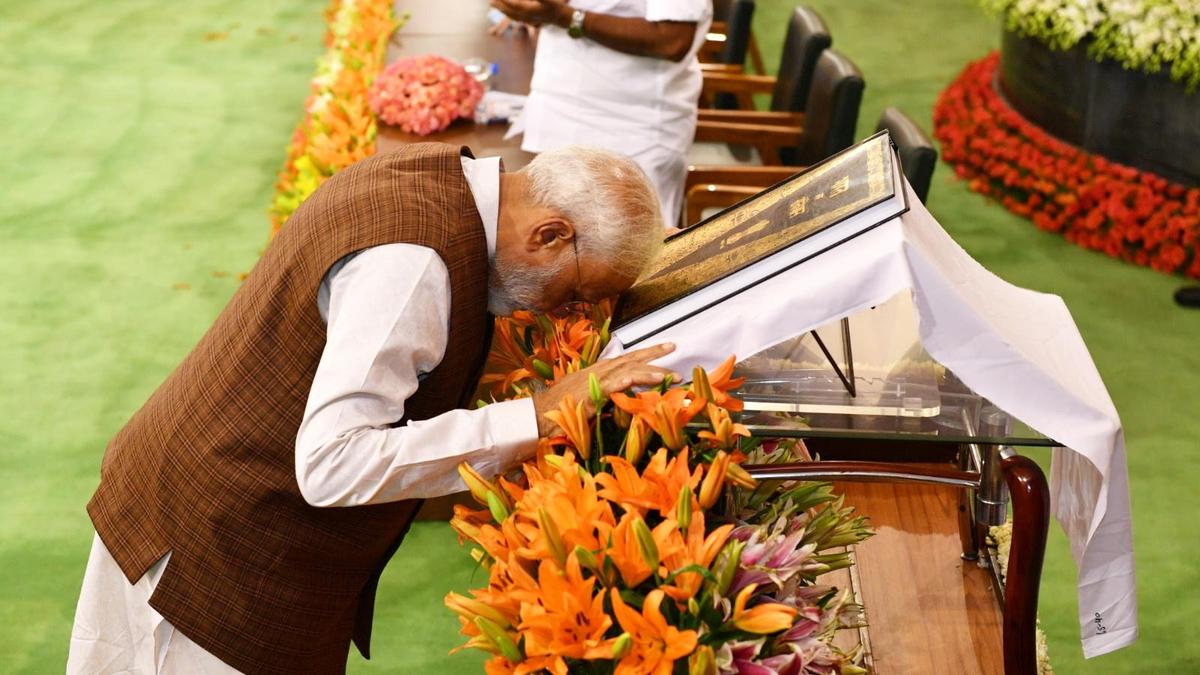
Prime Minister Narendra Modi commemorated Constitution Day by highlighting its role in democracy and national development. Meanwhile, the Congress party organized 'Samvidhan Raksha' marches to protest alleged electoral irregularities.
Honoring the Foundation of Indian Democracy
On November 26, 2026, India observed Constitution Day, a day dedicated to commemorating the adoption of the Constitution in 1949. Prime Minister Narendra Modi led the national tributes, honoring the architects of the document, including Dr. Rajendra Prasad and Dr. Babasaheb Ambedkar. By framing the Constitution as a 'priceless heritage,' the Prime Minister emphasized its central role in guiding the nation toward the vision of 'Viksit Bharat' (Developed India) by 2047.
Connecting Constitutional Values to Governance
In his communication, PM Modi underscored that his administration has consistently sought to bridge the gap between constitutional principles and the daily lives of citizens. By marking November 26 as Constitution Day over a decade ago, the government aimed to weave constitutional awareness into the collective consciousness of the youth. The Prime Minister argued that through welfare schemes and strategic amendments, the government has actively promoted social and economic justice, positioning the Constitution as an inseparable part of the national journey.
The 'India First' Vision for 2047
Central to the Prime Minister’s message is the concept of 'India First' thinking and the prioritization of civic duties. The narrative posits that the realization of a developed India is contingent upon the alignment of constitutional values with proactive governance. This approach seeks to strengthen national unity while ensuring that democratic institutions remain robust enough to facilitate long-term socio-economic progress.
Political Dissent and the 'Samvidhan Raksha' Movement
While the government framed the day as a celebration of democratic heritage, the political landscape remained polarized. The Indian National Congress utilized the occasion to launch 'Samvidhan Raksha' (Protect the Constitution) marches across various states. This initiative serves as a direct challenge to the ruling government, focusing on grievances regarding the integrity of electoral rolls and the perceived failure of the Election Commission of India (ECI) to safeguard universal suffrage.
Broader Implications for Indian Democracy
This intersection of celebratory rhetoric and political protest reflects the evolving nature of Indian discourse surrounding its foundational document. On one side, the government emphasizes constitutional stability and developmental goals; on the other, the opposition asserts that the machinery of democracy—specifically the right to vote—is under threat. These developments highlight a critical trend where the Constitution is increasingly becoming the primary arena for both national vision-setting and intense political accountability.
Conclusion: The Continuing Legacy
As India moves toward its centennial in 2047, the debate over the Constitution remains as relevant as ever. Whether through the lens of state-led welfare and unity or through the opposition’s focus on the protection of electoral rights, the Constitution of India continues to serve as the ultimate touchstone for political legitimacy. The events of November 26, 2026, underscore that while the document is a static text adopted in 1949, its interpretation and application remain a dynamic, and often contentious, process in the modern Indian state.
Multiple Citing Sources
Verification Required?