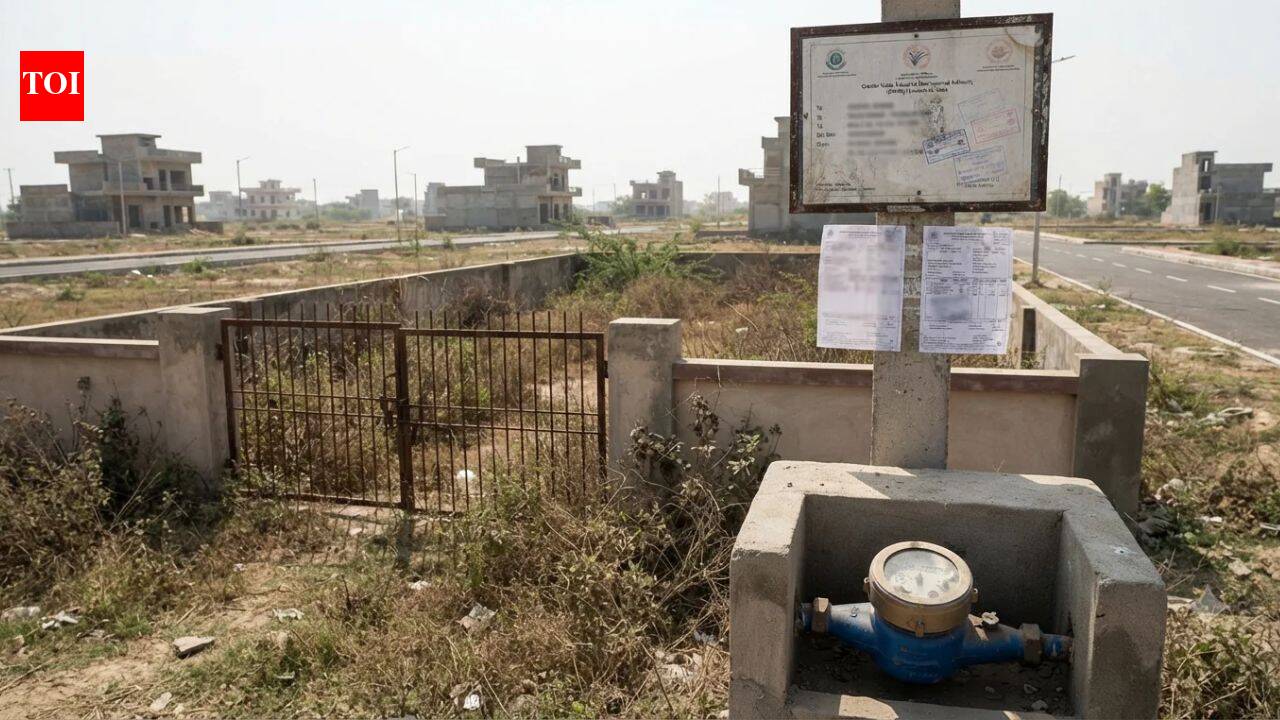
No water used at Greater Noida plot, yet GNIDA bills man Rs 14,128
Source Entity
TOI CITY DESK
Consumer commissions in India have recently ruled in favor of citizens against service providers for unfair billing and arbitrary service termination. These verdicts underscore the growing accountability of utility authorities and private distributors in protecting consumer rights.
Upholding Consumer Rights: Recent Rulings Against Utility Arbitrariness
Recent legal interventions by consumer commissions in India have highlighted a critical shift in the accountability of utility providers. In two distinct cases—one involving the Greater Noida Industrial Development Authority (GNIDA) and another involving a Bharat Gas distributor—authorities have been penalized for administrative failures that caused significant distress to service users. These rulings serve as a potent reminder that service providers cannot operate with impunity, regardless of their status as government bodies or private distributors.
The GNIDA Billing Dispute
In the case of the Greater Noida resident, the GNIDA issued water bills totaling Rs 14,128 for a plot that remained unoccupied. Despite the consumer possessing the plot since 2010 without active water usage, the authority insisted on fixed charges for over four years. This case highlights a recurring issue where infrastructure authorities apply blanket billing policies without verifying actual site conditions. The consumer commission's decision to classify this as an 'unfair trade practice' marks a significant victory for property owners who are often forced to pay for services they never requested or received.
Accountability in LPG Services
Simultaneously, a consumer commission in Andhra Pradesh addressed a grievance involving the wrongful cancellation of an LPG connection. Shaik Abdulla, a consumer attempting to relocate, found his service terminated due to the distributor's failure to process a transfer request correctly. The commission, led by President Karanam Kishore Kumar and member N. Narayana Reddy, ordered the restoration of the connection and mandated compensation for mental agony and litigation costs. This ruling emphasizes that essential service providers have a statutory obligation to facilitate seamless transitions for their customers.
Broader Implications for Utility Governance
These incidents reflect a broader systemic challenge within India’s utility sector: the lack of robust grievance redressal mechanisms. When consumers are forced to approach legal commissions for issues that should be resolved via standard customer support channels, it points to a breakdown in administrative efficiency. By mandating compensation, these commissions are effectively increasing the 'cost of failure' for service providers, incentivizing them to adopt more transparent and responsive operational practices.
Historical Context and Future Trends
The legal landscape in India has increasingly favored the consumer through the Consumer Protection Act, which empowers individuals to challenge arbitrary bureaucratic decisions. As digital infrastructure improves, there is an expectation that billing and transfer processes will become more automated, reducing the scope for human error or intentional harassment. Future trends suggest that regulatory bodies will likely impose even stricter penalties on public and private entities that fail to maintain accurate records or neglect the needs of their subscribers.
Conclusion
The dual rulings against GNIDA and the Bharat Gas distributor represent a positive trajectory in consumer protection. By holding these entities accountable for their negligence, the consumer commissions have reinforced the principle that service delivery must be predicated on actual usage and procedural fairness. As these precedents set the bar higher, consumers can expect greater vigilance and improved service standards across India's utility landscape.