Could a modern chess engine on a Pentium have defeated Kasparov in 1996?
Source Entity
Hacker News
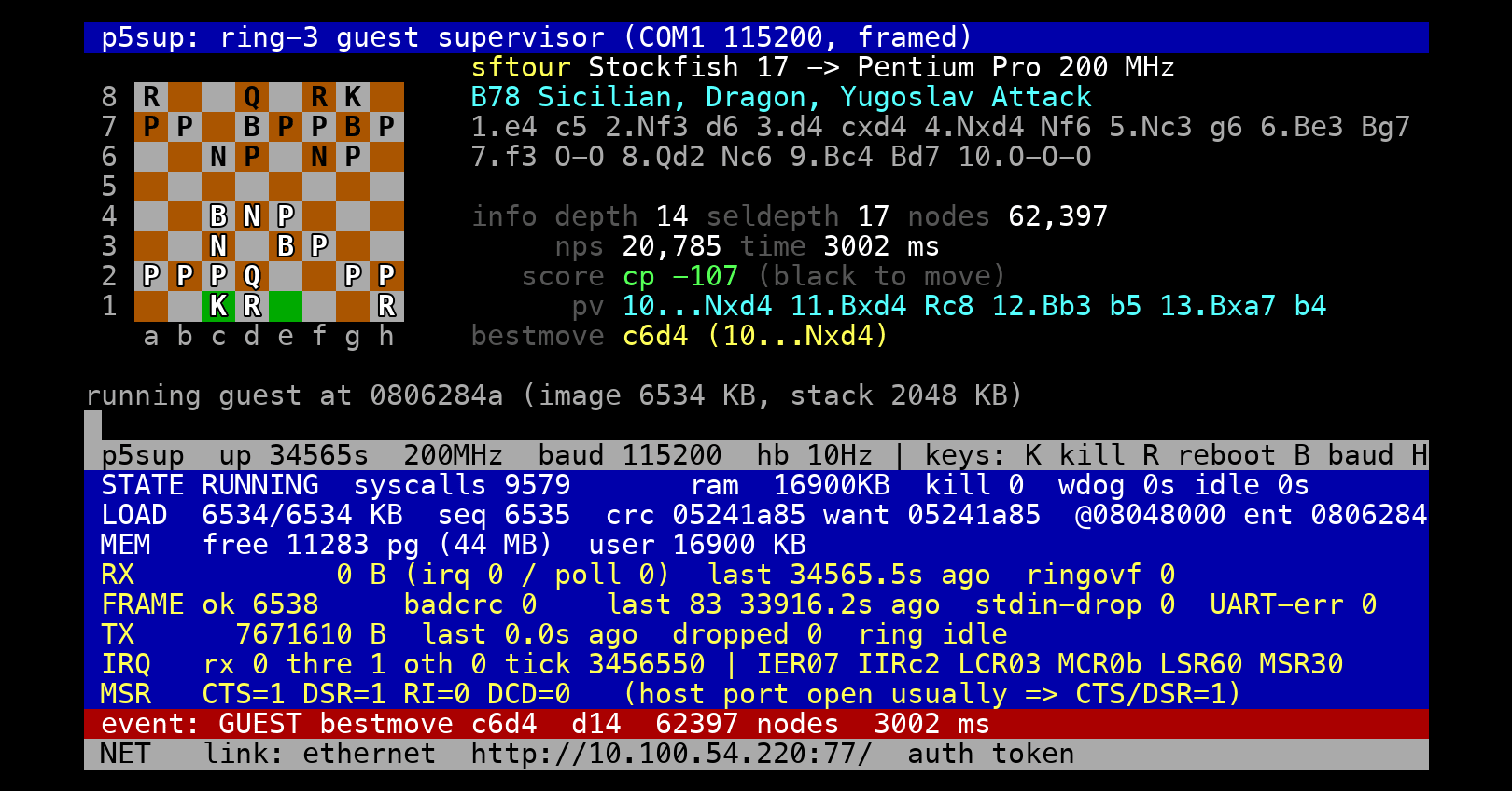
This analysis explores whether modern chess software could have defeated Garry Kasparov in 1996 if it were restricted to the hardware of that era. It highlights the vast disparity between Deep Blue's custom-built supercomputing architecture and the standard consumer processors available at the time.
The Technological Frontier: Deep Blue vs. Kasparov
On February 10, 1996, the world of artificial intelligence reached a watershed moment when IBM’s Deep Blue defeated reigning World Chess Champion Garry Kasparov in a single game. While Kasparov ultimately won that initial match, the event signaled a shift in the human-machine hierarchy. By 1997, the upgraded Deep Blue would go on to defeat Kasparov in a full match, marking the first time a machine had bested a world champion under tournament conditions.
The Architecture of a Champion
Deep Blue was not a standard computer running a software program; it was a marvel of custom engineering. IBM invested millions of dollars into developing a bespoke architecture designed specifically to dominate the board. The machine was powered by 30 P2SC processors running at 120 MHz, but the real secret to its success lay in its 480 custom VLSI chess co-processors. These dedicated chips offloaded the heavy lifting of move generation and position evaluation, allowing the system to calculate millions of positions per second in a way that general-purpose hardware could not replicate.
Modern Engines on Legacy Hardware
A fascinating question arises: could a modern chess engine, such as Stockfish or Leela Chess Zero, defeat Kasparov if it were constrained to run on a 1996-era Pentium processor? The answer is nuanced. While modern algorithms are vastly superior in their heuristic evaluation of board states, they rely heavily on massive computational throughput and modern cache structures. A Pentium, even at its peak, lacks the parallel processing power and the dedicated VLSI circuitry that allowed Deep Blue to brute-force its way through millions of variations.
The Hardware-Software Divide
In 1996, the bottleneck for chess AI was not just the algorithm, but the raw ability to search the game tree. Deep Blue’s hardware was essentially a hardware-accelerated search engine. A modern engine, if ported to a single Pentium, would be significantly handicapped. It would lose the ability to perform deep look-aheads, which is the cornerstone of modern engine strength. Without the massive parallelism provided by modern hardware, even the smartest AI would struggle to out-calculate a human grandmaster on such limited silicon.
Historical Context and Future Implications
Looking back, the battle between Kasparov and Deep Blue was as much a battle of hardware design as it was of software logic. The shift from custom-built supercomputers to the era of commodity hardware and neural networks has changed the landscape of AI entirely. Today, we no longer need custom chips to defeat grandmasters; we use general-purpose GPUs and advanced machine learning models. This evolution underscores a broader trend in computing: the transition from application-specific hardware to flexible, software-defined intelligence.
Conclusion
Ultimately, while modern software is far more sophisticated than the code that powered Deep Blue, it requires the modern hardware environment to function at peak capacity. Restricting a contemporary engine to a mid-90s Pentium would effectively strip it of its greatest advantage—its ability to process vast amounts of data in real-time. Thus, the victory of Deep Blue remains a unique historical instance where specialized hardware was the defining factor in human-machine competition.