IT hubs see 82% commute by personal vehicles, just 2% use public transport
Source Entity
India Latest News: Top National Headlines Today & Breaking News | The Hindu
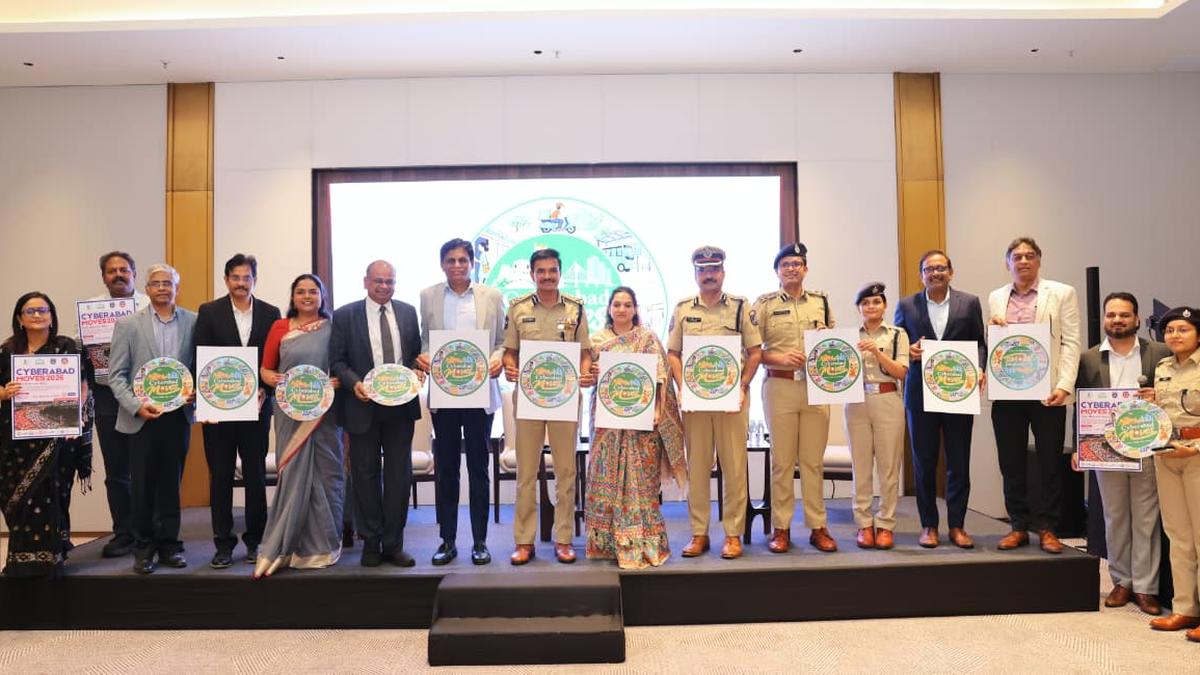
Cyberabad's IT sector is facing a severe mobility crisis, with 82% of commuters relying on personal vehicles and only 2% using public transport. Daily traffic volume across 15 key hubs now exceeds 2.5 million, highlighting an urgent need for infrastructure reform.
The Mobility Crisis in Cyberabad: A Deep Dive into Urban Congestion
Cyberabad, the beating heart of Hyderabad’s technological prowess, is currently confronting an existential threat to its growth: a paralyzing mobility crisis. Recent data from the Cyberabad Police and the Society for Cyberabad Security Council (SCSC) reveals that an astounding 82% of commuters rely on personal vehicles to navigate the region, while public transport usage languishes at a mere 2%. This heavy reliance on private transport is not merely an inconvenience; it is a structural failure that threatens the efficiency and sustainability of one of India's most important IT corridors.
The Scale of the Challenge
The figures provided by local authorities paint a stark picture. Across 15 key IT-sector locations, daily traffic volume—comprising both vehicles and individuals—has surged beyond 2.5 million. When contextualized against a resident population of 3.5 million spread across 637 square kilometers, the density of movement becomes clear. With approximately six lakh IT professionals converging on these hubs daily, the existing road infrastructure is being pushed to its breaking point, resulting in the chronic gridlock that now defines the commuter experience in the area.
Infrastructure vs. Urban Expansion
The historical context of Cyberabad’s rapid development explains much of the current imbalance. As the region transformed into a global technology hub, urban planning often struggled to keep pace with the sheer speed of corporate expansion. While the IT sector created massive employment opportunities, the public transit infrastructure failed to scale proportionally, leaving employees with few reliable alternatives to personal car or bike ownership. This systemic gap has solidified a culture of private vehicle dependency that is difficult to reverse.
The Ripple Effect on Productivity
The broader implications of this reliance on personal vehicles are multifaceted. Beyond the immediate frustration of traffic congestion, the environmental impact of such a high volume of individual vehicles is significant, contributing to poor air quality and increased carbon footprints. Furthermore, there is a tangible economic cost; the millions of man-hours lost in transit each day represent a massive drain on the productivity of the IT sector. When a workforce spends a significant portion of their day trapped in traffic, the long-term competitiveness of the region as a global tech destination is compromised.
Future Trends and Necessary Interventions
Looking ahead, the data suggests that unless there is a radical shift toward integrated public transport solutions, the congestion in Cyberabad will only intensify. Future trends indicate that urban centers must prioritize multi-modal transit systems that bridge the 'last-mile' connectivity gap, which currently forces many to opt for personal vehicles. Policymakers will likely need to explore aggressive incentives for public transit, improved last-mile connectivity, and perhaps even shifts toward hybrid work models to mitigate the daily surge of human movement. Addressing this 82% dependency rate is no longer an optional improvement; it is a mandatory requirement for the future viability of the Cyberabad IT ecosystem.
Verification Required?