Dara Singh, prime convict in murder of Australian Christian missionary Graham Staines, two sons, to set free
Source Entity
India Latest News: Top National Headlines Today & Breaking News | The Hindu
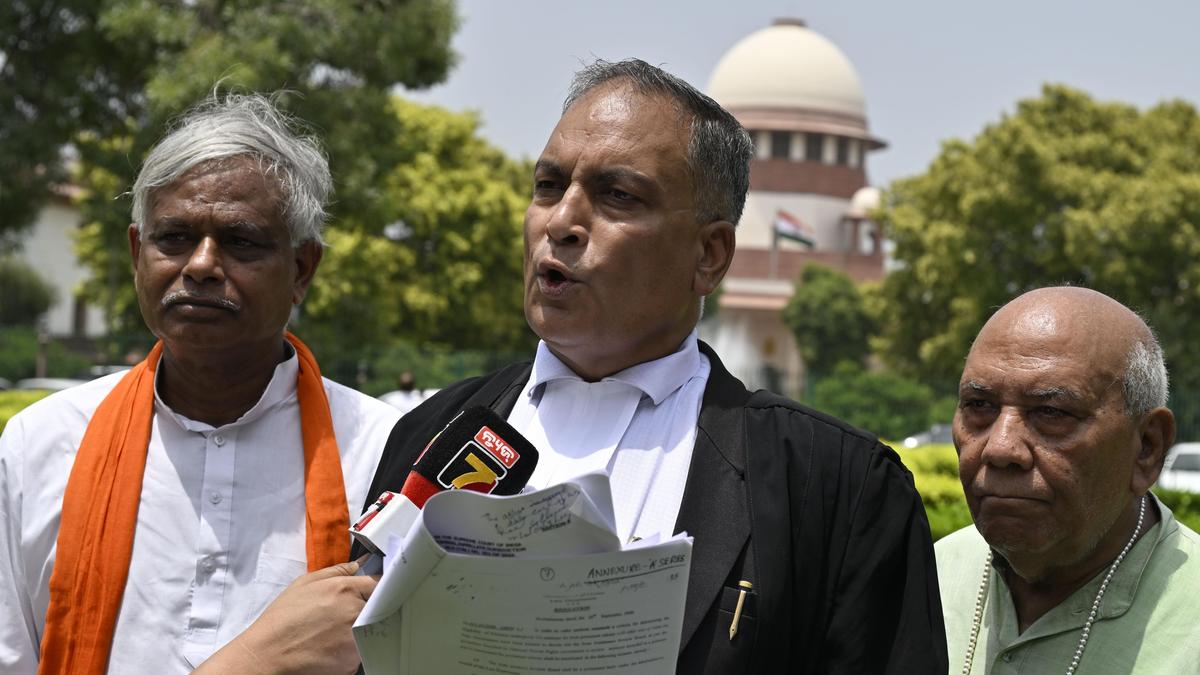
Odisha State Sentence Review Board has recommended Dara Singh’s release on the grounds of ‘good behaviour’
Legal Turning Point: The Recommended Release of Dara Singh
In a development that revisits one of the most harrowing chapters of communal violence in modern Indian history, the Odisha State Sentence Review Board has recommended the release of Dara Singh. Singh was the prime convict in the 1999 attack that resulted in the deaths of Australian Christian missionary Graham Staines and his two young sons. The recommendation for his release is predicated on 'good behavior' during his time in prison, a standard legal mechanism for the remission of sentences, yet one that carries immense emotional and political weight given the nature of the crime.
Historical Context of the Staines Tragedy
To understand the gravity of this recommendation, one must look back to January 23, 1999, in Manoharpur, Odisha. Graham Staines, an Australian national who had dedicated his life to serving the leprosy-affected poor in India, was targeted in a brutal attack. A mob, orchestrated by Dara Singh, set fire to the station wagon where Staines and his two children, Philip and Timothy, were sleeping. The brutality of the act—burning a father and his children alive—sent shockwaves across the globe and highlighted the volatile intersection of religious identity and extremist violence in the region. The event not only strained diplomatic perceptions of safety for foreigners in India but also became a symbol of the struggle for religious freedom.
The Legal Journey and Conviction
Dara Singh's path to conviction was fraught with legal complexities and delays. As the mastermind behind the attack, Singh faced multiple charges. While the legal process was protracted, the judiciary eventually held him accountable for his role in the conspiracy and execution of the murders. His incarceration served as a deterrent and a form of retribution for a crime that the courts viewed as an assault on the very fabric of secularism. The current recommendation by the Sentence Review Board represents the administrative side of the penal system, where the focus shifts from punishment to the potential for rehabilitation based on the inmate's conduct within the prison walls.
The Role of the Sentence Review Board
The Odisha State Sentence Review Board operates under specific guidelines to determine if a life convict has served sufficient time and demonstrated a change in character to warrant early release. By citing 'good behavior,' the board is applying a standard administrative metric. However, in high-profile cases involving hate crimes or mass violence, such recommendations often spark intense debate. Critics argue that 'good behavior' inside a controlled prison environment does not necessarily erase the heinous nature of the original crime or guarantee that the individual no longer poses a risk to communal harmony.
Broader Implications for Communal Harmony
The potential release of Dara Singh is likely to be viewed through a polarized lens. For some, it is a matter of following legal protocol and the principle of rehabilitation. For others, particularly those advocating for minority rights and the family of the victims, it may be perceived as a dilution of justice. The Staines case remains a touchstone for discussions on religious tolerance in India. The release of a figure associated with such a visceral act of violence could potentially reignite old tensions or be interpreted as a signal regarding the state's stance on communal crimes.
Conclusion: Justice vs. Rehabilitation
Ultimately, the recommendation for Dara Singh's release brings the tension between judicial punishment and administrative remission to the forefront. While the State Sentence Review Board has followed the procedural requirements for release, the legacy of the Graham Staines murders continues to loom large. As the case moves toward a final decision, it serves as a reminder of the enduring scars left by communal violence and the ongoing challenge of balancing the legal right to remission with the societal need for accountability and closure.
Verification Required?