Air pollution over 50 times WHO limit in parts of Delhi as people defy ban on firecrackers on Deepavali
Source Entity
India Latest News: Top National Headlines Today & Breaking News | The Hindu
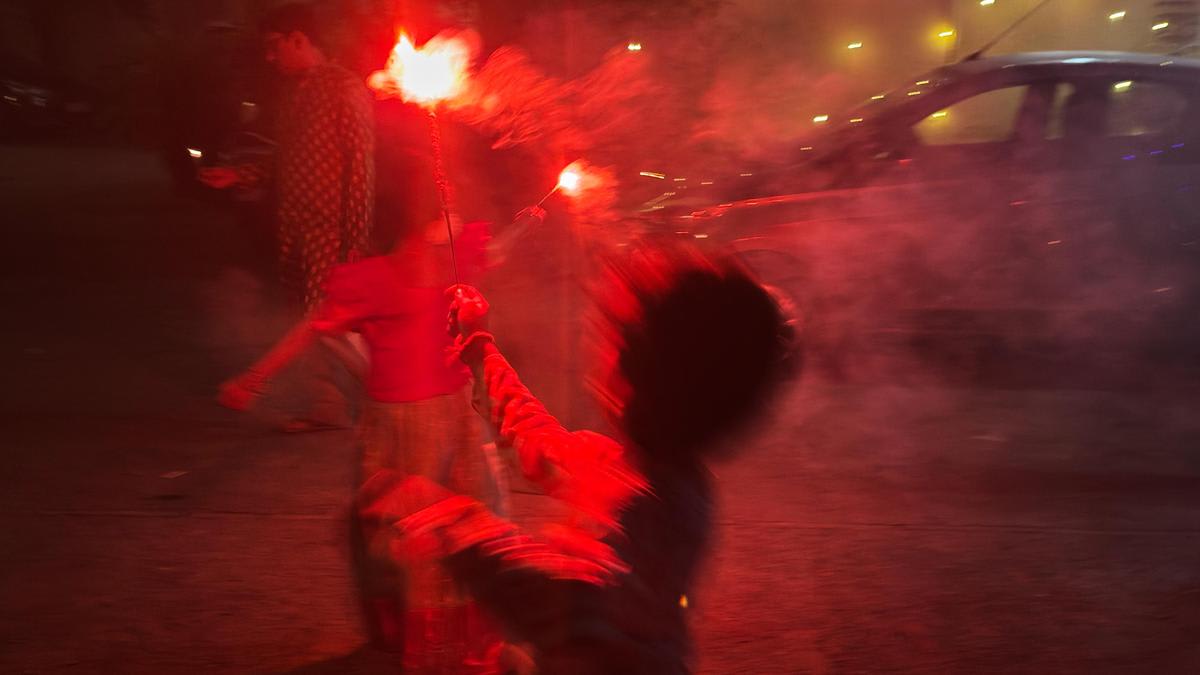
Delhi's air quality has reached a critical state with an AQI of 383 on Diwali, as multiple monitoring stations report 'severe' pollution levels. The toxic haze is attributed to firecracker usage and stagnant atmospheric conditions, with forecasts predicting continued poor air quality.
Delhi’s Atmospheric Crisis: A Diwali Under Toxic Haze
On the morning of Diwali, the national capital of Delhi found itself enveloped in a thick, hazardous blanket of smog. According to data from the Central Pollution Control Board (CPCB), the city recorded an overall Air Quality Index (AQI) of 383. This figure places the city perilously close to the 'severe' category, which begins at an AQI of 401, signaling a major public health concern for millions of residents.
The Geography of Pollution
The crisis is not distributed evenly across the city. While the overall index sits at 383, local variations reveal a dire situation in specific pockets. Of the 54 monitoring stations across the capital, 24 have already breached the 'severe' threshold. Jahangirpuri leads the list with a staggering AQI of 450, followed closely by Punjabi Bagh (449), R K Puram (448), Bawana (446), and IIT Delhi (445). Even iconic locations such as India Gate are struggling, with readings near the Kartavya Path reaching 398, keeping the area firmly in the 'very poor' category.
Contributing Factors and Immediate Triggers
The deterioration of air quality on this scale is a complex interplay of seasonal factors and human activity. The data suggests that firecracker usage on the eve of Diwali acted as a significant catalyst, exacerbating existing pollution loads. This spike occurred despite a marginal improvement in air quality recorded between Friday (382) and Saturday (369), illustrating the volatility of the capital's air shed during the festive season.
Broader Implications for Public Health
When AQI levels consistently hover between 'very poor' and 'severe,' the implications for public health are profound. Exposure to such high concentrations of PM2.5—the fine particulate matter that penetrates deep into the respiratory and circulatory systems—is linked to long-term chronic illness and acute respiratory distress. The fact that nearly half of the city's monitoring stations are reporting 'severe' levels underscores the gravity of the situation for vulnerable populations, including children, the elderly, and those with pre-existing conditions.
Future Trends and Forecasting
Looking ahead, the Air Quality Early Warning System (EWS) for Delhi provides a grim outlook. Forecasts indicate that the air quality is likely to remain in the 'severe' category through November 8 and 9. This persistence suggests that the current atmospheric conditions are not conducive to the rapid dispersion of pollutants, meaning the toxic haze is expected to linger well beyond the immediate celebration of the festival.
Conclusion
The current air quality crisis in Delhi serves as a stark reminder of the environmental challenges facing the capital. With 24 stations reporting 'severe' pollution and a forecast that promises little relief in the coming days, the situation remains a critical public health emergency. Addressing these recurring spikes will require sustained efforts to curb localized emissions and manage the cumulative impact of festive activities on the region's already strained environment.
Multiple Citing Sources
Verification Required?