Delhi overtakes Lahore as world's most polluted city as air quality drops
Source Entity
India Latest News: Top National Headlines Today & Breaking News | The Hindu
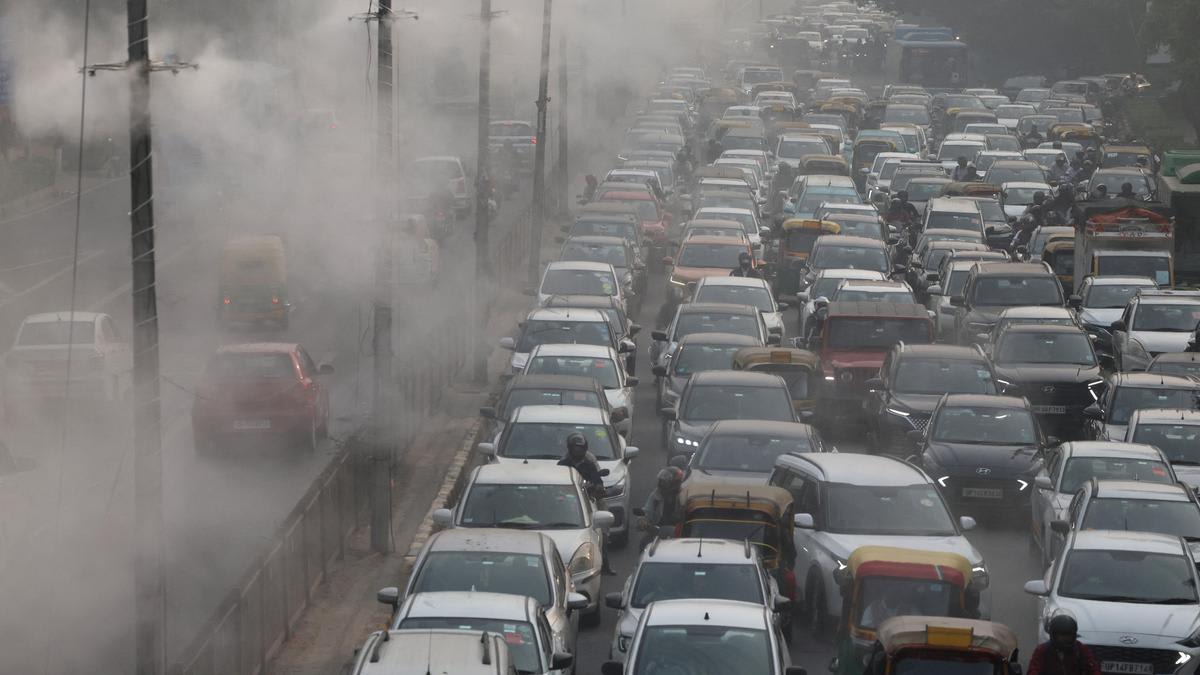
Delhi's air quality has plunged into the 'severe' category, with AQI levels breaching the 400 mark across multiple monitoring stations. The crisis, confirmed by CPCB data on November 13, 2026, has affected the entire National Capital Region.
Delhi Faces Critical Air Quality Crisis
On November 13, 2026, the national capital of India experienced a significant environmental downturn as the overall Air Quality Index (AQI) surged into the 'severe' category. According to data released by the Central Pollution Control Board (CPCB), the 24-hour average AQI reached 403 by 9 a.m., signaling a rapid degradation from the 'very poor' levels recorded just 24 hours prior. This surge in pollutants has enveloped the city in a thick layer of smog, impacting visibility and public health.
Widespread Impact Across Monitoring Stations
The severity of the situation is reflected in the granular data provided by the CPCB. Out of 58 monitoring stations across Delhi, 33 have reported 'severe' air quality levels. Specific locations, such as the area surrounding AIIMS, recorded an alarming AQI of 418, while the Rajokri Border reported 402. Even locations not classified as 'severe,' such as the Dwarka Expressway, are currently struggling with 'very poor' air quality, indicating a pervasive crisis that transcends specific neighborhoods.
Regional Escalation in North India
The pollution crisis is not confined to the boundaries of the national capital. Neighboring regions and towns, including Noida, Gurugram, and Faridabad, have reported 'very poor' air quality. Furthermore, Ballabgarh in Haryana has joined Delhi in the 'severe' category. This regional trend highlights the systemic nature of air pollution in Northern India, where geographical and meteorological factors often conspire to trap pollutants over a vast, interconnected landscape.
Meteorological and Structural Challenges
The persistence of these conditions is underscored by the Central government’s ‘Air Quality Early Warning System for Delhi,’ which projected that the 'severe' category would likely remain in effect through Friday night. The rapid shift from an AQI of 350 on Thursday afternoon to over 400 by Friday morning demonstrates the volatile nature of Delhi’s air quality, which is frequently exacerbated by seasonal weather patterns that prevent the dispersion of particulate matter.
Future Implications and Public Health
The recurring nature of these 'severe' pollution episodes poses long-term risks to the health of millions residing in the National Capital Region. As the city grapples with these high AQI levels, the focus shifts to the efficacy of current mitigation strategies and the urgent need for long-term policy interventions. Without consistent improvement, the region remains susceptible to these environmental shocks, which have become an annual challenge for urban planning and public health governance in India.
Verification Required?