'If someone dies .... ': Police probes alleged chats ahead of CJP's 'Sansad Chalo' march
Source Entity
TOI NEWS DESK
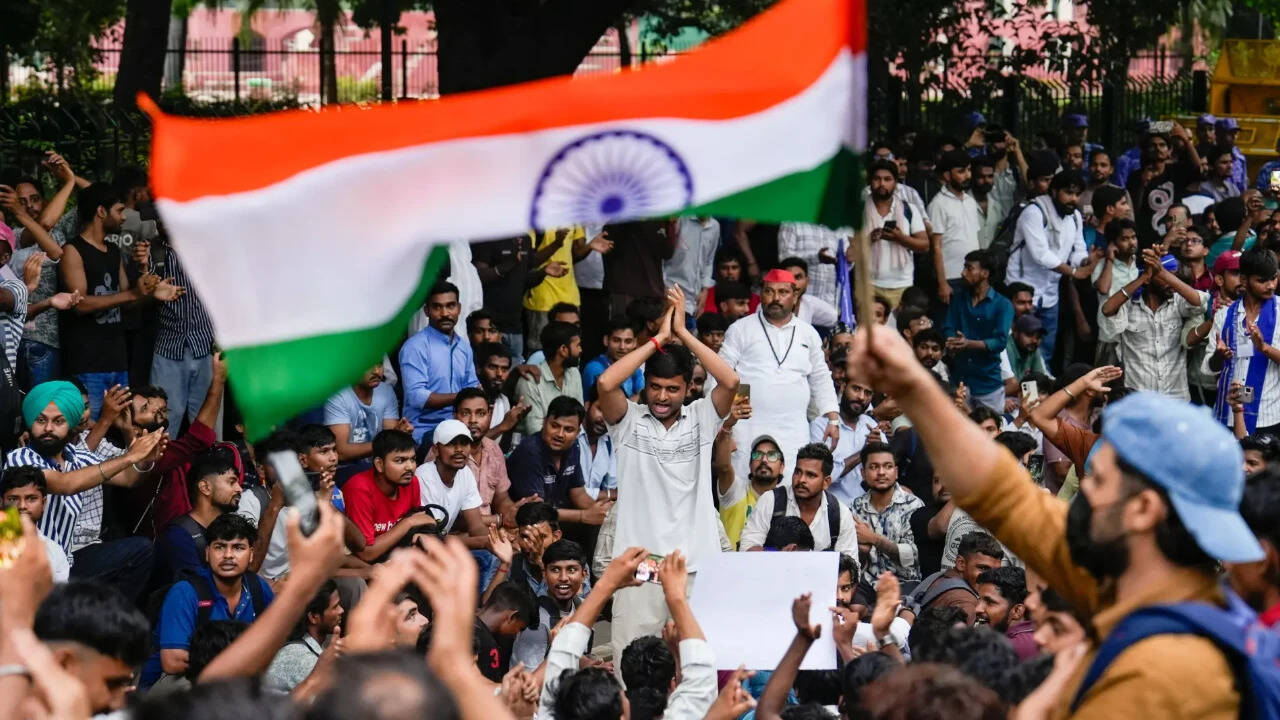
A CJP-led protest march in Delhi demanding Education Minister Dharmendra Pradhan's resignation escalated into violent clashes, leaving over 118 police personnel and 60 protesters injured. Demonstrators sought refuge in Gurdwara Bangla Sahib as police detained 70 individuals following the unrest.
The Delhi Protests: A Volatile Intersection of Policy and Public Unrest
The Anatomy of the Conflict
On a tumultuous Monday in the heart of Delhi, a march led by the CJP (Climate and Justice/Campaign group) demanding the resignation of Education Minister Dharmendra Pradhan spiraled into widespread chaos. The scene was marked by the jarring sounds of ambulance sirens, the visual obstruction of teargas, and the rhythmic clamor of slogans. As police enforced prohibitory orders, the situation descended into a violent confrontation, with both sides reporting significant casualties. The intensity of the afternoon forced hundreds of protesters to seek sanctuary within the walls of the iconic Gurdwara Bangla Sahib, illustrating the desperation of those caught in the crossfire.
Escalation and Police Response
According to official statements from the Delhi Police, the protest was characterized by what authorities described as “large-scale violence” and “unruly behavior.” The police reported that 118 of their personnel, including senior officers, sustained injuries from stones and various objects hurled by the crowd. The authorities further alleged that demonstrators attempted to breach barricades, vandalized government vehicles, and damaged public property. In response, the police detained approximately 70 protesters, citing the necessity of maintaining order after the crowd repeatedly ignored lawful directions to disperse.
The Human Cost and Social Impact
While the police reported 118 injuries among their ranks, they also confirmed that approximately 60 protesters were injured during the scuffle. The emotional toll was palpable, with stories emerging of mothers witnessing their sons injured amidst the chaos. For those on the ground, the march was not merely a political statement but a deeply personal struggle for their cause. The presence of placards reading “We are with Sonam Wangchuk” signaled that the protest was intrinsically linked to broader grievances, with the subsequent shifting of Sonam Wangchuk to Safdarjung Hospital by the police adding a layer of high-stakes tension to the event.
Historical Context of Delhi Protests
Delhi has long served as a theater for political protest, where the convergence of citizens at sites like Parliament Street often forces the state into a defensive posture. The use of lathi-charges and teargas, while standard in crowd control, frequently sparks debates regarding the proportionality of force. The reliance on religious sites like Gurdwara Bangla Sahib as a temporary refuge reflects a historical pattern in the capital, where public institutions and places of worship become neutral zones during periods of intense civil unrest.
Broader Implications and Future Trends
This event highlights the increasing polarization surrounding educational policy and administrative accountability in India. The demand for the resignation of a high-ranking cabinet minister suggests that the grievances are systemic rather than superficial. Moving forward, the government faces the challenge of balancing the fundamental right to protest with the maintenance of public safety. If the underlying issues regarding the Education Ministry are not addressed through dialogue, the trend of recurring, high-intensity marches is likely to continue, potentially leading to further strain on the capital's security infrastructure and civil society relations.
Conclusion
The clash at Parliament Street serves as a sobering reminder of the volatility inherent in large-scale public demonstrations. With both the state and the protesters reporting significant physical harm, the need for a mediated resolution becomes paramount. As the legal processes for those detained begin and the injured recover, the incident will likely fuel further discourse on the limits of dissent and the role of the state in managing political mobilization in a democratic society.
Multiple Citing Sources