Flaws in Delhi landfill ops take centre stage, MCD plans to ramp up facilities
Source Entity
Latest News: Today's Latest News Headlines from India & World | Hindustan Times | Hindustan Times
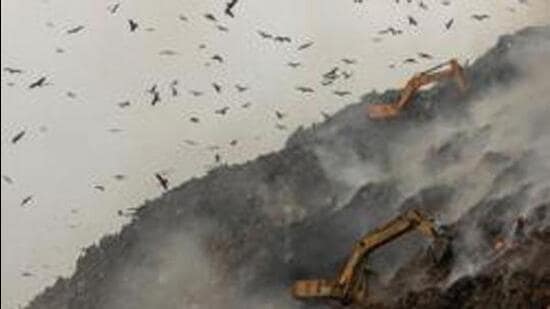
New DelhiPoor disposal of fly ash, subpar performance of a waste-to-energy (WtE) plant and gaps in leachate disposal continue to hinder clearance of legacy waste at the Ghazipur landfill site in Delhi, according to violations flagged by a commissioner appointed by the National Green Tribunal (NGT) in a suo motu case based on a report published in these columns
Crisis at the Core: Analyzing the Systemic Failures of the Ghazipur Landfill
The Ghazipur landfill in Delhi has long served as a grim monument to the city's struggle with urban waste management. The recent findings by a commissioner appointed by the National Green Tribunal (NGT) highlight a critical breakdown in the operational infrastructure intended to remediate this site. The core issues—ranging from the mismanagement of fly ash to the inefficiency of waste-to-energy (WtE) plants—suggest that the Municipal Corporation of Delhi (MCD) has struggled to transition from mere waste accumulation to scientific waste processing. This situation is not merely an operational lapse but a systemic failure that threatens the environmental health of the National Capital Region (NCR).
Technical Bottlenecks: Fly Ash and Leachate Management
Two of the most concerning violations flagged are the poor disposal of fly ash and gaps in leachate disposal. Fly ash, a byproduct of the combustion process in waste-to-energy plants, contains concentrated heavy metals and toxins. When improperly handled, it can become airborne, contributing to Delhi's already hazardous air quality, or seep into the soil. Simultaneously, leachate—the toxic liquid that drains from a landfill—poses a severe threat to groundwater. If leachate disposal systems are flawed, this "garbage juice" permeates the water table, contaminating local aquifers and risking the health of surrounding communities. The failure to manage these two streams indicates a lack of rigorous adherence to environmental safety protocols during the legacy waste clearance process.
The Waste-to-Energy (WtE) Paradox
The subpar performance of the Waste-to-Energy plant at Ghazipur reveals a significant gap between policy intent and operational reality. WtE plants are designed to reduce the volume of legacy waste by incinerating it to produce electricity, thereby shrinking the physical footprint of the landfill. However, when these plants underperform, the rate of waste clearance slows down, and the landfill continues to grow or remain stagnant. This inefficiency often stems from the high moisture content of Indian municipal solid waste or the lack of pre-sorting, which lowers the calorific value of the fuel. The NGT's focus on this plant underscores the necessity for technological upgrades and better feedstock management to make waste incineration a viable solution rather than a symbolic gesture.
Regulatory Pressure and the Role of the NGT
The intervention of the National Green Tribunal (NGT) through a suo motu case demonstrates the judiciary's growing impatience with the MCD's slow progress. By appointing a commissioner to audit the site, the NGT has shifted the oversight from self-reporting by the MCD to independent verification. This regulatory pressure is essential because landfill remediation projects are often plagued by bureaucratic inertia and a lack of transparency. The fact that these violations were flagged based on an investigative report suggests that public and journalistic scrutiny is now a primary driver for municipal accountability in Delhi's environmental governance.
Broader Implications for Urban Planning
The struggle at Ghazipur reflects a broader crisis in Indian urban planning, where waste generation has far outpaced the development of processing infrastructure. The reliance on "legacy waste clearance" is a reactive strategy; the true solution lies in decentralized waste segregation and a circular economy. The current failure to manage leachate and fly ash serves as a cautionary tale for other metropolitan cities in India that are attempting to implement similar WtE models. Without a comprehensive plan that integrates the entire waste lifecycle—from source segregation to final residue disposal—the cycle of creating "waste mountains" will likely continue despite technological interventions.
Future Outlook and Necessary Reforms
Moving forward, the MCD's plan to "ramp up facilities" must go beyond superficial upgrades. To achieve genuine clearance of legacy waste, the city requires a multi-pronged approach: upgrading the WtE plant's efficiency, installing advanced leachate treatment plants (LTPs), and ensuring a closed-loop system for fly ash utilization (such as in brick making). Future trends suggest a shift toward "biomining," where legacy waste is excavated and sorted into combustibles, recyclables, and inert soil. If the MCD can successfully integrate these methods with the NGT's strict oversight, Ghazipur could transition from a liability to a blueprint for landfill reclamation. However, the window for action is narrow, as the environmental costs of inaction continue to mount.
Verification Required?