Rides of joy and freedom: 130 girl students receive bicycles
Source Entity
Alok Singh
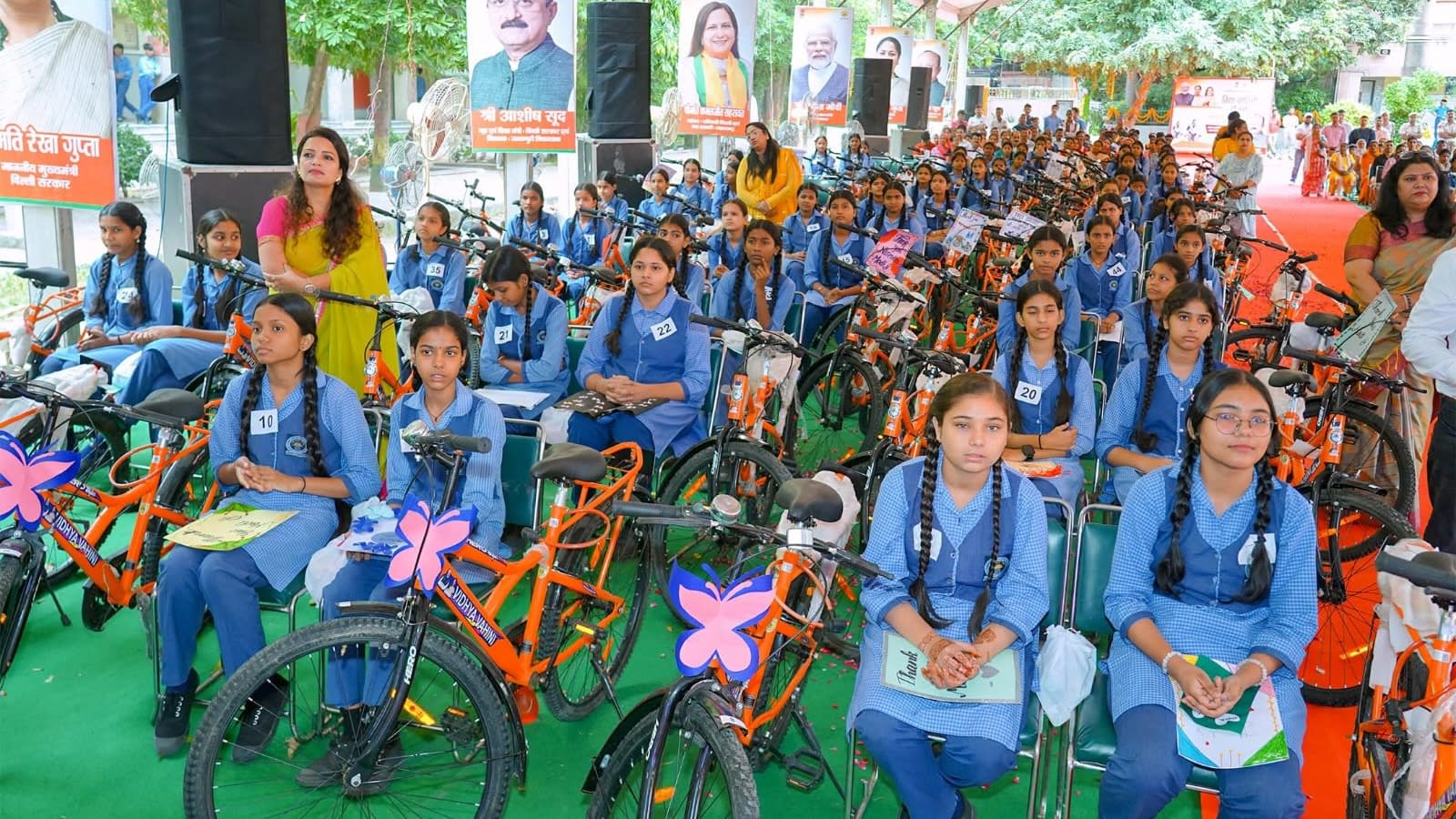
The Delhi government has launched the Vidya Vahini Yojana, distributing bicycles to 130 Class 9 female students in Janakpuri. This initiative aims to improve school attendance and foster independence for over 1.4 lakh eligible girls across the capital.
Empowering Education: The Vidya Vahini Yojana Initiative
In a significant move to bolster educational access and gender equity, the Delhi government recently distributed bicycles to 130 Class 9 female students at a school in Janakpuri. This distribution event, overseen by Delhi Education Minister Ashish Sood, marks a concrete operational phase of the Vidya Vahini Yojana, a flagship program launched in July of this year. By providing these bicycles, the government aims to address the logistical barriers that often impede the educational journey of young girls in the national capital.
The Impact of Mobility on Student Life
The qualitative impact of this initiative is best reflected through the personal experiences of the recipients. For students like Sonam, the bicycle represents a newfound sense of personal autonomy, allowing her to travel to the market without relying on external support. Meanwhile, students like Rizwana and Sweety highlight the practical benefits of the scheme; for Rizwana, the bicycle reduces her commute time to school by two-thirds, while for Sweety, it marks a historic milestone as the first bicycle ever owned by her family. These testimonies underscore the transformative power of simple, targeted infrastructure support in the lives of adolescent students.
Scaling the Vidya Vahini Yojana
The Janakpuri distribution event is merely the beginning of a much larger logistical rollout. The Delhi government has identified approximately 1.4 lakh girls as eligible beneficiaries for this scheme, which is being implemented in carefully managed phases. By targeting Class 9 students specifically, the program strategically intervenes at a critical juncture in a student's academic life, where the risk of dropout often increases due to transportation challenges or household responsibilities.
Broader Implications for Educational Equity
Historically, transportation has been a major socio-economic barrier to secondary education for girls in urban and peri-urban environments. The Vidya Vahini Yojana serves as a policy intervention designed to bridge the 'last-mile' connectivity gap. When students can travel safely and quickly, their attendance rates typically improve, and their engagement with extracurricular activities increases, leading to better long-term academic outcomes.
Future Trends and Policy Sustainability
Looking ahead, the success of the Vidya Vahini Yojana will likely be measured by its ability to maintain the momentum of distribution across all eligible government schools. If the program achieves its target of covering 1.4 lakh students, it could serve as a model for other Indian states facing similar challenges in student retention. The sustainability of this project will depend on the government's capacity to manage maintenance logistics and ensure that the bicycles continue to serve the intended demographic effectively.
Conclusion
Ultimately, the distribution of bicycles in Janakpuri is a testament to the Delhi government's commitment to inclusive education. By removing the physical hurdles to schooling, the Vidya Vahini Yojana is not just providing transportation; it is investing in the independence, safety, and future prospects of thousands of young women in Delhi.