Delhi’s BS-VI curbs, Day 2: Checks at some borders, free passage at others
Source Entity
Drishti Jain, Abhimanyu Hazarika
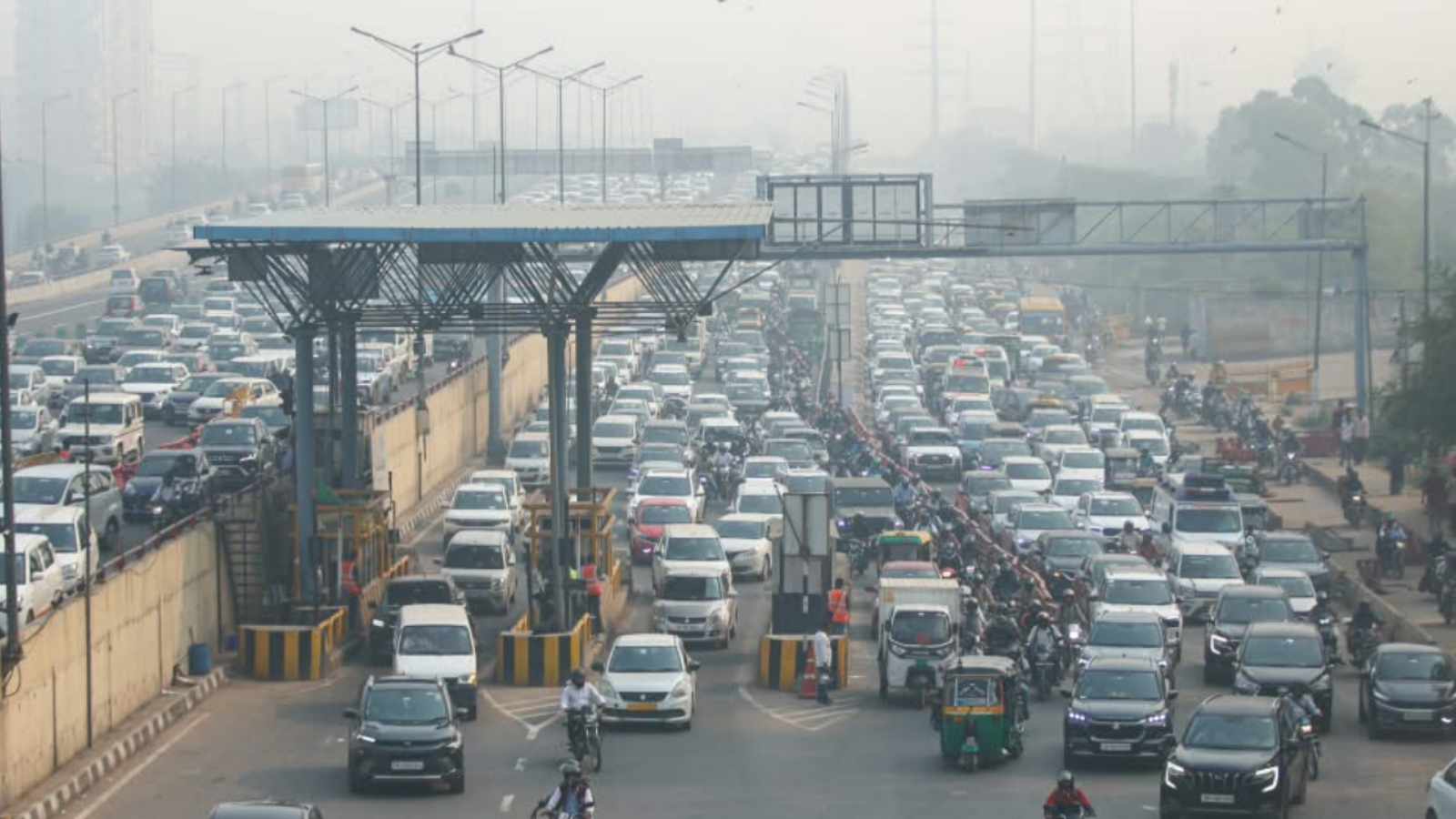
Delhi has implemented strict winter pollution control measures from November 1 to January 31, including a ban on non-BS-VI vehicles from neighboring NCR districts. These restrictions, alongside construction curbs and office attendance adjustments, aim to address the capital's deteriorating air quality.
Delhi Implements Stringent Winter Pollution Measures
Starting November 1, the Delhi government has activated a comprehensive seasonal framework to combat the capital's perennial winter air quality crisis. These measures, which extend beyond the standard Graded Response Action Plan (GRAP), will remain in effect until January 31, 2027. The initiative is a direct response to the alarming environmental challenges faced by the region, which recently recorded its lowest average Air Quality Index (AQI) of 166 for October in eight years.
The Challenge of Non-BS-VI Vehicles
A central component of the new strategy is the restriction on non-BS-VI petrol and diesel vehicles registered outside of Delhi. With approximately 48 lakh such vehicles registered in NCR districts bordering the capital—and over 3 crore across Uttar Pradesh, Haryana, and Rajasthan—the scale of the enforcement challenge is immense. Because roughly three-quarters of these older, high-emission vehicles are two-wheelers that frequently commute into Delhi, the ban aims to significantly reduce the daily tailpipe emission load.
Enforcement and Infrastructure Limitations
The Delhi Traffic Police face a formidable task in managing these entry restrictions. Given the high volume of daily cross-border traffic, ensuring effective compliance requires not only manpower but also integrated surveillance systems. Authorities are currently navigating the complexities of monitoring thousands of entry points where vehicles registered outside the capital attempt to access the city, necessitating a robust coordination effort between regional law enforcement agencies.
A Multi-Pronged Mitigation Strategy
Beyond vehicle restrictions, the government has adopted a holistic approach to pollution management. This includes reduced office attendance and staggered working hours to lower the volume of commuters on the road. Additionally, the administration has introduced higher parking fees to discourage the use of private transport. These measures are designed to work in tandem with stricter regulations on dust-generating construction activities, which are a major contributor to particulate matter in the air during the colder months.
Rerouting Through-Traffic
Recognizing that a significant portion of Delhi's traffic is merely passing through, the government is actively adjusting traffic patterns to reroute non-essential transit away from the city center. By diverting this through-traffic, officials hope to alleviate congestion and concentrate emission sources away from the most densely populated residential zones. This shift is critical for maintaining the efficacy of the localized pollution control measures.
Future Implications and Outlook
The success of these interventions over the next three months will likely set a precedent for future winter air quality management. By targeting the influx of older vehicle models and controlling construction dust, the city is attempting to mitigate the severe smog that historically plagues the region. The effectiveness of these policies will be measured by the air quality trends observed through January 2027, potentially influencing long-term policies regarding regional vehicle registration and interstate transportation standards.
Multiple Citing Sources