Heavy rain, thunderstorms lash Delhi; IMD issues 'red' alert
Source Entity
India Latest News: Top National Headlines Today & Breaking News | The Hindu
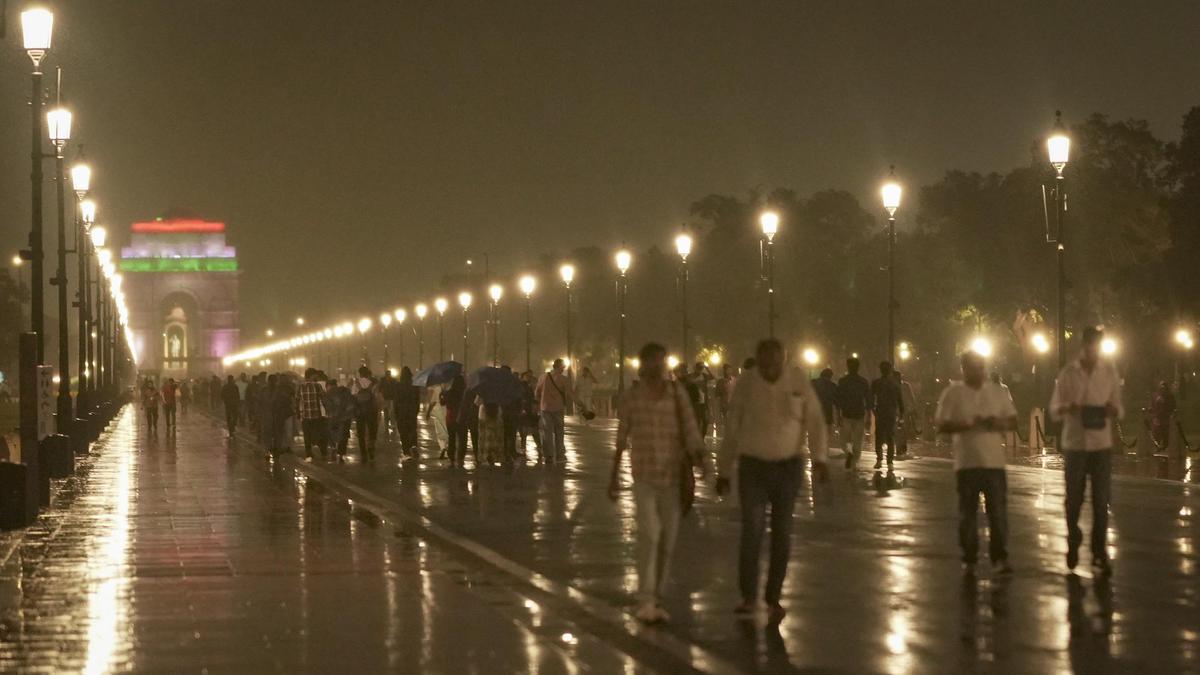
Delhi-NCR experienced heavy rainfall and thunderstorms on October 12, 2026, prompting a red alert from the IMD. The weather caused widespread waterlogging, while political tensions simultaneously rose as opposition leaders staged a march to the Supreme Court.
Delhi-NCR Faces Intense Weather and Political Unrest
On the morning of October 12, 2026, the National Capital Region (NCR) experienced a sudden and intense meteorological event. Heavy rainfall accompanied by thunderstorms lashed Delhi, Noida, Gurugram, and Ghaziabad, prompting the India Meteorological Department (IMD) to issue a 'red' alert. This classification signals the highest level of weather warning, necessitated by severe conditions including gusty winds reaching 60 kmph and precipitation rates exceeding 15 mm per hour.
Meteorological Impact and Data
According to the Safdarjung observatory, which serves as the primary data point for the capital, 40 mm of rain was recorded by 5:30 a.m., while the Delhi airport received 30 mm. The heavy downpour significantly impacted urban infrastructure, leading to widespread waterlogging across key areas such as R K Puram, Kartavya Path, and parts of central, southeast, and west Delhi. While the rain provided a temporary respite from heat, bringing cooler conditions, it also severely disrupted early morning transit and daily life across the NCR.
Short-term Weather Outlook
Despite the intensity of the storm, the IMD predicts a stabilization of temperatures in the coming days. Maximum temperatures are expected to remain between 32 and 34 degrees Celsius on October 13, with a slight rise to 33–35 degrees Celsius by October 14. Minimum temperatures are anticipated to remain steady within the 23 to 25-degree range, suggesting that while the immediate storm was severe, the broader climatic trend remains consistent with seasonal expectations.
Political Tensions Amidst Inclement Weather
Concurrent with the weather crisis, the political landscape in Delhi escalated as the INDIA bloc and Congress leaders initiated a planned march to the Supreme Court. This demonstration follows Chief Justice of India Surya Kant’s refusal to meet with opposition leaders, citing sub-judice proceedings and the principle of the constitutional separation of powers. The juxtaposition of a 'red' weather alert and a high-stakes political protest has created a complex logistical situation for the capital.
Broader Implications and Urban Challenges
The convergence of severe weather and mass political mobilization highlights the fragility of urban infrastructure in Delhi-NCR. The closure of six key Delhi Metro stations, necessitated by the march, compounded the mobility issues already caused by waterlogged streets. As Delhi continues to face increasing climate volatility, the demand for resilient drainage systems and robust crisis management protocols becomes increasingly critical for maintaining the functionality of the national capital during extreme weather events and political volatility.
Multiple Citing Sources
Verification Required?