Delhi Police arrests two law students for disrupting Supreme Court proceedings
Source Entity
Latest News: Today's Latest News Headlines from India & World | Hindustan Times | Hindustan Times
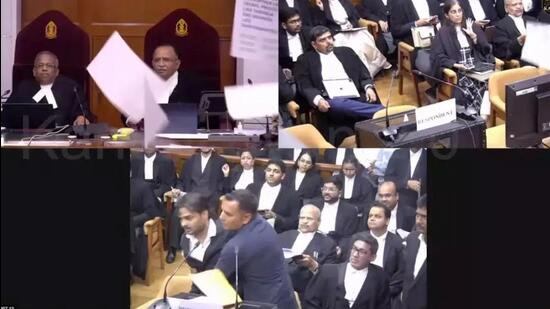
Delhi Police have arrested two law students for disrupting proceedings in Court No. 13 of the Supreme Court on July 10, following a formal complaint lodged by the court's security staff.
Disruption of Judicial Sanctity: Law Students Arrested in Supreme Court
In a significant breach of courtroom decorum, the Delhi Police have arrested two law students for disrupting the proceedings of the Supreme Court of India. The incident, which occurred on July 10 within the confines of Court No. 13, led to the registration of a First Information Report (FIR) following a formal complaint lodged by the Supreme Court's security personnel. This event highlights a concerning lapse in conduct by individuals who are currently being trained to enter the legal profession, where respect for the court is the foundational pillar of practice.
The Sanctity of Courtroom Decorum
Courtrooms, particularly the Supreme Court as the apex judicial body, operate under strict protocols to ensure that justice is administered without interference or chaos. The disruption of proceedings is not merely a behavioral issue but is often viewed as an affront to the majesty of the law. Court No. 13, like all chambers in the Supreme Court, requires an environment of absolute silence and order to allow judges to deliberate and counsel to argue their cases effectively. When this environment is compromised, it hinders the judicial process and can be interpreted as an attempt to obstruct the administration of justice.
The Paradox of Legal Education and Conduct
There is a profound irony in the fact that the accused are law students. In the Indian legal system, law students are viewed as future 'officers of the court.' Their education emphasizes not only the mastery of statutes and precedents but also the adherence to professional ethics and courtroom etiquette. The breach of these norms by students suggests a disconnect between academic legal training and the practical application of professional conduct. Such actions may raise questions within academic institutions regarding the emphasis placed on judicial ethics versus theoretical knowledge.
Procedural Response and Security Framework
The swift response of the Supreme Court security staff in filing a complaint underscores the zero-tolerance policy toward disruptions within the judicial premises. The transition from a security complaint to a police FIR indicates that the disruption was deemed severe enough to warrant criminal proceedings rather than a simple removal from the premises. This procedural escalation serves as a deterrent to others, reinforcing the idea that the security of the court is not merely physical but extends to the preservation of the judicial atmosphere.
Potential Professional and Legal Consequences
Beyond the immediate legal ramifications of the FIR, these students face potentially devastating consequences for their future careers. To practice law in India, an individual must enroll with the Bar Council of India (BCI), which requires a demonstration of good moral character. A criminal record involving the disruption of the highest court in the land could lead to disciplinary action by their university or, more critically, the rejection of their application for enrollment as advocates. This incident serves as a cautionary tale regarding the long-term professional impact of impulsive actions within a legal setting.
Conclusion
The arrest of two law students for disrupting proceedings in Court No. 13 is a stark reminder of the necessity of maintaining discipline within the judiciary. While the specific motives behind the disruption remain to be fully detailed in the legal proceedings, the act itself undermines the dignity of the Supreme Court. This incident emphasizes the need for a stronger integration of ethics and courtroom etiquette in legal education to ensure that the next generation of lawyers upholds the sanctity of the halls of justice.
Verification Required?