Shipwrecks of Shackleton and Scott recreated in 3D digital form after deep sea expedition
Source Entity
Leyland Cecco in Toronto
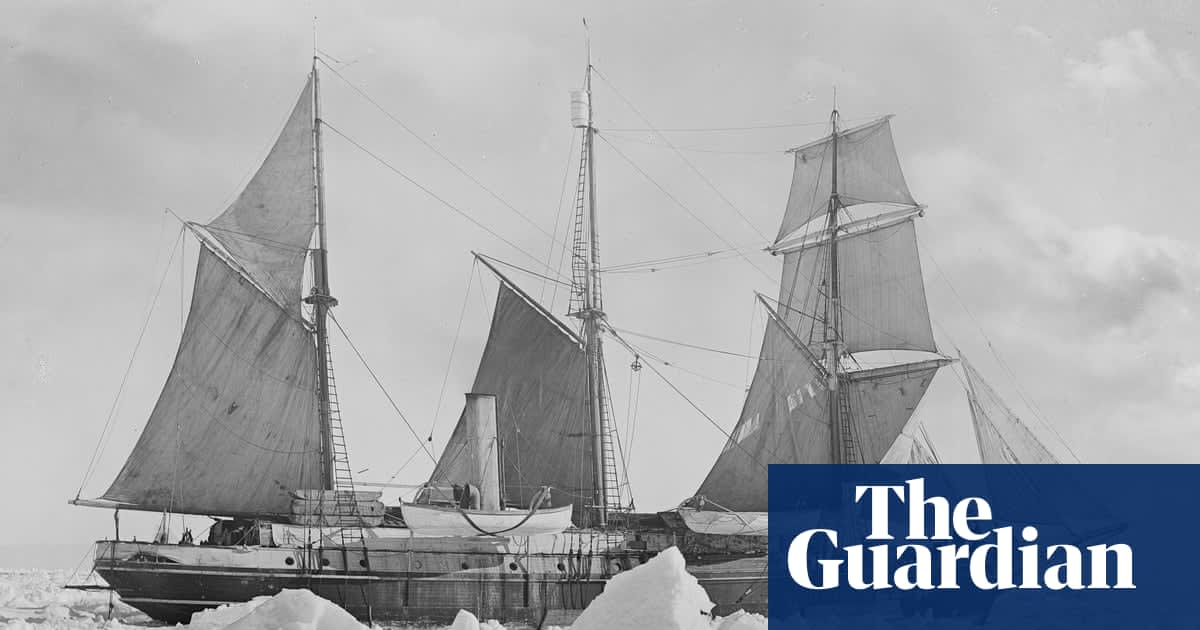
Canadian scientists have successfully utilized advanced deep-sea exploration technology to create high-resolution 3D digital recreations of the shipwrecks belonging to legendary polar explorers Ernest Shackleton and Robert Falcon Scott.
Bridging Eras: The Digital Resurrection of Polar History
In a remarkable fusion of historical preservation and cutting-edge marine technology, Canadian scientists have successfully located and digitally reconstructed the shipwrecks of two of history's most renowned polar explorers, Ernest Shackleton and Robert Falcon Scott. By deploying advanced deep-sea expedition equipment in the challenging waters of the Labrador Sea, the team has managed to bring the 'skeletons' of these vessels back to the surface—not physically, but through high-fidelity 3D digital twins. This achievement marks a pivotal moment in maritime archaeology, transforming how we interact with the remnants of the 'Heroic Age of Antarctic Exploration.'
The Technology of Digital Twins in the Deep
Finding a shipwreck 1,000 feet (305 metres) below the surface presents immense technical hurdles, primarily due to absolute darkness, extreme pressure, and the presence of silt that can obscure visibility. The use of 3D digital recreation—likely employing photogrammetry and sonar mapping—allows scientists to capture thousands of overlapping images and data points to build a precise geometric model of the vessel. This 'digital twin' approach is revolutionary because it provides a non-invasive method of study. Rather than risking the structural integrity of the fragile, decaying hulls by attempting recovery, researchers can now analyze the ships' architecture and the circumstances of their sinking in a virtual environment with millimetric precision.
The Legacy of Shackleton and Scott
To understand the significance of these findings, one must look at the historical weight carried by the names Shackleton and Scott. These men epitomized the early 20th-century drive to conquer the ends of the Earth, characterized by extreme endurance and often tragic outcomes. Shackleton is remembered for his legendary leadership and the miraculous survival of his crew after the loss of the Endurance, while Scott's ill-fated journey to the South Pole remains one of the most poignant stories of exploration. By documenting the final vessels used by these men, the Canadian expedition provides a tangible link to an era of exploration that relied on grit and rudimentary navigation, contrasting sharply with the satellite-driven precision of today.
Overcoming the Labrador Sea's Challenges
The expedition's success in the Labrador Sea is particularly noteworthy given the environment's hostility. The report describes the transition from the 'final glimmers of light' to a world of 'darkness and silt,' highlighting the sensory deprivation faced by the robotic explorers. The discovery of the bow emerging from the silt is a testament to the persistence of the search patterns and the sensitivity of the equipment used. This specific geographic region, known for its volatile weather and deep trenches, often hides historical secrets; the recovery of these specific wrecks suggests that the Labrador Sea may hold further untapped archaeological treasures from the age of sail and steam.
The 'Golden Era' of Shipwreck Investigation
This mission occurs during what the scientists describe as a 'golden era for shipwreck investigating.' This era is defined by the democratization and miniaturization of deep-sea technology. Previously, only the most well-funded government agencies could reach depths of 1,000 feet; now, specialized ROVs (Remotely Operated Vehicles) and AUVs (Autonomous Underwater Vehicles) allow academic institutions to conduct high-resolution surveys. The shift from mere 'discovery' (finding the wreck) to 'digital preservation' (creating a 3D model) ensures that even as the physical ships succumb to corrosion and ocean currents, the historical data remains permanently accessible to the global scientific community.
Future Implications for Maritime Archaeology
Looking forward, the success of the Shackleton and Scott recreations sets a precedent for the treatment of other 'lost' vessels. We can expect a trend where digital archives replace physical museums for deep-sea finds, allowing historians to conduct 'virtual dives.' This methodology will likely be applied to other high-profile mysteries of the deep, moving the field away from treasure hunting and toward a more disciplined, scientific approach to heritage management. The ability to synthesize data from the seafloor into a parseable 3D format means that future generations will be able to 'walk' through these ships using VR technology, ensuring the stories of polar exploration never truly fade.
Summary
By leveraging state-of-the-art 3D imaging, Canadian scientists have bridged the gap between the early 20th-century polar expeditions and 21st-century science. The digital resurrection of Shackleton and Scott's ships not only preserves the physical layout of these historic vessels but also honors the legacy of the explorers who sailed them, proving that the depths of the ocean are no longer a barrier to historical understanding.